


 May 28,2026
  By Alice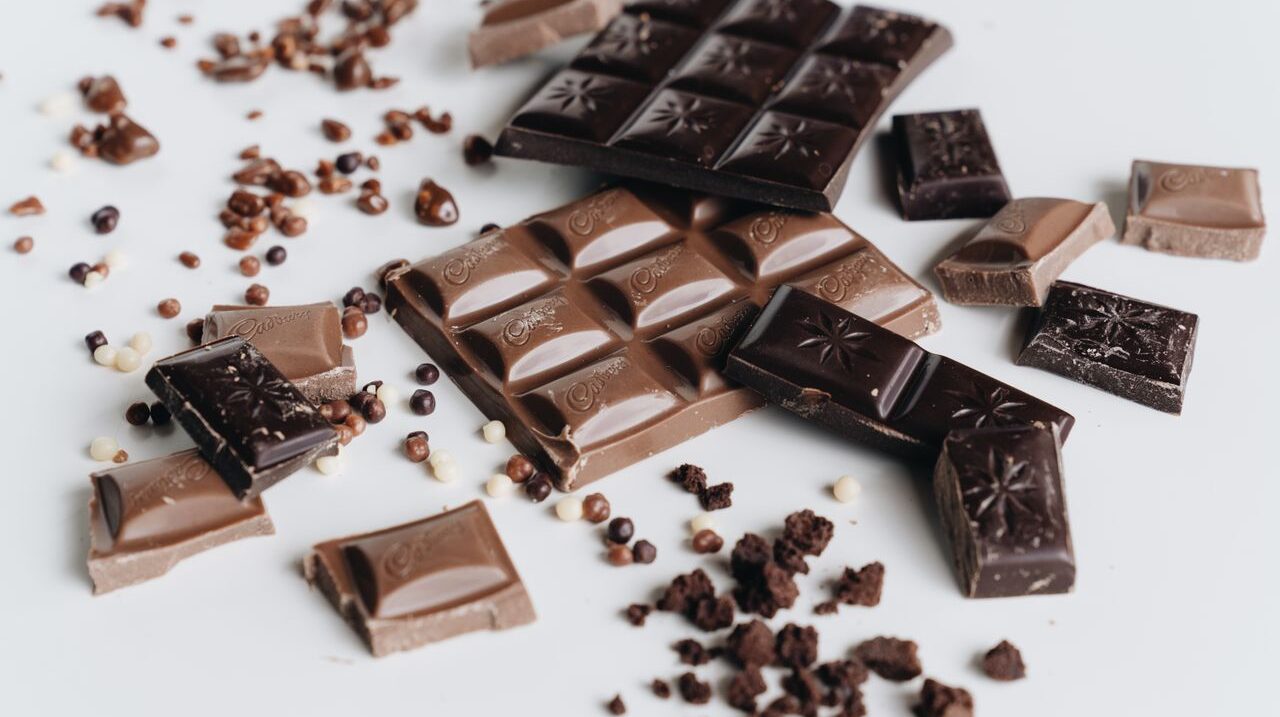
As a popular food ingredient, chocolate is proven to have a high number of fans. Therefore, its demands remain high. Chocolate may come in many forms, though, proving its versatility. In global trade, both raw chocolate (cacao) and ready-to-eat products (candies, chocolate bars) are thriving. Are you ready to be part of this culinary magic? Start by knowing the HS code for chocolate and tips to classify it.
What is chocolate, and why is it popular?
Chocolate is basically a derivative of the cacao fruit (Latin name: Theobroma cacao). The seeds were extracted from the fruits, fermented, dried, roasted, and ground. As a result, we will have cacao powder that can be processed into many types of products. Such as drinks, candies, chocolate bars, cakes, ganache, chocolate chips, and many more.
Chocolate used to be consumed as a herbal drink by indigenous people in Central America. European colonizers then brought it back to their home and introduced it to the European market. Europeans started to call it cocoa, misheard and misspelt, but it became the norm anyway. It did not take long for chocolate to be a popular drink among elites and aristocrats. The soaring demands motivated Europeans to use cacao in their colonial agricultural projects, particularly in Africa.
It was not until the 1800s that access to chocolate was democratized. More people were able to obtain it and modify the mode of consumption. Coenraad van Houten, a Dutchman, invented a cacao press machine that allowed him to reduce fat from the cacao beans and create lighter, less bitter cacao powder. Since then, people started to drink chocolate powder with milk and sugar, rather than mere water. That invention also facilitated mass production and resulted in a more affordable price. More innovations happened around that time, including the invention of chocolate bars and chocolate milk bars.
Chocolate is highly popular for its unique taste (bitter-sweet) and stress-relieving effects. It is proven scientifically. Chocolate has beneficial chemical compositions such as mild stimulants (theobromin, caffeine), antioxidants (flavonoid, oleic acid), minerals (magnesium, potassium, zinc) and mood regulators (phenylethylamine, tryptophan).
How to classify chocolate and get an accurate HS code for chocolate
Chocolate’s popularity is quite stable from time to time. The World Customs Organization (WCO) decided to make one specific chapter for this commodity. Chapter 18 of the document was titled ‘Cocoa and cocoa preparations’. We got you wrapped up. Here is the list of HS codes for chocolate.
| HS code for chocolate | Chocolate products |
| 180100 | Cocoa beans (whether raw or roasted, broken or intact) |
| 180200 | Cocoa shells, skins, and other cacao waste |
| 180310 | Cocoa paste containing fat |
| 180320 | Cocoa paste that is wholly or partly defatted |
| 180400 | Cocoa fat, cocoa butter, cocoa oil |
| 180500 | Cacao powder without added sugar or sweetener |
| 180610 | Cocoa powder with added sugar or sweetener |
| 180620 | Other food containing cocoa prepared in blocks, bars, liquid, paste, powder, granule or other forms with a weight of more than 2 kg and was contained in immediate packings |
| 180631 | Other food with a chocolate composition in slabs, blocks or bars that was filled |
| 180632 | Other food with chocolate ingredients in blocks, slabs, or bars that was not filled |
| 180690 | Other food preparations with cacao composition or cacao products combined with other specific ingredients |
The WCO document is crystal clear in helping you to classify chocolate or cocoa. However, some countries may ask you to add more digits of the HS code for chocolate for specific ingredients, such as alcohol. For instance, the European Union regulates the HS code for chocolate bars containing alcohol with TARIC 18069011. They also have an HS code for cacao products that were marketed as sugar replacement or sugar-chocolate confectionery, which is 18069050. Therefore, a double-check is still required when you aim to export your products to certain countries or regions.
You are also advised to check chapter 17 (sugar and confectionery) and 19 (cereals, flour, starch, milk, pastrycook). Some of the chocolate products fall under those chapters instead. Here are some examples.
| HS code | Products |
| 170490 | Sugar confectionery that does not contain cocoa, including white chocolate |
| 190120 | Mixes and pre-made doughs for baker’s wares with no cocoa or containing less than 40% by weight of cocoa on a defatted basis |
| 1901090 | Other food preparations of flour, starch, malt extract, with zero cocoa or containing less than 40% by weight of cocoa |
| 190410 | Swelled or roasted cereal with or without less than 6% by weight of cocoa on a defatted basis |
| 190531 | Sweet biscuits, including cookies with chocolate addition/coat or not |
| 190532 | Wafers and waffles with chocolate addition/coat or not |
Top actors in the global chocolate trade
When talking about the global chocolate trade, we cannot deny the long history of the colonial exploitative projects in several occupied areas in the global south. The legacy is still strong, as we see African and Central American countries dominate the list of cacao beans’ top exporters (HS code for chocolate 180100).
Top exporters of cacao beans (roasted or raw) in 2024
| Countries | Trade Value (USD) |
| Cote d’Ivoire | 3,993,573,156 |
| Ecuador | 3,993,573,156 |
| Nigeria | 1,631,079,433 |
| Netherlands | 1,000,520,383 |
| Peru | 795,691,753 |
Source: UN Comtrade 2024, accessed on 15th May 2026
As we predicted, European countries and the United States were listed among the largest importers of raw and roasted cocoa beans. However, you might be surprised that Malaysia and Indonesia were also on that list, proving that they also actively work in the cacao processing industry.
The biggest importers of raw and roasted cacao seeds
| Countries | Trade Value (USD) |
| Netherlands | 4,265,789,228 |
| Malaysia | 3,297,864,066 |
| Germany | 1,557,322,752 |
| United States of America | 1,134,862,044 |
| Indonesia | 1,096,577,709 |
Source: UN Comtrade 2024, accessed on 15th May 2026
How to find the HS code for chocolate
As explained above, finding the HS code for chocolate requires a meticulous process. This is essential to avoid an inaccurate declaration of HS code during the customs process in the recipient country. To help your work for finding the accurate HS code for chocolate and cocoa beans, you can use an application specifically made for the export and import process, such as HSCodeMatch.
In this section, we are going to teach you to use HSCodeMatch for finding the HS code for chocolate. Using HSCodeMatch is actually very easy, and it is basically used for all parties involved in international trade. Check this step-by-step instruction for finding the HS code for chocolate and cocoa beans using the HSCodeMatch app.
Step 1: Set product name and countries on HS Code Search
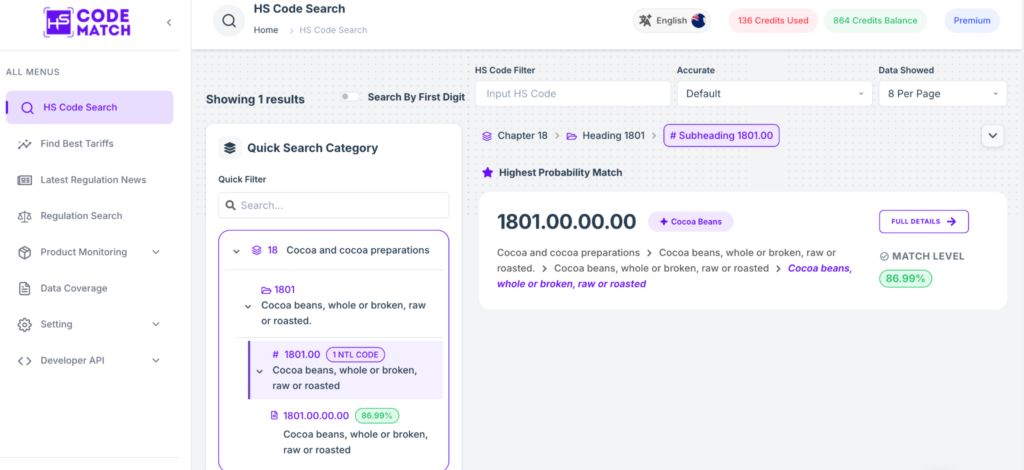
Open the HSCodeMatch application here: app.hscodematch.com and find HS Code Search. Then, set the product name, cocoa beans, and countries based on the largest exporter and importer, the Ivory Coast, and the Netherlands.

Step 2: Find the list of results of HS codes for cocoa beans
There is only one HS code result, 1801.00.00.00 in the Netherlands. Then click Full Details to see the full description of the HS code on HS Code Details.
Step 3: Check the HS code for the chocolate description and tariff rates
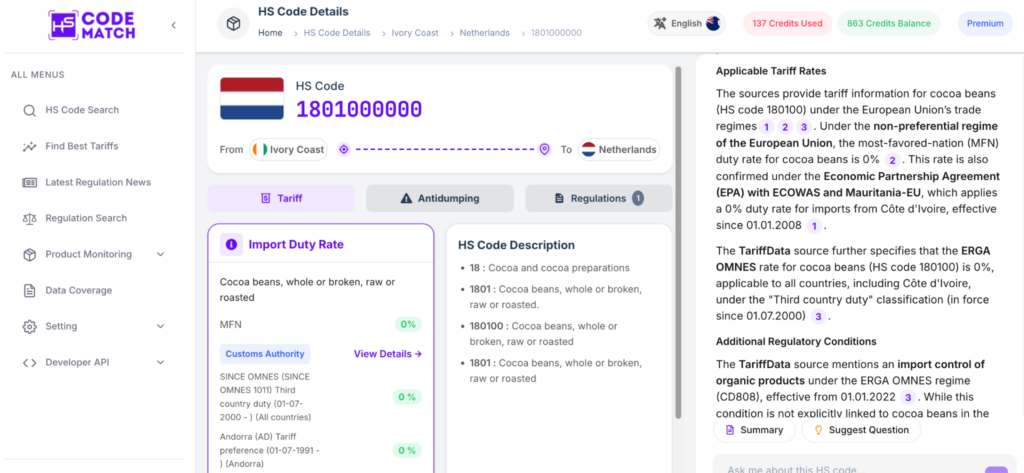
Find the tariff rate, HS code description, and applicable regulations for the cocoa beans product under HS code 1801.00.00.00 on the HS Code Details page. Here, you can check if the HS code is suitable for your cocoa products.
Step 4: Ask the AI Chatbot Assistant to clarify the regulations
If there is an ambiguity, you can just ask the AI Chatbot Assistant for help. However, only ask the relevant question regarding exporting and importing cocoa beans from the Ivory Coast to the Netherlands in the AI Chatbot Assistant.
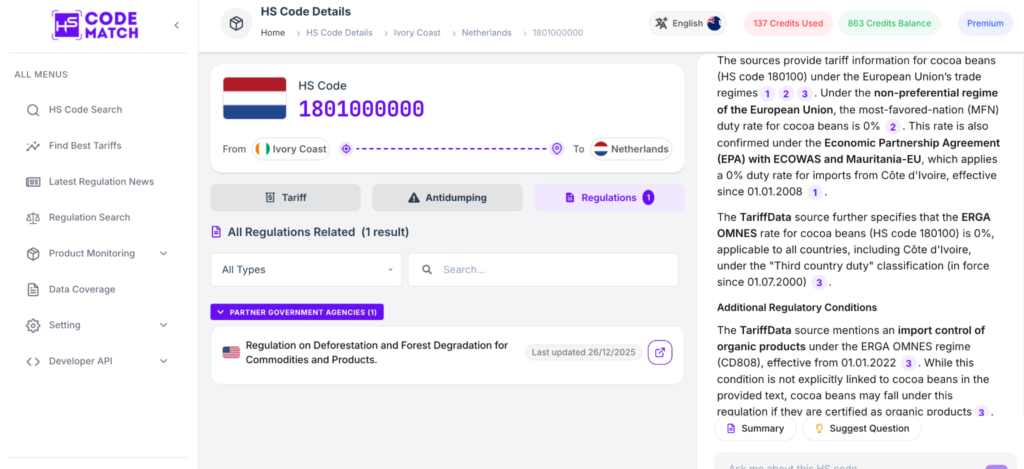
To ensure your comprehension related to the AI Chatbot Assistant, we have provided three questions and answers from this feature. Check the following answers to ensure you ask the relevant question to the AI Chatbot Assistant.
What are the labelling requirements for exporting cocoa beans from the Ivory Coast to the Netherlands?
In order to export cocoa bean products to the Netherlands or the EU, the labelling rules under the EU Regulation 2023R1115 must be fulfilled. The following labelling requirement must be included in the regulations list.
- Mandatory particulars: Name of food or cocoa beans, quantity netto, identification, and address of importer in the EU.
- Origin labelling: Name of country of origin, in this case, the Ivory Coast. The declaration of the origin country of cocoa beans is crucial to avoid misleading information to consumers.
- Allergen information: Labelling of the allergen handling, for instance, nuts and other allergens.
- Date marking: This is important to the export products in the EU, but this is typically not required for raw cocoa beans.
What documents are required to export cocoa beans to the Netherlands?
To export cocoa beans to the Netherlands and the EU, the exporter and importer must follow the Consolidated Regulation (EU) 2023/1115. This regulation is developed to prevent deforestation and forest degradation. These are the specific documents required to export cocoa beans from the Ivory Coast to the Netherlands.
- Geolocation coordinates for all plots where the cocoa beans are produced
- Date and time range of cocoa bean production.
- Verifiable information that the cocoa beans are free from deforestation implications and comply with the EU’s legislation.
- Contact details for the suppliers and buyers of cocoa beans.
What are the geolocation data requirements for cocoa beans export under EU Regulation 2023/1115?
According to the EU Regulation 2023/1115 (EUDR), the cocoa beans require geolocation data requirements. This is the criteria to ensure the deforestation free for the cocoa supply chains. From this rule, the operator must collect and submit the geolocation coordinates for plots where the cocoa beans are planted. The geolocation data must include:
- Identify the boundaries of cocoa bean production using polygonal coordinates, and this is not only a point coordinate. This includes GPS coordinates and satellite imagery with high resolution.
- Precise in verification of compliance with deforestation-free via satellite imagery.
- Inclusion of the production date for all cocoa beans.
- Must be accompanied by a due diligence statement to ensure the data is accurate and complies with the EU regulations.
Conclusion
As one of the most popular commodities on earth, the WCO dedicated one chapter to cocoa and its derivatives. In order to get the accurate HS code for chocolate, you need to classify your products based on the specifications and forms. In Chapter 18 of the WCO documents, they mentioned the most common forms of cacao products according to the stage of processing, whether they are roasted or raw, defatted status, or mixed with other additives. However, for certain regions, you might be required to add more digits according to the existence of specific ingredients.
Frequently Asked Questions (FAQ) about HS Code for Chocolate
1. What is the fastest way to classify cacao products in order to get an accurate HS code?
The easiest way to classify HS codes for your cocoa products is using an application called HSCodeMatch. This allows you to find the accurate HS code for your chocolate products. In addition, you can find the HS code for chocolate on the WCO document, particularly chapters 17, 18, and 19.
2. Does the percentage of cacao affect the HS code for chocolate?
Generally, no. Yet, there is an exception if your product is white chocolate, which contains no cocoa solids and therefore is regulated under another chapter. White chocolate usually still has cocoa butter composition, but as the percentage is less than 20% and does not explicitly contain cocoa seeds, they are often classified as sugar confectionery instead.
3. What is the HS code for chocolate cookies?
Chocolate cookies, biscuits, and wafers are regulated under Chapter 19 rather than Chapter 18, as are other chocolate products. It is because the chocolate in those products is often merely a coat or additive rather than the main ingredient.
4. What is the HS code for chocolate candies?
Depending on what chocolate you use and the forms of your products. You may use HS code 180631 if your chocolate bars or candies are filled, or 180632 if your products are not filled. However, if you use white chocolate, the HS code is 170490 instead.
5. What are the main determining factors to classify the HS code for chocolate?
In order to identify the HS code for chocolate, you need to follow two factors: the form of the product and the stage of processing. Whether your cocoa products are raw or roasted beans, defatted or not, or contain additives or not.
Find and Match the Right HS Code for Your Products.
Try Our App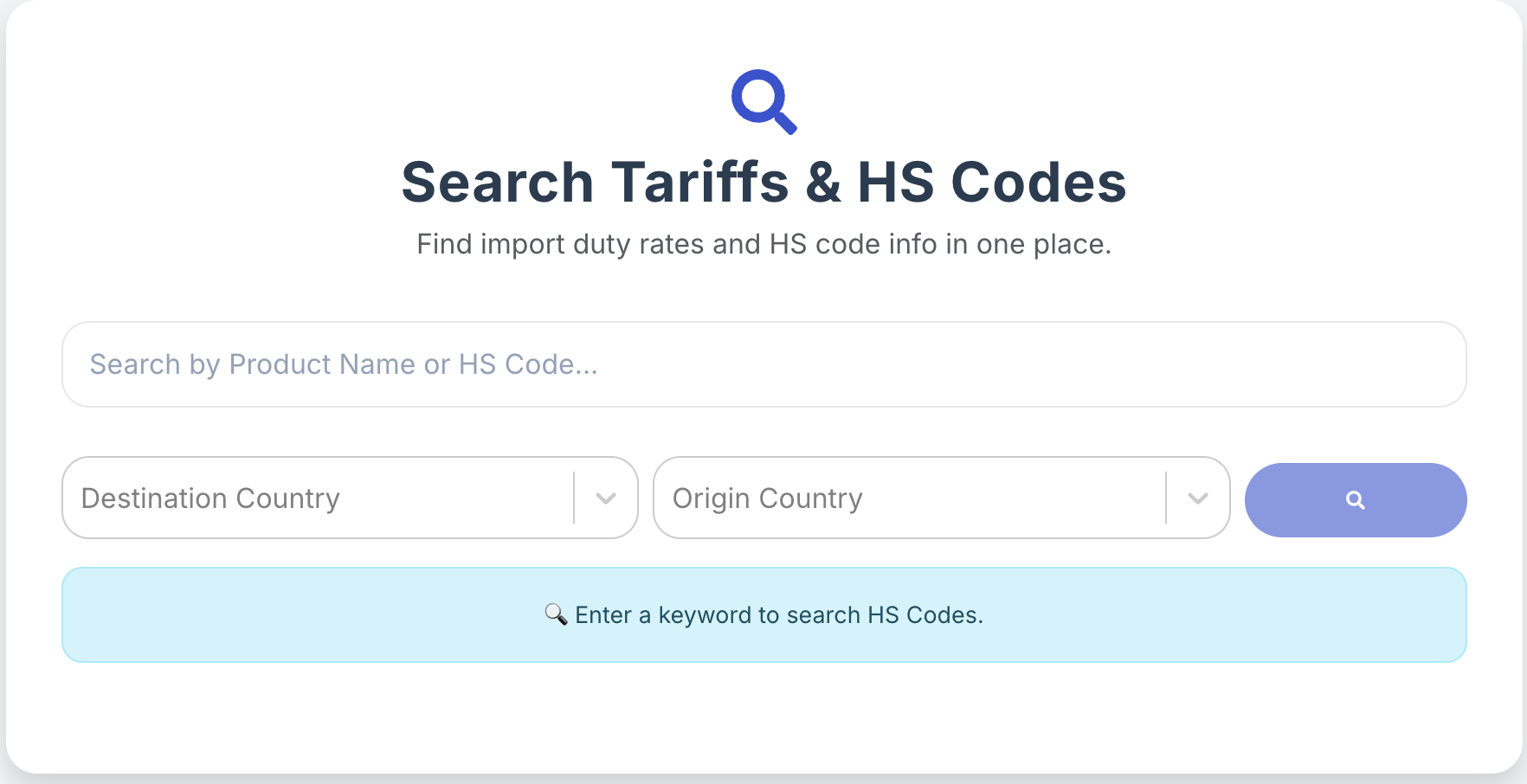

 Sep 10, 2026

