


 Jun 09,2026
  By Alice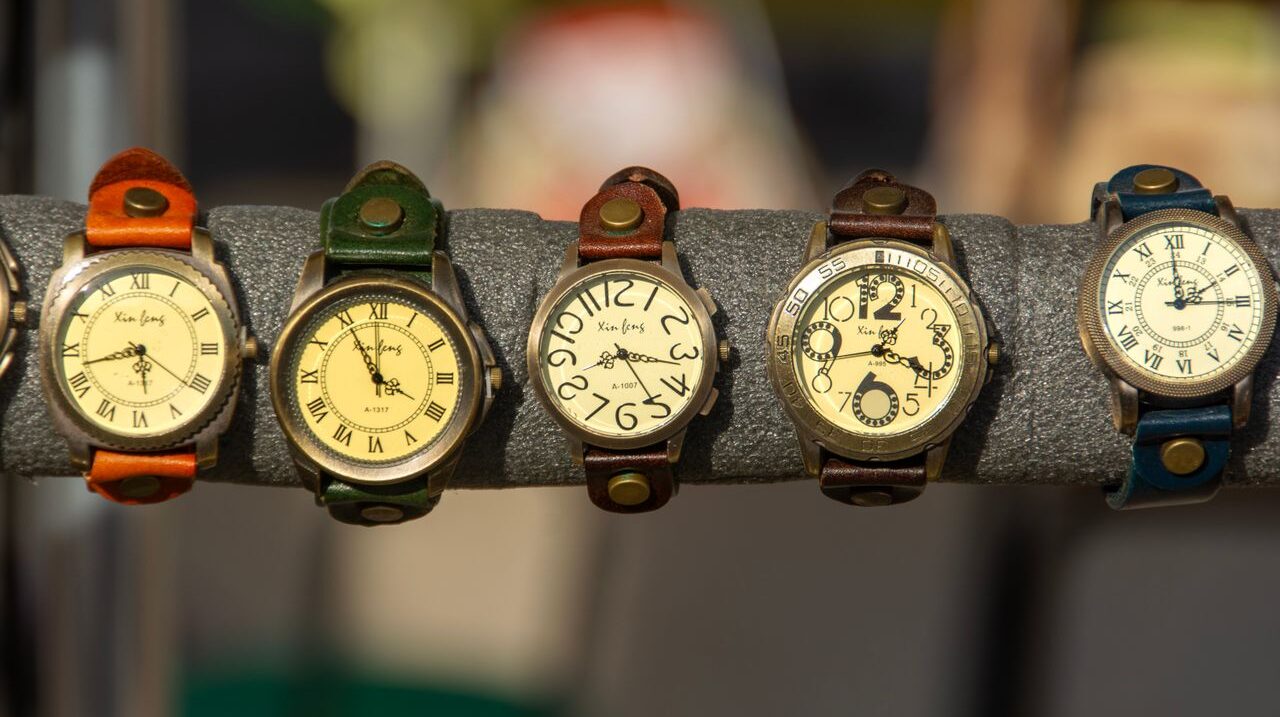
A watch is not a mere accessory; it has functional and psychological benefits for the wearer. Not only stylish, watches are practical in many ways. Instead of pulling out a phone from your pocket or purse, you can check the time faster and easier with a wristwatch. As it is made of precious metal clad and completed with meticulous design, watches are also categorized as luxurious items. Many use them to make a certain good impression, or even as a long-term investment. The circulation of watches as commodities is not necessarily consistent, but still promising if you diligently read the market. Interested in this sector? Let’s start with understanding the market scene and the HS code for watches.
The history and development of the watch
The history of watches started with a clock, a static device that helps humans record and check time. It works with a mechanism that reads regular or consistent movement powered by various sources, from manual gravity to electrical power. In the 16th century, inventors introduced portable clocks that could be easily moved to different places.
It then developed into a miniature clock, which was also known as a clock-watch. It took centuries for humans to finally find personal pocket watches. It was so expensive that only upper-class people could access it. In the 19th to 20th century, wrist-watches (watches with wrist-straps attached) were introduced to the public and became the watches we all know. Yet, the evolution of watches does not stop there. In the 21st century, the smartwatch’s invention changed the trajectory of global watch sales.
Types of watches in the modern era
In the modern era, watches, particularly wrist-watches, are classified into these categories.
| Categories | Types |
| Movement | Mechanical: a battery-free watch, but requires manual winding every 1 to 3 days |
| Automatic: use a similar mechanism as a mechanical watch, but with automatic winding features. The watch will store energy from your arm movement to help them do the winding process. | |
| Quartz: type of watch that requires a battery as the power source. The power will vibrate the quartz crystal and create consistent movement. | |
| Solar: this type of watch uses solar or light as the main energy source for the battery. | |
| Function | Analog: is the type of watch with a traditional clock face, consisting of 2-3 needles (seconds, minutes, and hours) |
| Digital: shows time in numerical digits, offers more accurate and detailed information of time, sometimes packed with other measurements such as step count, GPS, etc. | |
| Chronograph: type of watch with built-in stopwatch | |
| Hybrid: watch with classic or analog appearance, but offer modern features like digital and smartwatch. Features are varied, it could be steps count, heart-rate, ability tto be connected to a smartphone, etc. | |
| Design | Aviator: originally designed for aviation, has high-visibility (large, high-contrast, luminescent), and adopts chronograph principles with stopwatch, multi-zone time track, airspeeds, etc. |
| Military: designed for military personnel, this type of watch has a high-contrast appearance, non-reflective cases, and is made of durable materials. | |
| Fashion: a watch that is specifically made to prioritize aesthetic, mostly produced by clothing brands | |
| Minimalist: offers a versatile look, a clean and sleek design that can be used on various occasions. | |
| Luxury: not only for practicality, but a luxury watch is also meticulously crafted with precious materials, often deemed as a symbol of prestige and wealth. | |
| Sport: wrist-watch with fitness tracking functions, made to assess athletic performance. Most of the sports watches today are digital as they provide detailed data. As it is mostly used for outdoor activity, durable materials such as steel and titanium are commonly used. | |
| Eco-friendly: in order to provide a solution for ecological issues, woods and bamboo are now considered as unique and valuable materials for wrist watches. |
It is intriguing how humans are also attracted to smartwatches. Adopting the principles of smartphones, smartwatches are designed to do multiple tasks at the same time. They not only provide time, but also fitness activities, even notifications from your phone. The sales of smartwatches show a surging trend, which means people see smartwatches as a commodity worth buying. Now, what is the HS code for a watch? How to classify them based on the types above?
HS code for watch: tips to classify
As we all know, watches are divided into several types based on certain categories, but what about according to the World Customs Organization? It is certainly not based on the style only. Well, if you look closely, the HS code for watches belongs in chapter 91 about clocks, watches, and their parts.
| Headings | HS code for a watch | Type of watch | Examples of products |
| 9101 | Wrist watches, pocket watches, incorporated with a stop-watch or not, made with metal/precious metal clad | ||
| 910111 | Electric wrist-watches with a mechanical display only | Quartz or solar metal-clad wrist-watch with analog display | |
| 910191 | Other electric wrist-watches | Quartz or solar metal wrist-watch with thermocompensated technology | |
| 910121 | Non-electric wrist-watches with automatic winding | Automatic wrist-watch with a metal casing | |
| 910129 | Other non-electric wrist-watches | Mechanical wrist-watch with metal casing | |
| 910191 | Electric watches | Electric pocket watch with a metal case | |
| 910199 | Other | Mechanical pocket watch with metal case | |
| 9102 | Other wrist watches, pocket watches, incorporated with a stop-watch or not, are not mentioned in headings 91.01 | ||
| 910211 | Electric wrist-watches with only an analog/mechanical display | An electric watch with a classic display, made of carbon or ceramic | |
| 910212 | Electric wrist-watches with only an opto-electronic display | Digital watch with LED display, case made of ceramic or plastic | |
| 910219 | Other electrically-powered wrist-watches | A hybrid watch that combines both analog and digital displays in one clock-face | |
| 910221 | Other non-electric watches, with automatic winding | Automatic watch made of non-metal materials | |
| 910229 | Other non-electric watches | ||
| 910291 | Electrically operated watches | ||
| 910299 | Other | ||
| 8517 | Telephone sets, smartphones, telephones for cellular/wireless networks, other communication apparatus for data transmission and reception | ||
| 851762 | Machines for reception, transmission, and conversion of data (voice, image, and other) | Smartwatch with the capability to connect to phones/smartphones |
At some point, you may also need to work with only parts of the watch, such as straps, bands, cases, plates, springs, etc. Those products are mentioned in the WCO document, Chapter 91, about the HS code for watches. Check headings 91.11 until 91.14 to see more details. Also, not all digital watches are classified as smartwatches; be sure to confirm the features of your product and check them with the WCO classifying document.
Top actors in the watch export-import
As we all know, each industry has its biggest players, including watches. Let’s check using HS code for watch 910111 (electric wrist-watches with only mechanical display). This HS code is often used to identify classic quartz and solar-powered wrist-watches. It is such a tradition to see Switzerland ranked among the main global exporters.
| Country | Trade Values |
| Switzerland | 1,363,226,278 |
| United States of America | 536,216,640 |
| France | 241,099,892 |
| United Kingdom | 226,552,487 |
| Hong Kong | 127,982,353 |
Source: UN Comtrade 2024, accessed on 28th May 2026
Switzerland remains at the top of the importer list. They are followed by France, Japan, Hong Kong, and the USA. This is interesting as the USA used to be the top consumer of analog wrist-watches (HS code for watch 910111), yet the enthusiasm is plummeting because of several factors, such as stricter tariff barriers and the rise of smartwatches.
| Country | Trade Values |
| Switzerland | 351,369,607 |
| France | 247,189,976 |
| Japan | 183,594,819 |
| Hong Kong | 177,220,107 |
| United States of America | 177,014,356 |
Source: UN Comtrade 2024, accessed on 28th May 2026
How to find the HS code for a watch
In this section, we will give you tips to find the HS code for a watch in a simple way. What you need to do is only use a third-party application used specifically to assist the export and import process, called HSCodeMatch. Within a second, you can just get the most accurate results of the HS code for watches without the need to check one by one.
Without further ado, let’s take a look at the steps on how to find the HS code for a watch with HSCodeMatch below. Before trying this, you need to sign up for the HSCodeMatch app, as it offers a free trial.
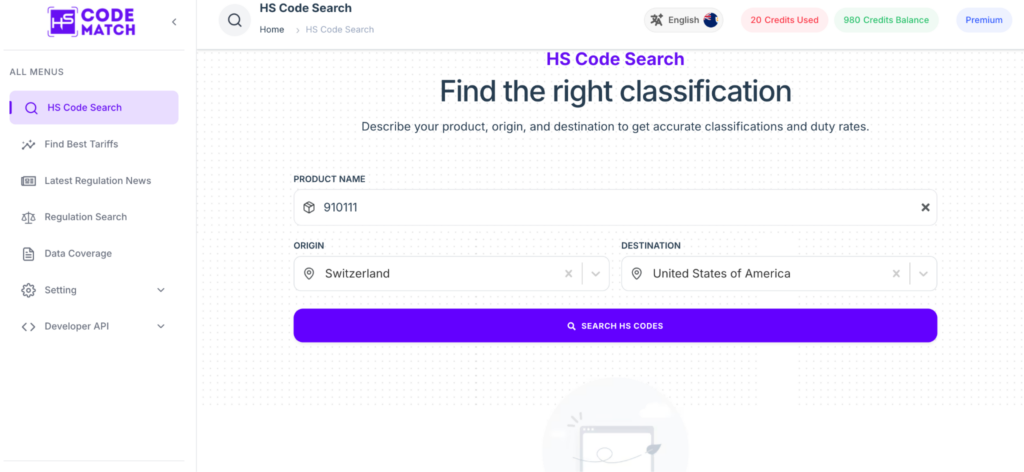
Step 1: Use the HS Code Search tool on HSCodeMatch
In order to find the HS code for a watch, HSCodeMatch provides a specific tool intended to find the HS code for all products and all countries, called HS Code Search. In this example, you can just put HS code 910111 on the product’s name, and we can use one of the largest exporters, Switzerland, and the biggest importer, such as the United States.
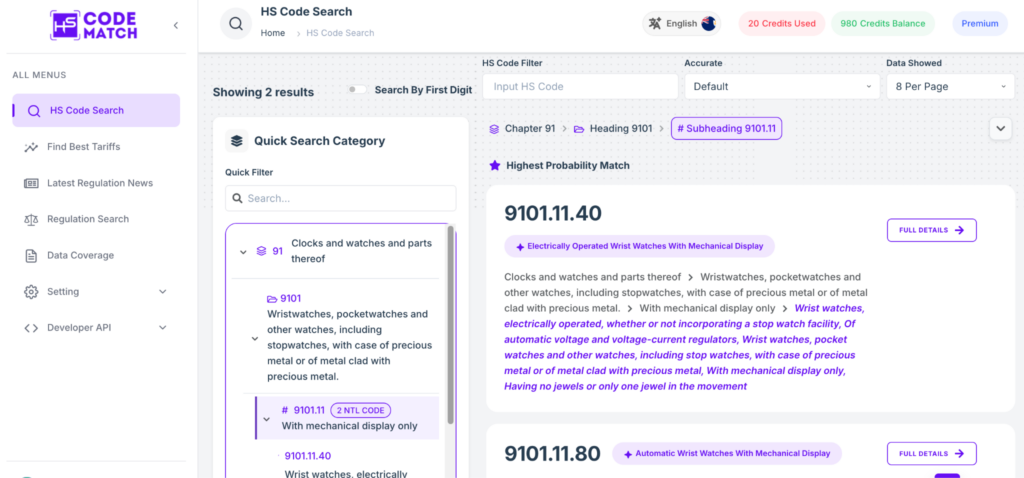
Step 2: Check the list of HS codes for watches
Once all sets are done, you can just check the list of HS codes for watches in the United States. In this example, we can just choose the highest percentage product under HS code 9101.11.40 in the United States.
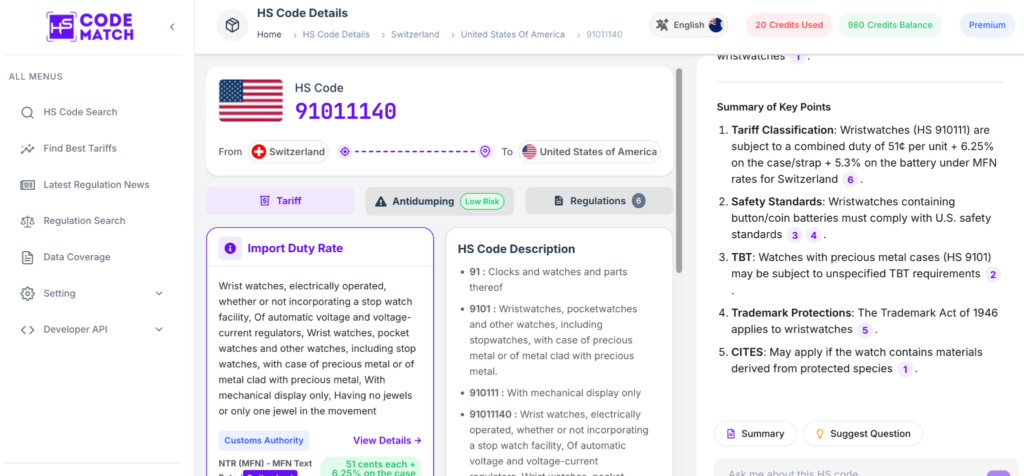
Step 3: Check the description of the HS code and tariff rate for the wristwatches
The next step is to check the HS code for watches under the code 9101.11.40 in the United States. You can also find the tariff rate and regulations for exporting watches from Switzerland into the US.
Step 4: Ask the AI Assistant to find the specific regulation in the United States
If you doubt, just ask the AI Chatbot Assistant from HSCodeMatch to find the latest regulations or tariff rate. This is important to ensure that you can find a specific regulation easily by asking the AI chatbot.
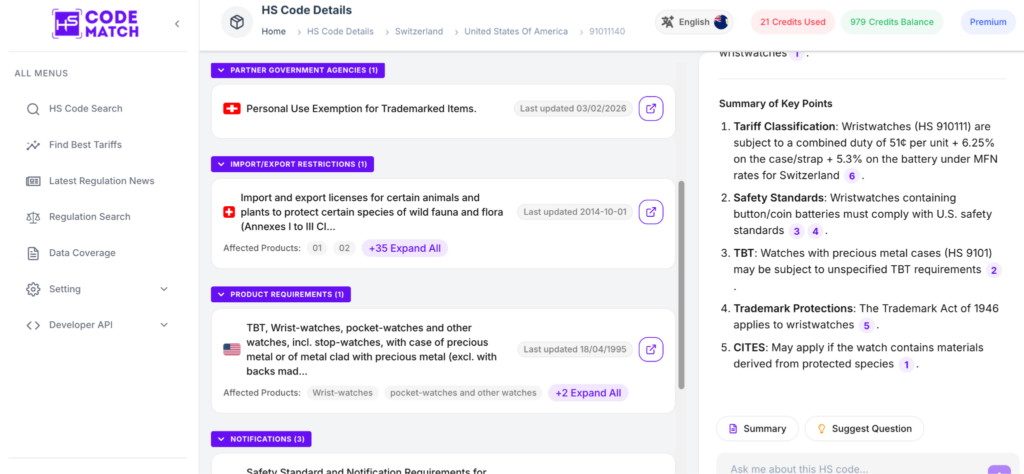
We will give you examples of questions and answers from the AI Chatbot Assistant about the exportation of watches under HS code 910111 from Switzerland to the United States. Check the examples below.
What is the tariff rate for exporting watches under the HS code 910111 from Switzerland to the United States?
The tariff rates for exporting wristwatches, electrically operated in the United States, are under the Most Favoured Nation (MFN) or Normal Trade Relation (NTR) regime. It means that there is no preferential tariff for exporting these products. The import duty for wristwatches under HS code 910111 is 51% per watch. There is also an ad valorem duty 6.25% for a case, strap, band, or bracelet. In addition, there is an ad valorem duty of 5.3% for the battery cell or coin battery.
Are there any restrictions on exporting watches under HS code 910111 from Switzerland to the United States?
There are restrictions for exporting wristwatches under HS code 910111 from Switzerland to the United States. The following descriptions of restrictions need to be understood before exporting these products.
1. Trademark restrictions and exemptions: US authorities allow personal use of a protected trademark for wristwatches. Generally, wristwatches are restricted, but a single watch for personal use might be exempted.
2. Safety standard for cell batteries: Wristwatches are subject to the safety standard, and there are notification requirements for cell button batteries. Not only for watches, this regulations applies to the products containing batteries.
3. Tariff classification and duty rates: Tariff classification of wristwatches from Switzerland must be included under further classifications or assessment. This includes the duty for watches in general, battery, strap, band, or bracelet.
4, CITES restrictions: This is a specific license for the watch intended for certain animals and plants to protect vulnerable species.
What are the U.S. safety labeling requirements for wristwatches containing button cell batteries?
Safety standards for exporting button cell and coin batteries in the US are specifically for the watches under HS codes 910211 and 911410. Wristwatches with a buttoncell batteries migh be under the broader area of consumer products in the US. The safety and notification requirement for consumers includes the labeling provision of potential hazard risks, including ingestion risks. The common labeling, such as warning text, symbol, or placement. However, based on recent regulations, personal use wristwatch imports into the US are exempt from trademark restrictions.
Conclusion
According to the WCO regulation, in order to classify watches and obtain the accurate HS code, you should check the dominant materials, features, and functionality. Metal/precious metal watches were regulated in Heading 9101, and other types of watches that headings fail to mention can be checked in Headings 9102. Style does not affect the HS code for a watch, but you may need to confirm the power source, as it might make your watch fall under different HS code subheadings.
Frequently Asked Questions (FAQs) about the HS code for wristwatches
1. What is the national variation HS code or HTS code for wristwatches, electrically operated in the United States?
The national variation of the HS code for wristwatches that operate electrically in the US is 91011140. This code is based on the standard HS code from the WCO under the code 910111.
2. Are there any preferential tariff rates for exporting wristwatches from Switzerland to the United States?
No, exporting wristwatches from Switzerland to the United States is under the MFN regime. It means that exporting watches from Switzerland to the US is under the normal tariff, and there is no preferential tariff rate.
3. Is there any FTA or other trade agreement between Switzerland and the United States?
No, Switzerland and the US have no Free Trade Agreement. These two countries have a strong trade relationship, but they still have not agreed on an FTA to boost exports and imports.
4. What is the HS code for LED watches?
LED watches are categorized as electric watches with an opto-electronic display with HS code 910212.
5. Does the watch strap have a specific HS code?
Yes, straps have a specific HS code regulated within chapter 91. Depending on the material, they might fall under HS code 911310 for precious metal straps, 9311320 if it is made of regular metal, and 911390 for other materials not yet mentioned above, such as rubber, silicone, plastic, wood, etc.
Find and Match the Right HS Code for Your Products.
Try Our App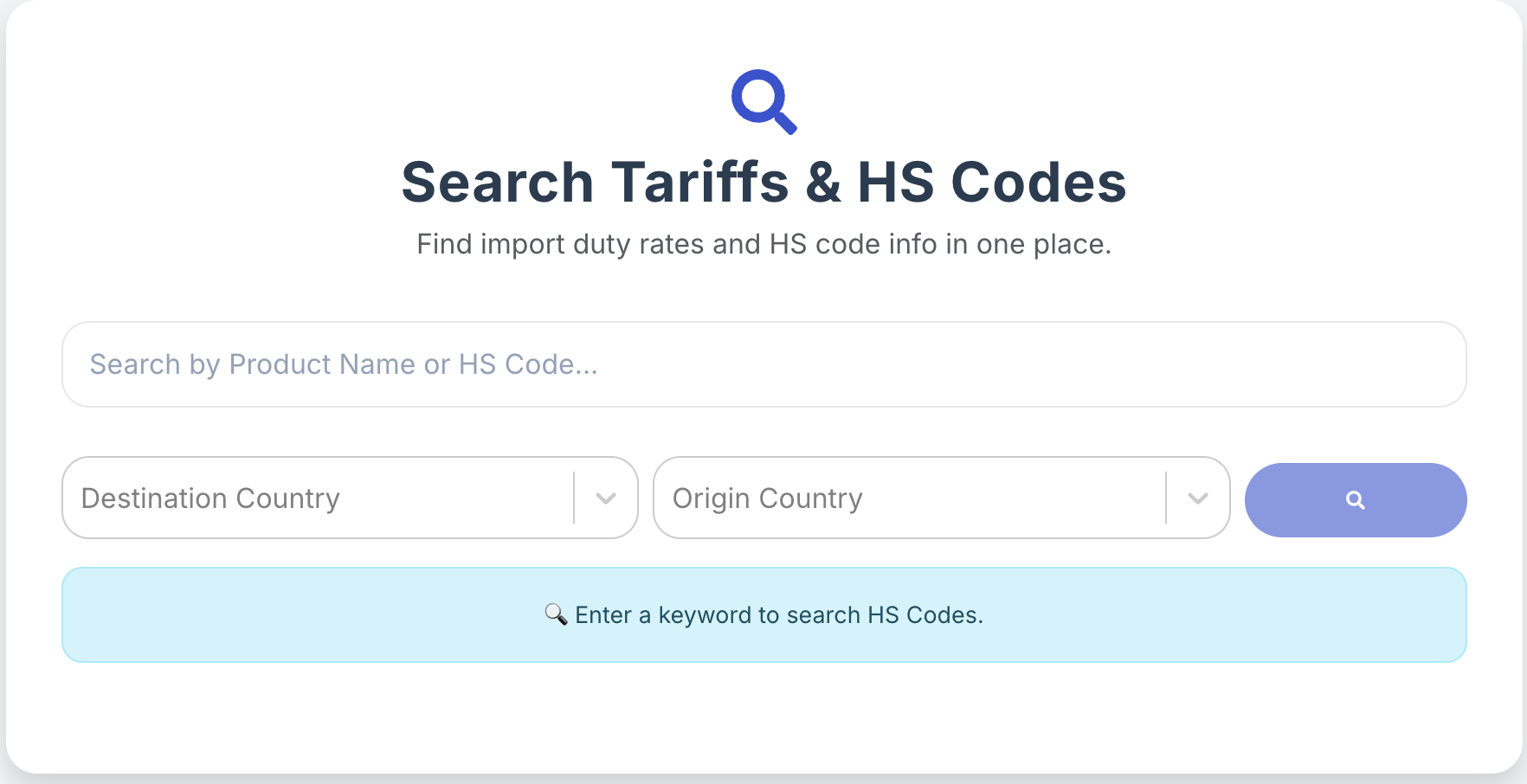

 Sep 10, 2026

