
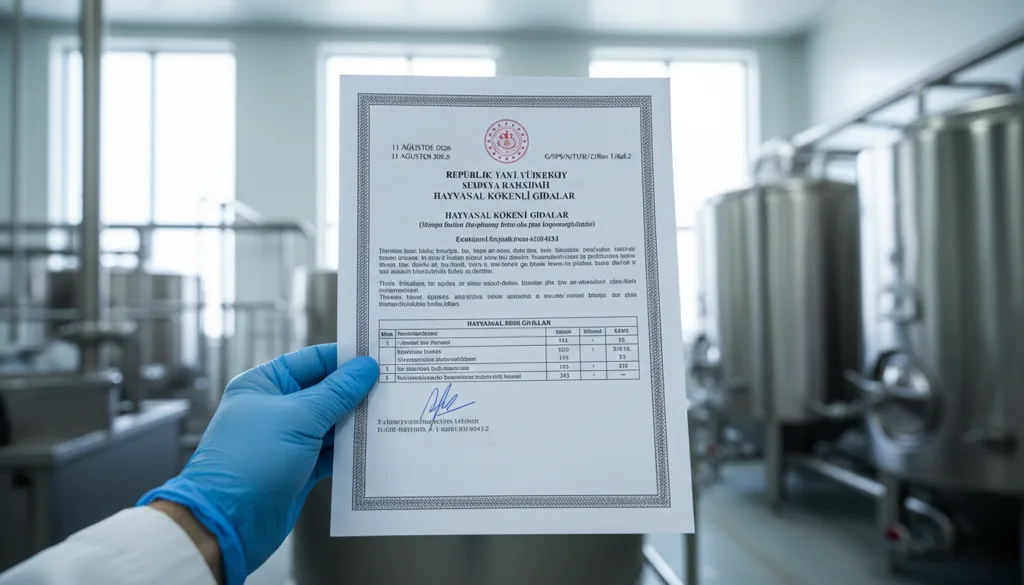
Turkey has introduced specific hygiene rules for food of animal origin to ensure safety, maintain health standards, and regulate handling, processing, and distribution of animal-derived food products.
Turkey has rewritten the hygiene rules for every company that sells animal-derived food, setting new limits on bacteria, storage temperatures and traceability that take effect on 1 March 2027.
The regulation covers raw milk, eggs, shellfish, meat and processed products such as cheese, yoghurt and gelatine. Delivered cost for a typical dairy shipment is expected to rise by 3-5% because of the extra testing and refrigeration required1. The Ministry of Agriculture and Forestry said the changes were needed to bring Turkish standards into line with European Union rules and to reduce outbreaks of brucellosis, salmonella and listeria2.
It comes after a decade in which the country’s food-safety authority has gradually tightened controls on animal products. In 2023 the ministry introduced mandatory camera systems in slaughterhouses; last year it set a 28-day shelf life for eggs from the date of laying1. The new rules add digital tracking of every carcass, stricter cooling requirements for raw milk, and a complete ban on unapproved plants selling raw milk into the supply chain.
The ministry estimates that 12,000 dairy farms, 850 slaughterhouses and 3,200 processing plants will be affected2. Small producers in rural areas are expected to bear the largest share of the compliance cost, because many still lack refrigerated transport and laboratory access.
What the new rules demand
Every shipment of raw milk must now be cooled to 6 °C or below within two hours of milking and kept at that temperature until it reaches the processing plant3. Previously the limit was 8 °C. Milk that arrives at the plant above 10 °C will be rejected and destroyed at the importer’s expense.
Five obligations from 1 March 2027
Slaughterhouses must install camera systems at key points—stunning, bleeding and evisceration—and keep the footage for 90 days1. The ministry said the measure was introduced after repeated violations of animal-welfare standards were caught on hidden cameras by activists.
Eggs may no longer be sold after 28 days from the date of laying1. The old rule allowed 35 days, but the ministry said studies showed salmonella risk rose sharply after the fourth week. Retailers must now print the laying date on every pack.
Shellfish importers must provide a health certificate from the country of origin showing that the batch has been tested for amnesic shellfish poisoning and norovirus1. The certificate must be issued no more than 48 hours before shipment.
Processors of gelatine and collagen must now test every batch for residue limits of heavy metals and veterinary drugs1. The ministry has published a list of 14 substances, including lead, cadmium and tetracycline, with maximum permitted levels.
Who pays for the changes
The cost falls on the company that first handles the product. Dairy farms must buy or lease refrigerated tanks; slaughterhouses must install cameras and digital tracking software; processors must upgrade laboratories and hire extra staff.
Who pays, and for what
The ministry has not offered subsidies, but it has extended the deadline for small farms to comply until 1 September 20272. Farms with fewer than 50 cows or 200 sheep can apply for a six-month exemption if they can show they are making progress.
Transport companies must retrofit their tankers with temperature loggers that record every minute of the journey3. The loggers must be calibrated annually by an accredited laboratory, and the data must be available to ministry inspectors on demand.
Retailers are responsible for removing expired eggs from shelves and for ensuring that shellfish are stored at 4 °C or below1. Supermarkets that fail to comply face fines of up to 50,000 Turkish lira (€1,400) per violation.
What the old rules allowed—and why they changed
Until now, raw milk could be transported at 8 °C and stored for up to 48 hours before processing3. The ministry said this was too lenient, because bacteria doubled every 20 minutes at that temperature. In 2023 alone, 1,200 cases of food poisoning were traced to contaminated milk.
What changed, rule by rule
| Requirement | Old rule | From 1 March 2027 |
|---|---|---|
| Raw milk | 8 °C for up to 48 hours | 6 °C within two hours |
| Eggs | 35 days, no laying date | 28 days, date on pack |
| Carcass records | Paper records | Digital tracking to the farm |
| Shellfish | One certificate, many shipments | Batch certificate, within 48 hours |
| Gelatine | No heavy-metal testing | Every batch, 14 substances |
Eggs could be sold for 35 days, and the laying date was not required on the pack1. After a salmonella outbreak in Ankara last year that sickened 400 people, the ministry shortened the shelf life and made the date mandatory.
Slaughterhouses were only required to keep paper records of carcass movements1. The new digital system will allow inspectors to trace a contaminated batch back to the farm within hours, rather than days.
Shellfish importers could use a single health certificate for multiple shipments from the same region1. The ministry said this led to repeated outbreaks of norovirus, because the certificate did not reflect the current water quality.
Gelatine and collagen processors were not required to test for heavy metals1. After a recall of contaminated gelatine in 2024, the ministry added the new residue limits.
How the rules compare with the EU
Turkey’s new standards are almost identical to those in the European Union’s Regulation (EC) No 853/2004, which sets hygiene rules for animal-derived food4. The ministry said the alignment was necessary to maintain access to the EU market, which takes 40% of Turkey’s dairy exports and 30% of its processed meat.
EU share of Turkey’s exports
One difference is that the EU allows eggs to be sold for 21 days from the date of laying, while Turkey has set the limit at 28 days1. The ministry said the extra week was needed because many Turkish consumers buy eggs from small shops that do not have refrigeration.
Another difference is that the EU does not require camera systems in slaughterhouses, although some member states have introduced them voluntarily4. Turkey’s ministry said
Sources
- ↩ Special Hygiene Rules for Animal Food Production and Processing https://www.tarimorman.gov.tr/GKGM/Sayfalar/Detay.aspx?TermStoreId=368e785b-af33-487d-a98d-c11d5495130b&TermSetId=c9118bad-41d2-40a8-9352-d3c5d954b355&TermId=fb841593-eb13-4a7b-90e6-762d1dc46795&UrlSuffix=919
- ↩ Regulation on Specific Hygiene Rules for Food of Animal Origin https://docs.wto.org/imrd/directdoc.asp?DDFDocuments/T/G/SPS/NTUR12R1A2.docx
- ↩ Collection, Transport, Storage, Marketing and Acceptance of CIG Milk https://www.kayseri.gov.tr/cig-sutun-toplanmasi-nakli-depolanmasi-pazarlanmasi-ve-kabulu-hakkinda-karar
- ↩ Food Safety, Veterinary, and Phytosanitary Chapter https://www.tarimorman.gov.tr/Konular/Avrupa-Birligi-ve-Dis-Iliskiler/Avrupa-Birligi/Gida-Guvenilirligi-Veterinerlik-Bitki-Sagligi-Fasli