
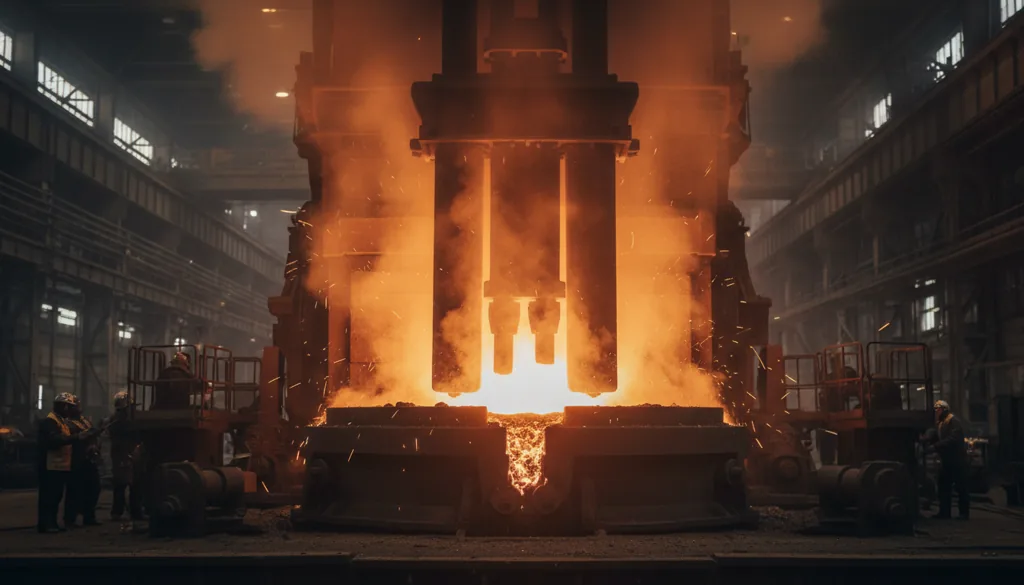
China has introduced new safety standards for industrial electroheating installations, covering arc and plasma/electron beam systems, to ensure operational safety and risk mitigation in industrial settings.
China has set new safety rules for industrial arc and plasma heating equipment, requiring importers to meet stricter testing and certification standards before selling the machines in the country. The rules, published as a draft national standard, cover arc furnaces, plasma cutters and electron-beam welders used in steel mills, shipyards and aerospace factories. Every shipment must now carry a pre-issued import permit and a certificate of conformity showing it meets the new limits on electrical hazards, fire risks and electromagnetic interference.
The measure is the first update in six years to the safety code for electroheating installations. It comes into force on 1 March 2027 and will apply to all new and used equipment entering China, regardless of origin. Importers pay the full cost of the additional testing and documentation; there is no government subsidy or grace period.
What the new standard covers
The draft standard, labelled GB XXXX.2—XXXX, sets safety requirements for arc-heating installations used in melting, refining and heat treatment. It defines arc furnaces as machines that use an electric arc between electrodes and the material to generate heat, and it includes both direct-arc furnaces (where the arc touches the charge) and indirect-arc furnaces (where the arc is struck between electrodes above the charge)1.
The rules also apply to the high-current systems that feed the furnaces, including transformers, high-voltage switches and electrode clamps. Any single fault that could lead to multiple dangerous conditions is treated as a single fault state, so the safety interlocks must still work even if one component fails1.
Key safety thresholds
The standard tightens several technical limits. Arc furnaces must now withstand 20 kA of short-circuit current for at least 0.5 seconds without damage, up from the previous 15 kA1. Electromagnetic interference from the equipment must not exceed 80 dBμV/m at 30 MHz, measured at a distance of 3 m1. Fire-resistant barriers around the furnace must have a minimum fire-resistance rating of 120 minutes1.
The tightened technical limits
For plasma and electron-beam systems, the standard introduces a new requirement: the beam must shut off automatically within 100 milliseconds if the workpiece is removed or if the vacuum seal is broken2.
Who must comply and by when
All companies that import, manufacture or sell industrial electroheating equipment in China must comply. The rules take effect on 1 March 2027, giving importers a twelve-month window to clear existing stock and obtain the new certificates1. After that date, customs will reject any shipment that does not carry the pre-issued import permit and the certificate of conformity issued by a Chinese-accredited testing body1.
The Ministry of Industry and Information Technology said in a statement that the new rules align with international standards and will “reduce operational risks in high-temperature industrial processes”3.
How the rules fit into China’s broader equipment safety push
The electroheating standard is part of a wider campaign to raise the energy efficiency and safety of industrial equipment. In February 2026, four ministries—Industry and Information Technology, Development and Reform, State-owned Assets Supervision and Administration, and the National Energy Administration—jointly launched a three-year plan to promote high-quality energy-saving equipment. By 2028, the plan aims to have 35 % of new electric motors, pumps and compressors meet the highest efficiency class, up from 20 % in 20253.
New electric motors, pumps and compressors in the highest efficiency class
The same plan also targets transformers, industrial heat pumps and hydrogen electrolysers. For arc furnaces specifically, it encourages the adoption of direct-current electric arc furnaces, which are more energy-efficient than traditional alternating-current models3.
What importers must do now
Importers should begin preparing by identifying which of their products fall under the new standard. The draft covers all arc-heating installations, including those used in steelmaking (HS 8514.10), plasma cutting machines (HS 8456.90) and electron-beam welders (HS 8515.80)1. They must then arrange for testing at a laboratory accredited by China’s Certification and Accreditation Administration.
The path to a compliant shipment
The testing process includes electrical safety checks, electromagnetic compatibility measurements and fire-resistance tests. Once the equipment passes, the importer receives the certificate of conformity, which must accompany every shipment1. The certificate is valid for three years, but the importer must keep records of each shipment and make them available to customs on request.
What the rules leave unchanged
The new standard does not alter the existing tariff rates for electroheating equipment, which remain at 8 % for most arc furnaces and 5 % for plasma cutters3. It also does not change the plant-health or environmental approvals required for used machinery; those rules are set by separate agencies and remain in force.
Tariff rates the new standard leaves untouched
| Equipment | Tariff rate |
|---|---|
| Most arc furnaces | 8% |
| Plasma cutters | 5% |
The draft does not specify how the import permits will be allocated. The ministry has not said whether permits will be issued on a first-come, first-served basis or whether there will be a quota system1.
The wider context: China’s push for safer, greener industrial equipment
The electroheating rules reflect China’s broader strategy to modernise its industrial base while reducing energy consumption and emissions. The February 2026 plan sets a target for 80 % of new servers in data centres to meet the highest energy-efficiency class by 2028, up from 60 % in 20253. It also encourages the use of low-global-warming-potential refrigerants in industrial cooling systems and the adoption of hydrogen electrolysers that consume less than 4.2 kWh of electricity per cubic metre of hydrogen produced3.
For importers, the message is clear: equipment that does not meet the new safety and efficiency standards will not clear Chinese customs after 1 March 2027. The volumes are small enough that the effect on regional prices will be marginal, but the administrative burden is real. Companies that start testing early will avoid the last-minute rush and the risk of shipment delays.
Sources
- ↩ WTO TBT notification 26-04167 — China https://members.wto.org/crnattachments/2026/TBT/CHN/26_04167_00_x.pdf
- ↩ National Standard Plan for Ultrafiltration Membrane System Operation Performance Test Method https://std.samr.gov.cn/gb
- ↩ Four Ministries Launch Plan for High-Quality Energy-Saving Equipment Development (2026-2028) https://jxt.hubei.gov.cn/bmdt/rdjj/202603/t20260323_5896806.shtml