
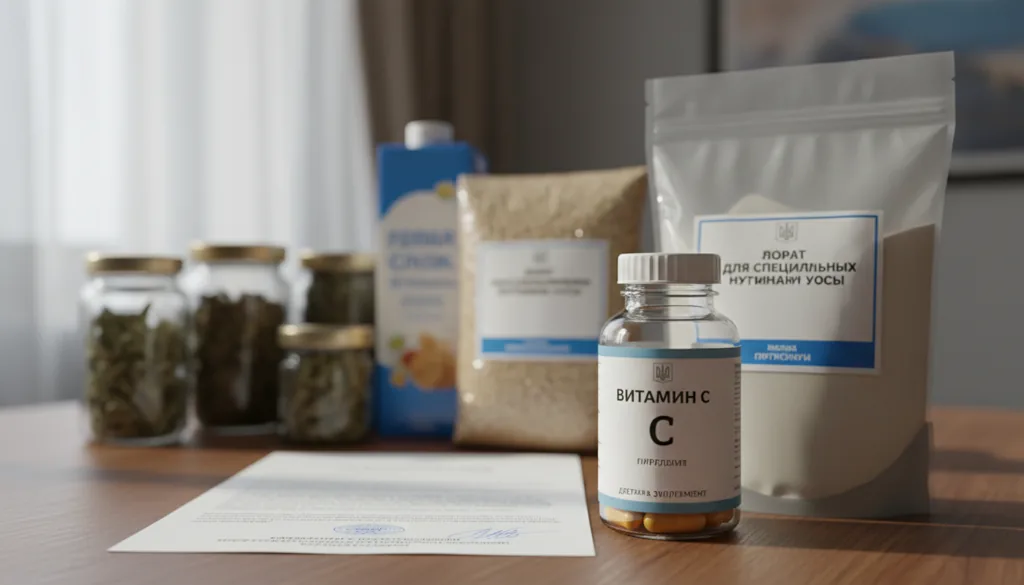
Ukraine has proposed amendments to food and feed labelling regulations and revised food and dietary supplement standards, including updated health impact assessment procedures for supplements.
Ukraine has reinstated full food and feed labelling rules from 1 October 2026, ending temporary wartime exemptions that allowed importers and manufacturers to sell products with foreign-language labels and incomplete ingredient lists.
The move affects every company selling food, animal feed or dietary supplements in Ukraine, from grain traders to infant-formula producers. The delivered cost of compliance will fall on importers, who must now provide Ukrainian-language labels that match the actual composition of each shipment, including allergens and nutritional values.
It comes after four years of relaxed rules that helped keep supermarket shelves stocked while supply chains were disrupted by war. Those exemptions are now being phased out as production and logistics have stabilised, the government said in a statement.
What the new rules demand
From 1 October 2026, every food and feed product sold in Ukraine must carry a label in Ukrainian that lists all ingredients, allergens, nutritional information and the minimum durability date1. Labels must also show the name and address of the importer or manufacturer, the country of origin, and instructions for use if the product could be misused2.
What every label must carry from 1 October 2026
The rules apply to both domestically produced and imported goods. Importers must ensure that labels on incoming shipments match the requirements before the goods clear customs; any mismatch will block entry1. For dietary supplements, an additional notification must be filed with the State Food and Consumer Service before the product can be sold3.
What the old rules allowed
Since March 2022, Ukraine had waived most labelling requirements to prevent shortages. Manufacturers could change recipes without updating packaging, and importers could sell products with labels in any language1. Relocated factories were also permitted to use leftover packaging from other producers, a measure that kept production lines running while supply chains were rebuilt1.
Labelling rules, wartime exemptions and full rules
| Requirement | From March 2022 (exemptions) | From 1 October 2026 |
|---|---|---|
| Label language | Any language | Ukrainian |
| Recipe changes | Allowed without new packaging | Label must match composition |
| Leftover packaging | Permitted for relocated factories | Not allowed |
| Ingredient lists | Could be incomplete | All ingredients and allergens |
| Non-compliant stock | Freely sold | Blocked at customs |
Those exemptions will expire on 30 September 2026. Any food or feed already in the market with simplified labels can remain until its expiry date, but no new stock with non-compliant labels can be sold after that date1.
Who pays the cost
The cost of re-labelling falls squarely on importers and manufacturers. Every shipment arriving after 1 October 2026 must carry a Ukrainian-language label that matches the actual composition of the product1. For dietary supplements, companies must also file a notification with the State Food and Consumer Service, adding an administrative step that did not exist under the old rules3.
Estimated cost of re-labelling one product line
The government has not offered subsidies or transitional funding. Industry groups estimate that re-labelling a single product line can cost between $5,000 and $20,000, depending on the complexity of the packaging.
The timeline for compliance
The new rules were adopted by the Cabinet of Ministers on 29 July 2026 and published in the official gazette on 30 July 20261. Companies have until 1 October 2026 to bring all labels into compliance.
Deadlines that fall on the importer
For dietary supplements, the transition is slightly longer. Products that were manufactured or imported under the old rules can remain on the market until their expiry date, provided the company files a notification with the State Food and Consumer Service within six months of the law taking effect3. That grace period ends on 27 March 2027, three years after the law was enacted.
Why the change was made
The government said the return to full labelling rules was necessary to protect consumers and align Ukraine’s regulations with EU standards. In a statement, Deputy Economy Minister Denys Bashlyk said the move would “ensure that consumers receive accurate information in Ukrainian about the composition, properties and safety of products”1.
The change also supports Ukraine’s obligations under the EU-Ukraine Association Agreement, which requires alignment with EU food-safety and labelling laws4. The government said the return to standard rules would “strengthen consumer protection, make the market more transparent and build trust in Ukrainian products both at home and abroad”1.
What is still unclear
The government has not specified how it will enforce the new rules. Under the old system, state inspectors at the border checked a sample of shipments for compliance; in 2025, they inspected 1,365 shipments of coffee alone, totalling 18,843 tonnes5. It is not yet clear whether the same sampling approach will apply to the new labelling requirements or whether every shipment will be checked.
The rules also do not address how companies should handle products that are already in transit when the new rules take effect. Industry groups have asked for clarification on whether those shipments will be granted a grace period, but the government has not responded.
The impact on dietary supplements
Dietary supplements face the strictest new requirements. From 27 September 2025, every supplement sold in Ukraine must carry a label that lists all ingredients, allergens, nutritional values and the name and address of the manufacturer or importer2. The label must also state that the product is not a medicine and cannot claim to prevent or treat diseases2.
Companies that were already selling supplements when the law took effect have until 27 March 2026 to file a notification with the State Food and Consumer Service3. Products that do not meet the new requirements can remain on the market until their expiry date, but no new non-compliant stock can be sold after that date.
What happens next for food and dietary supplement
The government has not announced any further changes to food and feed regulations, but industry groups expect additional rules to follow. In July 2026, the Ministry of Health notified the World Trade Organization of a draft resolution that would allow specialised medical foods and infant formula imported as humanitarian aid to be sold with foreign-language labels until their expiry date4. That measure is still under review.
For now, companies have until 1 October 2026 to bring all food and feed labels into compliance. After that date, any shipment that does not meet the new requirements will be blocked at the border, adding delays and costs to supply chains that are only now recovering from the disruptions of war.
Sources
- ↩ Labeling Rules Return to Standard for Food and Feed from October 1 https://me.gov.ua/News/Detail/59356bbe-7b96-4d4d-8549-8121af3c56d6?lang=uk-UA&title=ZhovtniaVirobnikiTaImporteriPovertaiutsiaDoStandartnikhPravilMarkuvannia
- ↩ Dietary Supplement Labeling Requirements https://dpss.gov.ua/news/vymohy-do-markuvannia-diietychnykh-dobavok
- ↩ New Rules for the Circulation of Dietary Supplements in Ukraine https://dpss.gov.ua/news/vazhlyvo-pro-novi-pravyla-obihu-diietychnykh-dobavok
- ↩ Draft Resolution of the Cabinet of Ministers of Ukraine “On Amendments to Resolution of the Cabinet of Ministers of Ukraine dated July 29, 2026 No. 980” (related to the labelling of food and feed) https://docs.wto.org/imrd/directdoc.asp?DDFDocuments/T/G/TBTN26/UKR398.docx
- ↩ State Control of Coffee Import Batches https://nir.gov.ua/novyny/derzhavnyj-kontrol-import-partij-kavy/