
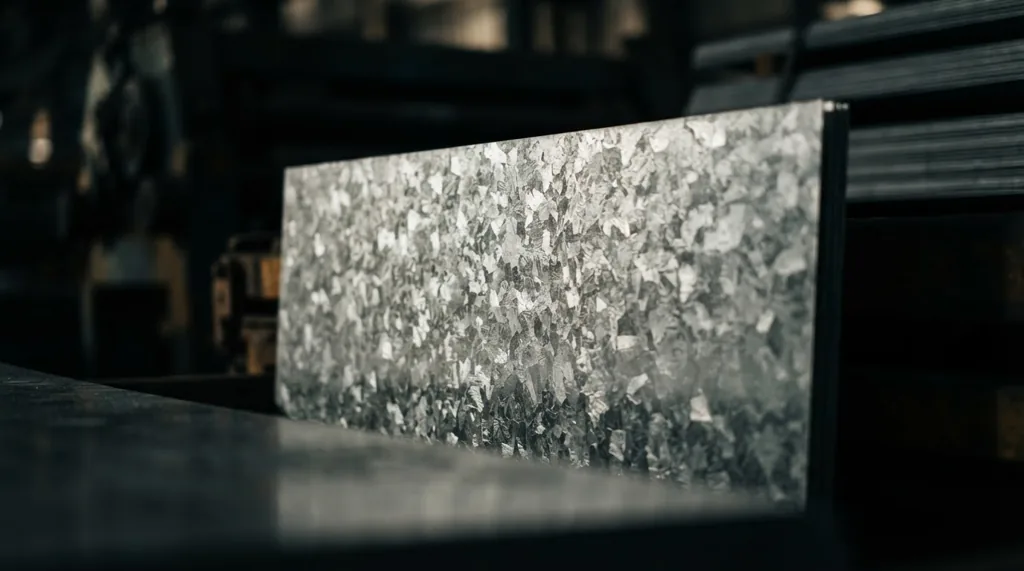
European Union anti-dumping duties on coated steel from Russia and Türkiye end on Aug. 13, 2027 unless a review is requested.
The European Commission warned on Nov. 20, 2026 that anti-dumping duties on coated steel from Russia and Türkiye end Aug. 13, 20271.
The duties will end unless European steelmakers ask for a review in time and the Commission opens one1. The notice appeared in the Official Journal of the European Union, the bloc’s official gazette, as notice C/2026/60441.
In short, shipments of this coated steel from Russia and Türkiye still pay the extra duty for now. If nobody asks for a review, that duty disappears at midnight at the start of Aug. 13, 20271.
What did the Commission announce for corrosion-resistant steel?
The notice is called a "notice of impending expiry". It tells traders that a trade defence measure is close to its planned end date1. The measure here is an anti-dumping duty, an extra import tax on goods sold abroad below their normal price.
The duty was set by Commission Implementing Regulation (EU) 2022/1395 of Aug. 11, 20222. That regulation, called here the 2022 regulation, covers "certain corrosion resistant steels" from Russia and Turkey2. Corrosion-resistant steel is flat steel with a coating that protects it from rust.
The notice gives the end date as Aug. 13, 20271. It adds that the measure ends at midnight (00:00) of that day1. Steel cleared at the border from that moment would no longer pay the anti-dumping duty, if no review is opened.
Why does EU law set an end date for the steel duties?
EU anti-dumping duties do not last forever. The notice rests on Article 11(2) of Regulation (EU) 2016/1036, the EU’s basic law on dumped imports from countries outside the bloc1. That article requires the Commission to publish a warning before a measure expires1.
The warning gives European producers a chance to defend the duty. Without a request from them, the duty ends on its own1. No new decision is needed for that to happen.
How can European steelmakers keep the duties in place?
The notice sets out a short procedure for Union producers, meaning steel companies that make the same product inside the EU1. The steps run in this order:
- A Union producer sends a written request for an expiry review, a new investigation into whether the duty is still needed1.
- The request must show enough evidence that ending the duty would likely let dumping and harm continue or return1.
- The Commission decides whether to open the review1.
- If it opens one, importers, exporters, the exporting countries and Union producers can comment on the request1.
Requests go to the Commission’s Directorate-General for Trade and Economic Security, its trade department1. The notice does not name any company that plans to ask for a review.
When is the deadline for a review request?
Producers may send a request from the day the notice was published1. The notice was dated Nov. 20, 20261. The request must arrive no later than three months before the expiry date1.
With an expiry date of Aug. 13, 2027, that leaves until about mid-May 2027. After that point, a late request would not count under the notice’s rules. The duty would then end as planned in August.
Which goods and countries are covered?
The notice lists one product: "certain corrosion resistant steels"1. It lists two countries of origin: Russia and Türkiye1. The 2022 regulation used the older name Turkey for the same country2.
The expiring steel duty at a glance
| Item | Detail |
|---|---|
| Goods | Certain corrosion-resistant steels |
| Countries of origin | Russia and Türkiye |
| Measure | Anti-dumping duty, Regulation (EU) 2022/1395 |
| Expiry | 00:00 on Aug. 13, 2027 |
| Who can ask for a review | EU steel producers |
The duty applies to steel made in those two countries. The notice does not change the product definition or the customs codes. Those stay as set in the 2022 regulation until the duty ends or a review changes them.
How did the duties on Russian and Turkish steel begin?
The case started with a complaint on May 12, 2021 from the European Steel Association, known as Eurofer2. Eurofer spoke for the EU industry that makes this steel2. The complaint held evidence of dumping and of serious harm to EU producers2.
From complaint to expiry
The Commission opened its investigation on June 24, 20212. It looked at dumping during the whole of 20202. To judge harm to EU makers, it studied trends from Jan. 1, 2017 to the end of 20202.
Turkish exporters and their association, CIB, objected to this choice of years2. They said 2017 was a good year for steel, while 2020 suffered from the COVID-19 pandemic2. The Commission rejected the claim and kept both periods2.
The duties were then imposed in August 2022. The 2022 regulation was published in the Official Journal on Aug. 12, 20222.
Which steel companies did the investigation examine?
The Commission checked data at the offices of steelmakers in Russia and Türkiye2. In Russia, three producer groups sent information2. Together they made up about 98% of Russian exports of this steel to the EU2.
Share of exports to the EU covered by the companies checked, %
The Russian producers checked were2:
- PJSC Magnitogorsk Iron and Steel Works (MMK), based in Magnitogorsk
- Novolipetsk Steel (NLMK), based in Lipetsk
- PAO Severstal, based in Cherepovets
At first, the Commission planned to study only two Russian companies. NLMK argued for including all three, and the Commission agreed2. It then dropped sampling for Russia altogether2.
In Türkiye, eight producer groups came forward, covering about 100% of Turkish exports to the EU2. The Commission picked a sample of three, which made up 62.6% of Turkish exports2. The Turkish producers checked were2:
- MMK Metalurji, the Turkish subsidiary of MMK, based in Dortyol
- TatMetal Çelik, based in Istanbul
- Tezcan Galvanizli Yapi Elemanlari, based in Kartepe-Kocaeli
One more Turkish producer asked for its own separate check. The Commission refused, citing the company’s complex structure2.
On the EU side, the Commission sampled four producers in three member states2. They made about 25% of EU production and sales of this steel2. They included Acciaieria Arvedi and Marcegaglia in Italy, ArcelorMittal Poland, and U.S. Steel Košice in Slovakia2.
What does the expiry notice mean for importers and buyers?
For now, nothing changes at the border. Importers of this steel from Russia or Türkiye keep paying the anti-dumping duty on each shipment. The rate for each company stays as set in 2022.
The real change depends on what EU producers do by mid-May 2027. There are two paths:
- No request arrives: the duty ends at 00:00 on Aug. 13, 20271. Shipments cleared after that would pay only the normal customs duty.
- A valid request arrives: the Commission may open an expiry review1. Importers, exporters and the two exporting countries could then argue their case1.
Steel buyers in the EU who use this coated steel are directly concerned. Their cost for Russian or Turkish supply depends on whether the duty survives. Exporters in Russia and Türkiye are also concerned, because the duty affects their prices in the EU market.
What happens next for the Russia and Türkiye steel duties?
The next step belongs to EU steelmakers. Any review request must reach the Commission by about mid-May 20271. If the Commission opens a review, it will publish a separate notice in the Official Journal.
If no review starts, the duty simply lapses. The notice says this happens at midnight at the start of Aug. 13, 20271.
Key points on the corrosion-resistant steel duties
The main facts of the notice are below.
| Question | Answer |
|---|---|
| What changed? | Notice that duties will expire |
| Who issued it? | European Commission |
| Notice number | C/2026/6044 |
| Notice date | Nov. 20, 2026 |
| Which goods? | Certain corrosion-resistant steels |
| Which countries? | Russia and Türkiye |
| Measure that ends | Regulation (EU) 2022/1395 |
| Expiry date | 00:00 on Aug. 13, 2027 |
| Who can stop expiry? | EU steel producers |
| What they must send | Written review request with evidence |
| Request deadline | Three months before expiry |
| Legal basis | Article 11(2), Regulation (EU) 2016/1036 |
The duty on Russian and Turkish coated steel stays in force for now. Unless EU producers file a review request by mid-May 2027, it ends on Aug. 13, 20271.
Sources
- ↩ C_202606044EN.000101.fmx.xml https://eur-lex.europa.eu/legal-content/EN/TXT/HTML/?uri=OJ:C_202606044
- ↩ Implementing regulation – 2022/1395 – EN – EUR-Lex https://eur-lex.europa.eu/eli/reg_impl/2022/1395/oj/eng