
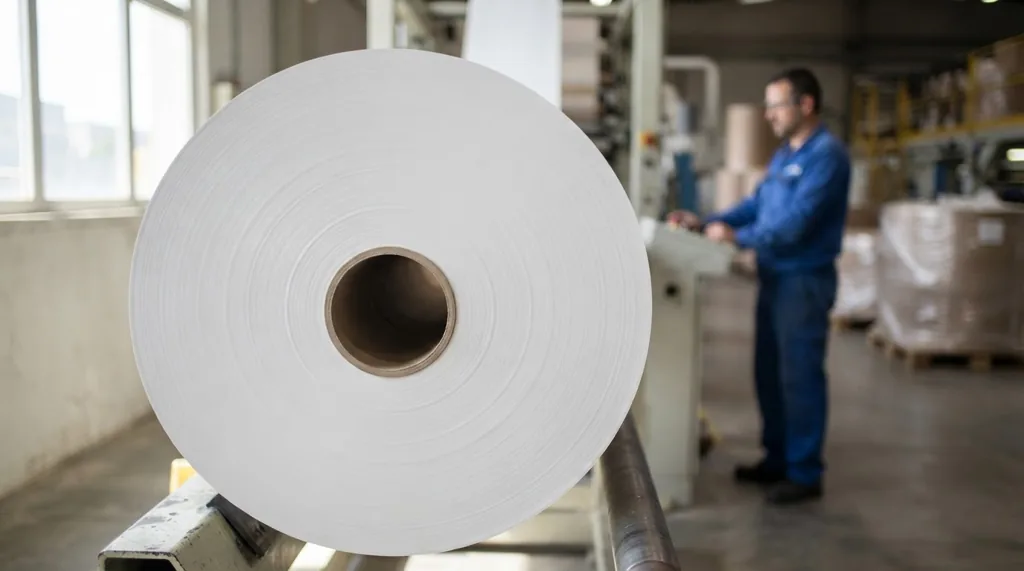
United States sets a 9.54% anti-dumping deposit on Torraspapel thermal paper from Spain, starting Nov. 16, 2026.
The U.S. Department of Commerce has set a final 9.54% anti-dumping rate for thermal paper made by Spain’s Torraspapel, applying from Nov. 16, 2026.
The decision closes a yearly review of Spanish thermal paper shipped to the United States between Nov. 1, 2023, and Oct. 31, 20241. Thermal paper carries a heat-sensitive coating2.
In short, importers of Torraspapel paper will now pay a cash deposit of 9.54% of the goods’ value at the border, down from 41.45% when the duty began. Paper from other Spanish makers keeps the old deposit of 37.07%.
What did Commerce decide on Spanish thermal paper?
Commerce found that Torraspapel S.A., the only producer and exporter in the review, sold thermal paper in the United States below its normal value1. Normal value is, roughly, the price the same paper sells for at home in Spain. Selling abroad below that price is called dumping.
The department set Torraspapel’s final dumping margin at 9.54% for the review period1. A dumping margin measures how far the U.S. price falls below normal value. It becomes the basis for the extra import tax.
The notice appears in the Federal Register, the U.S. government’s daily journal of rules and notices, on Nov. 16, 20261. It was signed on Nov. 9, 2026, which was also the deadline for these final results.
How did the rate change from May?
In its preliminary results, published on May 13, 2026, Commerce set Torraspapel’s margin at 7.69%3. The final rate of 9.54% is therefore higher than the first estimate.
Commerce said it changed the preliminary results after comments from the parties and its own review of the record1. The details sit in a separate paper, the issues and decision memorandum. That memo dealt with two questions:
- A possible calculation error: whether Commerce made a ministerial, or clerical, mistake in its figures.
- Inland freight costs in Spain: whether to base Torraspapel’s home-market transport costs on partial adverse facts available.
"Adverse facts available" means Commerce fills a gap in a company’s data with figures that work against that company. Commerce said it used partial adverse facts available to calculate Torraspapel’s final margin1. The notice points to Comment 2 of the memo, which covers the inland freight question.
In September 2026, Commerce staff checked Torraspapel’s sales data in a verification1. They looked at its sales records and original source documents.
What does the duty order cover?
The duty rests on an anti-dumping order that Commerce issued on Nov. 22, 20212. That single order covered thermal paper from Germany, Japan, Korea and Spain. Each country has its own rates and its own yearly reviews.
What the thermal paper order covers
| Item | Rule |
|---|---|
| Jumbo rolls | At least 4.5 inches wide, 65 pounds and 20 inches across |
| Converted rolls | Under 4.5 inches wide, 70 grams per square meter or less |
| Rolls cut in third countries | Covered if cut from Spanish jumbo rolls |
| Adhesive-backed paper | Outside the order |
| Tariff codes | 4811.90.8030 and 4811.90.9030 |
The order covers two kinds of paper2:
- Jumbo rolls: large rolls at least 4.5 inches wide, weighing at least 65 pounds and at least 20 inches across. All jumbo rolls are covered, whatever the weight of the paper.
- Converted rolls: smaller rolls less than 4.5 inches wide, with a paper weight of 70 grams per square meter or less.
The paper may have a base coat, a heat-sensitive coating and a top coat, on one or both sides2. Paper with an adhesive backing, such as sticky labels, is outside the order.
The order also catches small rolls cut in a third country from Spanish jumbo rolls2. Cutting Spanish paper into receipt rolls elsewhere does not remove the duty.
Which tariff codes apply to thermal paper from Spain?
The goods usually enter under two U.S. tariff codes, 4811.90.8030 and 4811.90.90302. These belong to the Harmonized Tariff Schedule of the United States, the U.S. list of import duty codes.
The codes are only a guide. The order says the written description of the goods decides what is covered, not the code2. A shipment entered under another code can still owe the duty if it matches the description.
Why does the United States charge this duty?
Commerce first found in September 2021 that thermal paper from the four countries was sold in the United States below fair value2. On Nov. 15, 2021, the U.S. International Trade Commission (ITC) told Commerce that these imports were materially injuring a U.S. industry. The ITC is the federal body that judges harm to American producers.
Those two findings together allowed Commerce to issue the order2. In its original decision, the ITC defined the U.S. industry as all American makers and converters of jumbo thermal paper rolls4.
What rates did the 2021 order set for Spain?
When the order began, Commerce set Torraspapel’s rate at 41.45%2. It set a rate of 37.07% for all other Spanish producers and exporters, called the all-others rate.
Anti-dumping rates on Spanish thermal paper, %
The order also set rates for the other three countries2. Germany’s rate was 2.90%, and Korea’s was 6.19%. Japan’s Nippon Paper faced 140.25%, and other Japanese makers 135.06%.
The new 9.54% rate for Torraspapel is less than a quarter of its starting rate. The all-others rate for Spain has not moved since 20211.
What changes for shipments from Nov. 16, 2026?
The new deposit rates apply to all covered paper entered for sale in the United States, or taken out of a warehouse for sale, on or after Nov. 16, 20261. A cash deposit is money the importer pays to U.S. Customs and Border Protection (CBP) when the goods enter. It is an estimate of the final duty.
The notice sets four rules for the deposit1:
- Paper from Torraspapel pays a deposit of 9.54%.
- A company reviewed or investigated before, but not in this review, keeps its rate from the latest completed review.
- If the exporter has no rate of its own but the maker does, the maker’s rate applies.
- All other Spanish producers and exporters pay 37.07%, the all-others rate from 2021.
These rates stay in place until Commerce gives further notice1. In practice, a buyer of Torraspapel paper now pays far less at the border than a buyer of paper from an unnamed Spanish maker.
How will customs settle past entries?
The 9.54% rate also fixes the final duty on paper that entered during the review period1. CBP will collect the duty when it settles each entry, a step called liquidation.
Commerce worked out a separate rate for each U.S. importer that bought Torraspapel paper1. It divided the total dumping found on sales to that importer by the value of those goods at entry. Where an importer’s rate is zero or below the minimum level, CBP will settle the entries without any anti-dumping duty. The preliminary notice put that minimum at less than 0.50%3.
Some Torraspapel paper may have reached the United States through a middleman without being reported by Torraspapel1. That paper will be charged at the all-others rate of 37.07%, unless the middleman has its own rate.
Commerce plans to send these instructions to CBP no earlier than 35 days after Nov. 16, 20261. If a party files a timely case at the U.S. Court of International Trade, CBP will wait before settling the entries in question. That pause lasts until the time to ask for a court order has passed, within 90 days of publication.
What must importers file before customs settles?
The notice is a final reminder to importers of one document1. Each must file a certificate on reimbursement of duties before CBP settles its entries from the review period.
The certificate states whether the foreign maker or exporter has paid back the importer for the anti-dumping duty. If an importer does not file it, Commerce may assume the duty was paid back1. The importer could then face double anti-dumping duties.
Commerce also plans to share its calculations with the parties within five days of publication1. This lets Torraspapel and others check how the 9.54% figure was reached.
Who is affected by the Torraspapel rate?
Several groups feel the change:
- U.S. importers of Torraspapel paper pay a lower deposit than before, but a higher final rate than the May estimate of 7.69%1, 3.
- Importers of paper from other Spanish makers still pay 37.07%1.
- Converters in third countries that cut Spanish jumbo rolls into small rolls still owe the duty on that paper2.
- Customs brokers must apply the new deposit rate to entries from Nov. 16, 20261.
Could the thermal paper duty end?
The order now faces a five-year review. The ITC opened its review of the orders on Germany, Japan, Korea and Spain on Oct. 1, 20264. It will decide whether ending the orders would likely bring back injury to the U.S. industry.
Next dates for the thermal paper duty
Responses to the ITC were due by Nov. 2, 20264. Comments on whether those responses are adequate may be filed by Dec. 8, 2026. The ITC will then decide whether to hold a full review or a shorter, expedited one.
Until that review ends, the order stays in force and the new rates apply1.
Key points on the Spanish thermal paper duty
The table below sums up the final review results.
| Question | Answer |
|---|---|
| What changed? | Final anti-dumping rate for Torraspapel |
| Who issued it? | U.S. Department of Commerce |
| Which goods? | Thermal paper from Spain |
| Tariff codes | 4811.90.8030 and 4811.90.9030 |
| Torraspapel’s new rate | 9.54% |
| May preliminary rate | 7.69% |
| Rate in the 2021 order | 41.45% |
| Rate for other Spanish makers | 37.07% |
| Review period | Nov. 1, 2023, to Oct. 31, 2024 |
| New deposits start | Nov. 16, 2026 |
| Paper importers must file | Certificate on reimbursement of duties |
| Next date | ITC comments due Dec. 8, 2026 |
From Nov. 16, 2026, each shipment of Torraspapel thermal paper pays a 9.54% deposit at the U.S. border. Customs instructions on past entries follow no earlier than 35 days later1.
Sources
- ↩ Federal Register :: Thermal Paper From Spain: Final Results of Antidumping Duty Administrative Review; 2023-2024 https://www.federalregister.gov/documents/2026/11/16/2026-23274/thermal-paper-from-spain-final-results-of-antidumping-duty-administrative-review-2023-2024
- ↩ Federal Register :: Thermal Paper From Germany, Japan, the Republic of Korea, and Spain: Antidumping Duty Orders https://www.federalregister.gov/documents/2021/11/22/2021-25365/thermal-paper-from-germany-japan-the-republic-of-korea-and-spain-antidumping-duty-orders
- ↩ Federal Register :: Thermal Paper From Spain: Preliminary Results of Antidumping Duty Administrative Review; 2023-2024 https://www.federalregister.gov/documents/2026/05/13/2026-09462/thermal-paper-from-spain-preliminary-results-of-antidumping-duty-administrative-review-2023-2024
- ↩ Federal Register :: Thermal Paper From Germany, Japan, South Korea, and Spain; Institution of Five-Year Reviews https://www.federalregister.gov/documents/2026/10/01/2026-20136/thermal-paper-from-germany-japan-south-korea-and-spain-institution-of-five-year-reviews