
United States sets final anti-dumping rates of 0% to 1.69% on Indian steel threaded rod, applying from Nov. 16, 2026.
The U.S. Commerce Department set final anti-dumping rates of 0% to 1.69% on Indian steel threaded rod, applicable from Nov. 16, 2026.
The rates come from the department’s yearly check, called an administrative review, of shipments made from April 1, 2024, through March 31, 20251. Commerce received no comments on its July figures, so the final rates are the same as the preliminary ones1.
In short, U.S. importers of threaded rod from most of the Indian exporters named in the review will now pay a 1.69% cash deposit at the border. Rod from one exporter group, Nishant, will carry no anti-dumping deposit.
What did Commerce decide on Indian threaded rod?
The notice in the Federal Register, the U.S. government’s official journal, covers carbon and alloy steel threaded rod from India1. Commerce found that this rod was sold in the United States at prices below normal value during the review period1.
Final anti-dumping margin by exporter, %
An anti-dumping duty is an extra import tax on goods sold abroad below their normal price. The "dumping margin" is the size of that price gap, shown as a percentage of the goods’ value. Commerce uses it to set the duty for each exporter.
The final margins are:
- Nishant Steel Industries: 0.00%. Commerce treats Nishant Steel Industries and Nuovo Fastenings Pvt. Ltd. as one company, called "Nishant"1.
- Shree Luxmi Fasteners and The Emerging Impex: 1.69%. These two linked firms are also treated as one, called "SLF/TEI"1.
- 14 other exporters: 1.69%. These firms were not examined one by one and receive a rate set for this review1.
The notice is dated Nov. 10, 2026, and applies from Nov. 16, 20261.
Why are the final rates unchanged from July?
Commerce published its preliminary results on July 13, 20262. It invited the companies and U.S. producers involved to comment1. Nobody did, so Commerce adopted the July results as final without changes1.
Because nothing changed, the department made no new calculations to share1. It also issued no separate decision memo with the final notice1. In July, Commerce had given parties 21 days after publication to file written arguments, called case briefs2.
Which goods does the threaded rod order cover?
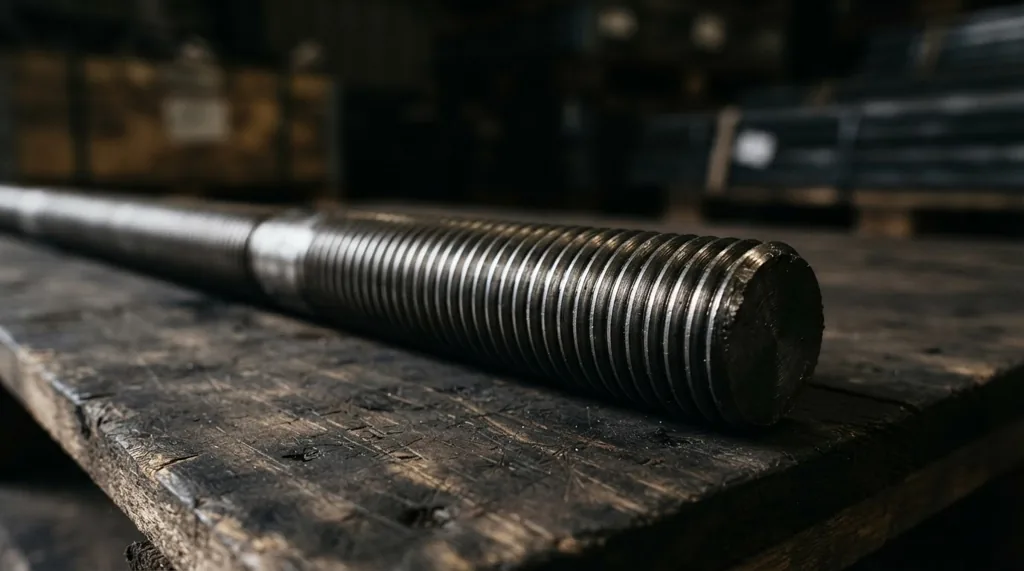
The order covers threaded rod, bar or studs made of carbon or alloy steel3. The pieces have a solid, round cross section of any width and come in any straight length3. They are threaded along more than 25% of their length and have no head3.
What the threaded rod order covers
| Point | Rule |
|---|---|
| Material | Carbon or alloy steel, solid round cross section |
| Threading | More than 25% of the length, no head |
| Finishes | Plain, oiled, galvanized, painted or similar |
| Left out | End-threaded rod, stainless steel rod, furniture hardware kits |
Such rod is normally drawn, cold-rolled, threaded and straightened, but it may also be hot-rolled3. It counts whether it is plain, oiled against rust, galvanized with zinc, painted or given a similar coating3.
The rod is usually made to American Society for Testing and Materials (ASTM) standards such as ASTM A36, A193 B7, A307 and F15543. Rod made to other standards, or to none, is still covered if it matches the description3.
Some goods are kept out of the order3:
- Rod threaded only at the ends, where the threading covers 25% or less of the length.
- Stainless steel threaded rod, meaning rod with 1.2% or less carbon and 10.5% or more chromium by weight.
- Rod packed with ready-to-assemble furniture as part of a hardware kit.
Which tariff codes are used for threaded rod?
The rod usually enters under Harmonized Tariff Schedule of the United States (HTSUS) codes 7318.15.5051, 7318.15.5056 and 7318.15.50903. It may also enter under 7318.15.2095 and 7318.19.00003.
The codes are for convenience only. The written description of the goods decides what is covered, not the code on the entry papers3.
Rod finished or packed in a third country is still covered3. That includes cutting, coating or painting the rod outside India, or packing it with another product3. When rod arrives attached to nuts and washers, only the rod itself is covered3.
Which Indian exporters get the 1.69% rate?
Commerce started the review on May 20, 2025, for 20 companies2. It picked Nishant Steel Industries and Shree Luxmi Fasteners for close checking of their sales and costs2.
The other exporters received the SLF/TEI rate of 1.69%2. Commerce’s practice is to average the margins of the checked companies, leaving out any rate that is zero or very small2. Nishant’s rate was zero, so the SLF/TEI rate was the only one left to use2.
The 14 exporters receiving the review-specific rate of 1.69% are1:
- Aadi Shree Fastener Industries
- Babu Exports
- Chirag International
- Everest Industrial Corporation
- Good Good Manufacturers
- Kanika Exports
- Kanika Fasteners Private Limited
- Kapil Enterprises
- Kapson India
- Maharaja International
- Mangal Steel Enterprise Limited
- RK Fasteners
- United Overseas Bolts & Nuts PVT LT
- Xcel Exports
Mangal Steel’s rate rises under this review. In the previous review, covering April 2023 to March 2024, Commerce found Mangal did not dump and set its margin at 0.00%4. Mangal now moves to the 1.69% rate for new shipments1.
Four companies left the review earlier. Commerce dropped three because they had no U.S. entries with duties on hold during the period2. It dropped Bee Dee Cycle Industries because the firm withdrew its own request for review on July 8, 20252.
What changes at the border from Nov. 16, 2026?
The new rates apply as cash deposits on entries from Nov. 16, 20261. A cash deposit is money the importer pays to U.S. Customs and Border Protection (CBP), the border agency, when the goods enter. It covers the estimated anti-dumping duty until the final amount is set.
Deposits are set in this order1:
- Companies named in this review pay their final margin from the review.
- Exporters not in this review, but reviewed before, keep the rate from their most recent completed review.
- If the exporter was never reviewed but its producer was, the producer’s latest rate applies.
- All other exporters pay the "all-others" rate of 0.00%, set in the original investigation.
These deposits stay in place until Commerce gives further notice1. For a shipment from SLF/TEI or one of the 14 listed firms, an importer pays 1.69% of the entered value. For a shipment from Nishant, the anti-dumping deposit is zero.
How will CBP settle shipments already made?
The review also fixes the final duty on rod that entered between April 1, 2024, and March 31, 20251. Customs calls this final settlement "liquidation".
For Nishant, CBP will settle the entries without anti-dumping duties, because its margin is zero1. For SLF/TEI, Commerce worked out a separate rate for each U.S. importer1. Each rate compares the dumping found on that importer’s sales with the total value of those sales1.
A rate below 0.5% counts as too small to charge, or "de minimis"1. If an importer’s own rate falls below that line, CBP will settle its entries without anti-dumping duties1. The 14 unchecked firms are settled at the 1.69% review rate1.
Some Nishant or SLF/TEI rod may have reached the United States through a trading company1. If the maker did not know the goods were going there, CBP uses the all-others rate of 0.00% from the original case2. This applies only if the trading company has no rate of its own1.
How did the threaded rod duties begin?
Commerce issued the anti-dumping order on threaded rod from India on April 9, 20203. It followed a finding by the U.S. International Trade Commission (ITC) that the imports were hurting U.S. makers3. The ITC sent that finding to Commerce on April 3, 20203.
Steps in the Indian threaded rod case
In the 2020 order, Daksh Fasteners had a margin of 28.34% and a cash deposit of 22.86%3. Mangal Steel and all other firms had a margin of 2.75%3. Their cash deposit was 0.00% after an adjustment for export subsidies found in a parallel case3.
Since then, Commerce has reviewed the order year by year. This review was slowed by the U.S. government shutdown. Commerce paused all its case deadlines by 47 days on Nov. 14, 2025, and by 21 more days on Nov. 24, 20252.
What must importers do next?
Importers must file a certificate on duty reimbursement before CBP settles their entries from the review period1. The certificate states whether the foreign seller paid back the importer’s anti-dumping duties1.
If an importer fails to file it, Commerce may assume the duties were paid back1. The importer could then face double anti-dumping duties1.
Commerce will send its settlement instructions to CBP no earlier than 35 days after the notice is published1. If a party starts a case at the U.S. Court of International Trade in time, CBP will wait1. It will hold the entries until the 90-day period for asking the court to block settlement has ended1.
Key points on the Indian threaded rod review
The table sums up the final review results.
| Question | Answer |
|---|---|
| What changed? | Final anti-dumping rates for Indian threaded rod |
| Who issued it? | U.S. Department of Commerce |
| Which goods? | Carbon and alloy steel threaded rod |
| Main tariff codes | 7318.15.5051, 7318.15.5056, 7318.15.5090 |
| Period reviewed | April 1, 2024, to March 31, 2025 |
| Nishant rate | 0.00% |
| SLF/TEI rate | 1.69% |
| Rate for 14 other exporters | 1.69% |
| Rate for unnamed firms | 0.00% all-others rate |
| New deposits apply from | Nov. 16, 2026 |
| Who must act? | U.S. importers, on deposits and certificates |
| Next step | CBP instructions no earlier than 35 days later |
From Nov. 16, 2026, rod from SLF/TEI and the 14 listed exporters will carry a 1.69% deposit at the U.S. border. Commerce will instruct CBP on settling the 2024-2025 entries no earlier than 35 days after publication1.
Sources
- ↩ Federal Register :: Carbon and Alloy Steel Threaded Rod From India: Final Results of Antidumping Duty Administrative Review; 2024-2025 https://www.federalregister.gov/documents/2026/11/16/2026-23272/carbon-and-alloy-steel-threaded-rod-from-india-final-results-of-antidumping-duty-administrative
- ↩ Federal Register :: Carbon and Alloy Steel Threaded Rod From India: Preliminary Results and Rescission, in Part, of Antidumping Duty Administrative Review; 2024-2025 https://www.federalregister.gov/documents/2026/07/13/2026-14069/carbon-and-alloy-steel-threaded-rod-from-india-preliminary-results-and-rescission-in-part-of
- ↩ Federal Register :: Carbon and Alloy Steel Threaded Rod From India: Amended Final Determination of Sales at Less Than Fair Value and Antidumping Duty Order https://www.federalregister.gov/documents/2020/04/09/2020-07481/carbon-and-alloy-steel-threaded-rod-from-india-amended-final-determination-of-sales-at-less-than
- ↩ Federal Register :: Carbon and Alloy Steel Threaded Rod From India: Final Results of Antidumping Duty Administrative Review; 2023-2024 https://www.federalregister.gov/documents/2026/04/10/2026-07004/carbon-and-alloy-steel-threaded-rod-from-india-final-results-of-antidumping-duty-administrative