
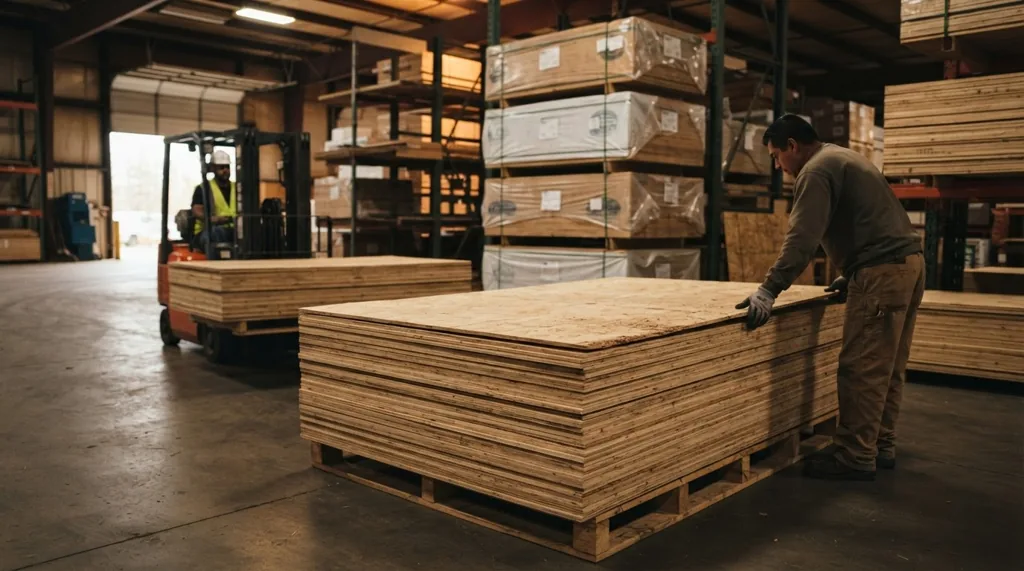
United States orders anti-dumping duties of 15.39% to 185.96% on hardwood plywood from China, Indonesia and Vietnam from Nov. 17, 2026.
The U.S. Department of Commerce issued anti-dumping duty orders on hardwood and decorative plywood from China, Indonesia and Vietnam on Nov. 17, 2026.
An anti-dumping duty is an extra import tax on goods sold abroad below their normal price. Commerce published the orders in the Federal Register, the U.S. government’s daily journal, and they apply from Nov. 17, 20261.
In short, importers of this plywood from the three countries must pay a cash deposit at the border. For Chinese plywood the deposit is about 186% of the value of the goods. Structural softwood plywood used in building is not covered.
What is changing for plywood from China, Indonesia and Vietnam?
The anti-dumping order notice turns earlier findings into permanent orders. Commerce found in July 2026 that the plywood was sold in the United States at less than fair value, which means below its normal price1. The U.S. International Trade Commission (ITC), the agency that judges harm to U.S. industry, then found that these imports hurt American makers2.
With both findings in place, Commerce told U.S. Customs and Border Protection (CBP), the border agency, to collect anti-dumping duties on the goods1. The orders are now the legal basis for duties on every future shipment.
Commerce published a second notice on the same day. It sets countervailing duty orders, an extra tax that cancels out government subsidies, on the same plywood from the same three countries3. Importers therefore face two separate duties on most shipments.
How high are the anti-dumping rates?
Each order lists a dumping margin and a cash deposit rate. The margin is how far below normal value the goods were sold. The deposit rate is the margin minus an adjustment for export subsidies already counted in the subsidy case1.
Anti-dumping cash deposit rate, %
For China, every named producer and exporter has a margin of 187.27% and a cash deposit rate of 185.96%4. The same rates apply to the China-wide entity, which covers all Chinese firms without their own rate4. The China-wide entity includes Linyi Evergreen and Xuzhou Shelter4.
For Indonesia, the rates differ by company1:
- PT Wijaya Cahaya Timber with PT Wijaya Triutama Plywood Industri: margin 15.40%, deposit 15.39%.
- PT Sengon Indah Mas with PT Java Wood Industri: margin 23.88%, deposit 23.78%.
- PT. Mustika Buana Sejahtera: margin 84.94%, deposit 84.94%.
- All other Indonesian firms: margin 18.10%, deposit 18.06%.
The Mustika Buana Sejahtera rate is based on "facts available with adverse inferences"1. This means Commerce used the least favourable data because the company did not fully cooperate. The China-wide rate rests on the same basis4.
For Vietnam, a long list of named producers and exporters each have a margin of 90.12% and a cash deposit rate of 84.95%4. The listed Vietnamese firms include Junma Phu Tho, Woodsland, Greatwood, Lam Viet and Tekcom Corporation4. Firms not listed fall under a Vietnam-wide entity rate set in the notice4.
How do the subsidy duties add to the bill?
The countervailing duty orders set separate rates on the same plywood3. For China, all firms listed and all others pay 88.96%3. That rate also rests on adverse facts3.
For Indonesia, the subsidy rates are 128.66% for PT. Mustika Buana Sejahtera, 4.22% for PT. Sengon Indah Mas and 58.39% for PT. Wijaya Cahaya Timber3. All other Indonesian firms pay 40.87%3.
For Vietnam, Junma Phu Tho pays a subsidy rate of 165.39%3. Trieu Thai Son and Nhat Duy, and all other Vietnamese firms, pay 47.68%3.
Both deposits are paid on the same shipment. A Chinese plywood shipment from a firm on the list therefore carries an anti-dumping deposit of 185.96% and a subsidy deposit of 88.96%. Together that is more than 270% of the goods’ value.
Which plywood is covered and which is left out?
The orders cover hardwood and decorative plywood1. The ITC describes this as plywood in which at least the face or back layer of wood is made of one or more types of hardwood or softwood1. The earlier investigation also covered certain veneered panels1.
What the plywood orders cover
| Item | Rule |
|---|---|
| Covered goods | Hardwood and decorative plywood |
| Tariff heading | 4412, e.g. 4412.10.05, 4412.41.00 |
| Left out | Stamped and certified softwood structural plywood (PS 1-22 or PS 2-18) |
| Also left out | Softwood structural plywood downfall |
| Why left out | ITC found those imports negligible |
The ITC’s determination lists the U.S. tariff codes where the goods are normally entered2. They fall under heading 4412 of the Harmonized Tariff Schedule of the United States, the U.S. list of tariff codes. Examples include subheadings 4412.10.05, 4412.31.06, 4412.33.06, 4412.41.00 and 4412.92.422. The written description in the order, not the code, decides whether goods are covered.
Two kinds of building plywood are not covered1:
- Stamped and certified softwood structural plywood: panels made and stamped to meet U.S. Products Standard PS 1-22 or PS 2-18, or a foreign standard Commerce accepts as equal.
- Softwood structural plywood downfall: panels from a certified structural plywood run that failed to get the stamp because of defects, such as weak bonding or low veneer grade.
The ITC found imports of these two products were negligible, or too small to matter2. It therefore ended the investigations for them2.
What happens to deposits already paid?
For the excluded structural plywood, Commerce will tell CBP to stop holding entries open. CBP will refund all cash deposits on these goods entered on or after March 2, 20261. March 2 was the date Commerce published its preliminary dumping findings4.
For Chinese plywood, Commerce had earlier found "critical circumstances"1. That finding allows duties on goods shipped in a rush before a preliminary ruling. The ITC did not agree, so Commerce told CBP to refund anti-dumping deposits on Chinese entries from Dec. 2, 2025, to before March 2, 20261.
A similar refund applies in the subsidy case. Subsidy deposits on Chinese and Vietnamese plywood entered from Oct. 24, 2025, to before Jan. 22, 2026, will be refunded3.
Which shipments owe the duties?
Anti-dumping duties apply to covered plywood entered on or after March 2, 20261. There is one gap. Entries made after the provisional measures period ended and before the ITC final findings were published do not owe the duties1.
Key dates for plywood duties
The ITC’s final determinations appeared in the Federal Register on Sept. 9, 20262. From that date CBP holds covered entries open and requires a cash deposit at the rates in the orders1. The deposit is paid at the same time as the importer would normally deposit estimated duties1.
The subsidy duties follow a similar pattern but start earlier. They apply to entries on or after Jan. 22, 2026, when Commerce’s preliminary subsidy findings were published3. Entries made after May 21, 2026, and before the ITC findings were published do not owe subsidy duties3.
Why did Commerce and the ITC act?
The case began with petitions from the Coalition for Fair Trade in Hardwood Plywood2. Its members are Columbia Forest Products, Commonwealth Plywood, Manthei Wood Products, States Industries and Timber Products Company2. The ITC opened its investigations effective May 22, 20252.
The ITC held a public hearing on July 16, 20262. On Sept. 4, 2026, it found that a U.S. industry is materially injured by these imports2. Material injury is the legal test for harm that justifies duties.
Commerce’s final dumping findings for all three countries were published on July 21, 20261.
Who is affected by the plywood orders?
U.S. importers pay the deposits and carry the cost. That includes furniture and cabinet firms that commented in the case, such as Cabinetworks Group and MasterBrand Cabinets4. Lumber traders such as Northwest Hardwoods and Viking Forest Products also took part4.
Plywood makers and exporters in China, Indonesia and Vietnam face high rates in the U.S. market. A buyer can still import from them, but must pay the deposit for each shipment. Firms with lower rates, such as PT Wijaya Cahaya Timber in Indonesia, keep a price advantage.
Customs brokers must enter the correct anti-dumping and subsidy case numbers and rates for each shipment. The anti-dumping cases are numbered A-570-211 for China, A-560-844 for Indonesia and A-552-851 for Vietnam4.
What comes next for the plywood scope?
Several parties asked Commerce to set up a certification program for the scope changes1. Under such a program, importers would sign a statement that their goods are outside the orders. Commerce will deal with these comments later in a changed circumstances review, a new review of whether the orders need adjusting1.
The order notices also set up yearly contact lists for each order. Parties who want to be told of scope requests must sign up within set deadlines in Commerce’s online filing system3. The deposit instructions stay in force until further notice1.
Key points on the hardwood plywood duty orders
The table sums up the main facts of the orders.
| Question | Answer |
|---|---|
| What changed | Anti-dumping duty orders issued |
| Who issued it | U.S. Department of Commerce |
| Goods covered | Hardwood and decorative plywood |
| Countries | China, Indonesia, Vietnam |
| China deposit rate | 185.96% (margin 187.27%) |
| Indonesia deposit rates | 15.39% to 84.94% |
| Vietnam deposit rate (listed firms) | 84.95% (margin 90.12%) |
| Extra subsidy duty | 88.96% for China |
| Goods left out | Certified structural softwood plywood and downfall |
| Who pays | U.S. importers, at entry |
| Orders apply from | Nov. 17, 2026 |
| Duty covers entries from | March 2, 2026 |
Every shipment of covered plywood from the three countries now enters with a cash deposit. Chinese plywood carries combined deposits of more than 270% of its value. The next step is Commerce’s changed circumstances review of the certification program.
Sources
- ↩ Federal Register :: Hardwood and Decorative Plywood From the People’s Republic of China, Indonesia, and the Socialist Republic of Vietnam: Antidumping Duty Orders https://www.federalregister.gov/documents/2026/11/17/2026-23386/hardwood-and-decorative-plywood-from-the-peoples-republic-of-china-indonesia-and-the-socialist
- ↩ Federal Register :: Hardwood and Decorative Plywood From China, Indonesia, and Vietnam; Determinations https://www.federalregister.gov/documents/2026/09/09/2026-18367/hardwood-and-decorative-plywood-from-china-indonesia-and-vietnam-determinations
- ↩ Federal Register :: Hardwood and Decorative Plywood From the People’s Republic of China, Indonesia, and the Socialist Republic of Vietnam: Countervailing Duty Orders https://www.federalregister.gov/public-inspection/2026-23393/antidumping-or-countervailing-duty-investigations-orders-or-reviews-hardwood-and-decorative-plywood
- ↩ 2026-23386.pdf https://public-inspection.federalregister.gov/2026-23386.pdf