
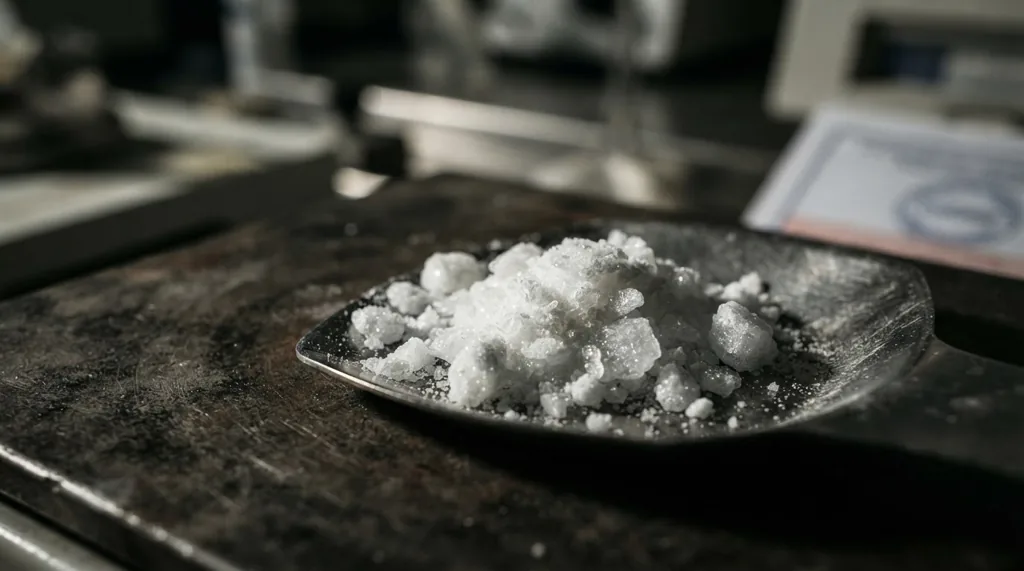
European Union customs must register acetylsalicylic acid imports from China from Oct. 30, 2026, so later anti-dumping duties can apply.
The European Commission ordered customs to register imports of aspirin’s active ingredient, acetylsalicylic acid, from China, starting Oct. 30, 2026.
The order is Commission Implementing Regulation (EU) 2026/2390 of Oct. 28, 2026, published in the Official Journal of the European Union on Oct. 291. It enters into force the day after publication1.
In short, every shipment of this chemical from China will now be recorded at the EU border. If the EU later sets anti-dumping duties, importers could be billed for shipments that arrived during the registration period.
Why is the EU registering Chinese acetylsalicylic acid?
Registration is linked to an anti-dumping investigation. An anti-dumping duty is an extra import tax on goods sold abroad below their normal price. The Commission opened this investigation on Sept. 23, 2026, by a notice in the Official Journal1.
The investigation followed a complaint lodged on Aug. 10, 2026, by Novacyl SAS, a European producer2. The regulation says the complaint was made on behalf of producers with more than 25% of total EU production of acetylsalicylic acid1.
The regulation states the purpose of registration plainly. It is to make sure that duties, if any, can be charged retroactively, meaning on imports that entered before the duties were set1. The Commission took this step on its own initiative1.
Which product does the aspirin registration cover?
The order covers one chemical. It is o-acetylsalicylic acid (CAS RN 50-78-2) originating in China1. CAS RN is the Chemical Abstracts Service registry number, a standard identity number for a chemical.
What the registration order covers
| Point | Provision |
|---|---|
| Product | o-acetylsalicylic acid (CAS RN 50-78-2) |
| Customs codes | CN ex 2918 22 00, TARIC 2918 22 00 20 |
| Origin | China |
| Duty now | None, registration only |
| Duration | Nine months from entry into force |
Customs classifies the product under the following codes1:
- CN code ex 2918 22 00, the EU’s Combined Nomenclature tariff code. The "ex" means only part of that code is covered.
- TARIC code 2918 22 00 20, the EU’s more detailed customs code for this product.
The initiation notice says the CN code is given for information only2. The product description decides what is covered, not the code2. Acetylsalicylic acid of the same type from other countries is not part of this registration1.
What does registration change at the EU border?
Article 1 of the regulation directs the customs authorities of EU member states to register these imports1. In practice, customs will record each import declaration for the product from China. This creates a record of quantities and dates that the EU can use later.
Registration does not add any duty today. No money is collected at the border because of the order alone. The regulation says any future liability would come from the findings of the anti-dumping investigation1.
The regulation also says the conditions for collecting duties retroactively will be assessed later1. That assessment will happen in the regulation that imposes definitive duties, if there is one1. So the bill, if any, comes later, but it can reach back to goods already cleared.
How large could a future duty on aspirin ingredient be?
The complaint gives estimates for 2025. It estimates dumping margins of 20% to 45% for the period from Jan. 1, 2025, to Dec. 31, 20251. A dumping margin is the gap between the normal price and the export price, shown as a share of the export price.
Estimates in the complaint, 2025, % (midpoint of range)
The complaint also estimates an injury elimination level of 49% to 78%1. This is the price increase needed to stop the harm to European producers.
Under EU rules, a future duty would normally be set at the lower of the two levels1. The Commission stresses that it cannot yet estimate the amount of any future liability1. The figures from the complaint are for information only and create no expectation about the final rate1.
What does the complaint say about China’s prices?
The complainant argues that domestic prices and costs in China cannot be used2. It says significant state distortions affect prices and costs there2. For this claim it relies on a Commission staff working document on distortions in China’s economy, dated April 10, 20242.
The complaint points to state presence in the chemicals sector2. It also points to distortions in land, energy, capital, raw materials and labour2. It cites China’s 14th and 15th Five-Year Plans and China’s Company Law2.
Because of these claims, the complaint builds a "normal value" from undistorted costs and benchmarks2. It compares this value with the export price to the EU, both at the factory gate (ex-works level)2. The complainant proposes Brazil as the representative country for these benchmark costs2. The Commission found enough evidence to examine the case on this basis2.
What harm do European producers claim?
The complaint says imports from China have increased their market share overall2. It says the volume and prices of these imports hurt European producers2.
The harm described covers lower sales quantities, lower prices and a smaller market share2. The complaint also points to effects on the industry’s overall performance, its finances and its jobs2. The investigation will decide whether dumping exists and whether it caused this harm2.
If both findings are positive, the Commission will then check whether duties would be against the wider EU interest2. That test is set out in Article 21 of the EU’s basic anti-dumping law, Regulation (EU) 2016/10362.
Who is affected by the acetylsalicylic acid registration?
Several groups have a stake in this order:
- Importers in the EU of acetylsalicylic acid from China. They may face a duty bill later on shipments cleared during registration.
- Exporting producers in China. The Commission has invited them to take part in the investigation2. It may pick a sample of them if there are many2.
- Unrelated importers, meaning buyers not linked to the Chinese exporters. They are also invited to take part, and may be sampled too2.
- Medicine makers and other buyers in the EU who use the chemical. Their supply costs could rise if duties follow.
For importers, the main change is risk. A price agreed today may not be the final cost of a shipment. Contracts signed during registration may need to account for a possible later duty.
What are the dates in the acetylsalicylic acid case?
The investigation covers dumping and injury from April 1, 2025, to March 31, 20262. Trends in injury will be examined from Jan. 1, 2022, to the end of that period2.
Key dates in the case
The initiation notice set short deadlines, counted from its Sept. 23, 2026, publication1. They include2:
- 10 days for information on the product scope.
- 15 days to request a hearing on the start of the investigation.
- 15 days for Chinese producers to report the materials and energy they use.
- 37 days for comments on the complaint and on the distortion claims.
- 65 days for factual information on costs and prices.
Sampled Chinese exporters must return a completed questionnaire within 30 days of being told they are in the sample2. Comments on the sample selection are due within 3 days of that decision2.
How long does registration last?
The regulation says registration expires nine months after its entry into force1. With entry into force on Oct. 30, 2026, registration runs until late July 2027, unless measures replace it.
Under the regulation, personal data collected during registration will be handled under the EU’s data protection rules for its institutions, Regulation (EU) 2018/17251.
The EU’s basic anti-dumping law allows registration of imports under investigation so that measures can be applied to them later3. It also provides for duties to be collected retroactively in defined cases3. Regulation 2026/2390 uses that power under Article 14(5)1.
Key points on the Chinese acetylsalicylic acid registration
The table sums up the order and the case behind it.
| Question | Answer |
|---|---|
| What changed? | Customs must register imports |
| Who issued it? | European Commission |
| Legal act | Implementing Regulation (EU) 2026/2390 |
| Which goods? | o-acetylsalicylic acid (CAS RN 50-78-2) |
| Customs code | TARIC 2918 22 00 20 |
| Which origin? | China |
| Duty now? | None, registration only |
| Estimated dumping margins | 20% to 45% |
| Estimated injury level | 49% to 78% |
| Start date | Oct. 30, 2026 |
| How long? | Nine months |
| Complainant | Novacyl SAS |
Shipments of acetylsalicylic acid from China entering the EU from Oct. 30, 2026, will be on record. If the investigation ends in duties and the conditions are met, those shipments could carry a duty bill after they have cleared customs.
Sources
- ↩ Implementing regulation – EU – 2026/2390 – EN – EUR-Lex https://eur-lex.europa.eu/eli/reg_impl/2026/2390/oj
- ↩ EUR-Lex – 52026XC04913 – EN – EUR-Lex https://eur-lex.europa.eu/eli/C/2026/4913/oj
- ↩ Regulation – 2016/1036 – EN – EUR-Lex https://eur-lex.europa.eu/eli/reg/2016/1036/oj