
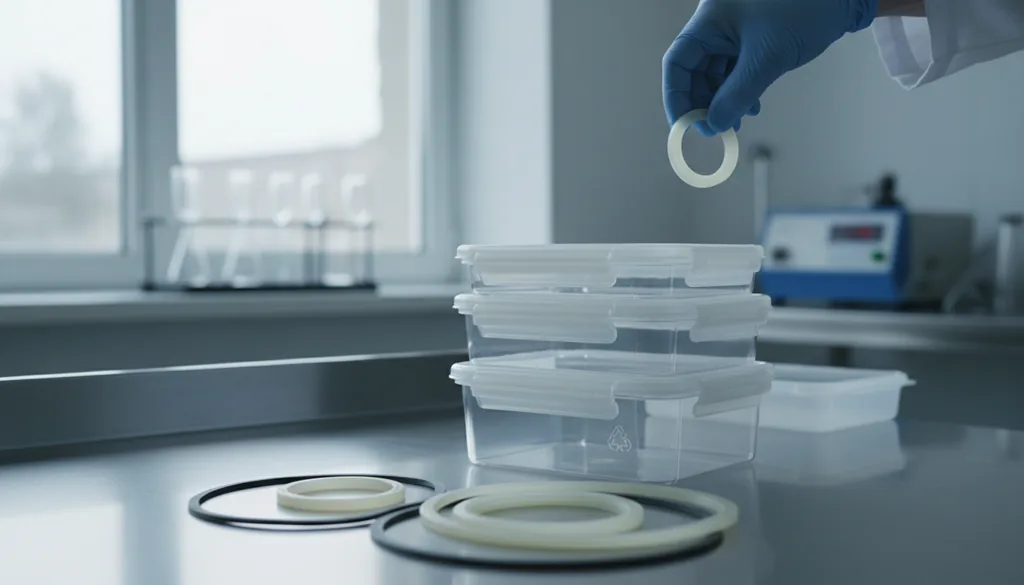
Israel has updated its public health protections for food contact materials by aligning with updated EU provisions and banning bisphenol use in food-contact products, effective from 5786–2026 ****
Israel has banned the use of bisphenol A (BPA) and other bisphenols in food-contact materials, aligning its regulations with updated EU rules. The measure, which takes effect on 8 August 2026, applies to all plastic products designed to come into contact with food, from packaging to kitchenware. The change follows a scientific reassessment by the European Food Safety Authority (EFSA), which found that even low levels of BPA exposure pose health risks to all age groups1.
The new rules will affect a wide range of goods, including reusable water bottles, food storage containers, baby bottles, and canned food linings. The ban extends to bisphenol derivatives with similar hazardous properties, closing a loophole that previously allowed manufacturers to substitute BPA with chemically related compounds. Only a handful of exemptions remain for essential uses where no migration into food occurs1.
The ban and its scope
The prohibition stems from EU Commission Regulation 2024/3190, adopted in December 2024, which Israel is now mirroring. The regulation removes BPA from the list of approved substances in EU Regulation 10/2011, which Israel had already incorporated into its public health laws in 2021. The Israeli Ministry of Health issued a separate order in March 2025 to adopt the EU’s updated restrictions, setting the 8 August 2026 deadline for compliance1.
The ban covers all plastic materials and articles intended for food contact, including those made from recycled plastics. It also applies to coatings, adhesives, and printing inks used in food packaging. The ministry said in a statement that the measure aims to "prevent the migration of harmful substances into food, particularly for vulnerable populations such as infants and young children"1.
What the rules change
Under the previous regime, BPA was permitted in food-contact plastics at controlled migration limits. The new rules eliminate those limits entirely, imposing a blanket prohibition on its use. The EU’s 2024 regulation also introduces a mechanism to automatically ban any bisphenol derivative classified as hazardous under harmonised EU chemical safety rules, preventing manufacturers from replacing BPA with equally risky alternatives1.
BPA in food-contact plastics, before and after
| Question | Previous regime | From 8 Aug 2026 |
|---|---|---|
| Use of BPA | Permitted with migration limits | Blanket prohibition |
| Bisphenol S and other substitutes | Allowed as BPA replacements | Same ban as BPA |
| Derivatives later classified hazardous | Could replace banned BPA | Banned automatically |
| Annex I of Regulation 10/2011 | BPA (no. 768) approved | BPA removed; five bisphenols restricted |
The Israeli order amends Annex I of Regulation 10/2011, removing BPA (substance number 768) and adding new restrictions for five other bisphenols (numbers 1084, 1089, 1092, 1093, and 1094). For example, bisphenol S (BPS), a common BPA substitute, is now subject to the same ban. The ministry’s notification to the WTO said the changes "reflect the latest scientific consensus on the health risks of bisphenols".
Who pays and what it costs
The delivered cost of compliant materials is expected to rise, as manufacturers shift to alternative chemicals or redesign products. The ministry has not estimated the impact on prices, but industry groups in the EU have warned that replacing BPA in can linings and polycarbonate plastics could increase production costs by 10-20%2. In Israel, the burden falls on importers, who must ensure all food-contact plastics entering the market after 8 August 2026 meet the new standards.
Companies selling products that fail to comply will face penalties under Israel’s public health laws. The Ministry of Health said it will conduct random testing of imported and domestically produced food-contact materials, with non-compliant shipments subject to seizure or recall. The ministry’s enforcement powers include fines and, in severe cases, criminal charges for repeated violations3.
The transition period
The 19-month window between the order’s publication in January 2025 and its enforcement in August 2026 is intended to allow businesses to deplete existing stock and reformulate products. However, the ministry’s notification to the WTO noted that "the transition period may be insufficient for some sectors, particularly those reliant on long supply chains or specialised materials"1.
The 19-month transition window
The ministry has not announced plans for a grace period or phased implementation. Instead, it has directed importers to begin sourcing compliant materials immediately. The WTO notification said that "after 8 August 2026, no food-contact material containing BPA or restricted bisphenols may be placed on the market, regardless of when it was manufactured"1.
What the ban does not cover
The new rules apply only to plastics and do not extend to other food-contact materials such as glass, ceramics, or metals. However, the ministry said it is reviewing whether to expand the restrictions to these categories in the future. The current ban also does not address microplastics or other chemical contaminants that may leach from plastics, though the ministry has flagged these as areas for future regulation2.
What the ban does not reach
The order does not change Israel’s existing requirements for food-contact materials, such as testing and certification. All plastics must still comply with the general safety provisions of EU Regulation 1935/2004, which Israel adopted in 2021. These require that materials do not release substances in quantities that could endanger human health or alter food composition3.
The broader context
The ban is part of a wider global shift away from BPA, driven by growing evidence of its endocrine-disrupting effects. The EU first restricted BPA in baby bottles in 2011 and has since tightened controls on its use in other food-contact materials. The United States, Canada, and several Asian countries have also imposed partial or total bans on BPA in food packaging4.
In Israel, the move follows a 2023 national health survey that found detectable levels of BPA in the urine of 95% of infants tested. The survey, conducted by the Ministry of Health, linked BPA exposure to increased risks of developmental disorders and metabolic diseases. The ministry said the new rules are "a critical step in reducing unnecessary chemical exposure, particularly for children".
What comes next for food contact plastics
The ministry has committed to reviewing the ban’s impact within two years of its implementation. The review will assess compliance rates, market availability of alternative materials, and any unintended consequences, such as the emergence of new, unregulated bisphenol substitutes. The ministry said it will also consider extending the restrictions to non-plastic food-contact materials if evidence of risk emerges1.
For now, importers and manufacturers must focus on ensuring their products meet the 8 August 2026 deadline. The ministry has published guidance on its website, including a list of approved alternative substances and testing protocols. However, it has not yet released detailed enforcement plans, leaving some uncertainty about how strictly the new rules will be applied5.
Sources
- ↩ WTO SPS notification 26-03913 — Israel https://members.wto.org/crnattachments/2026/SPS/ISR/26_03913_00_e.pdf
- ↩ Food Contact Plastic Recycling Regulations https://www.gov.il/BlobFolder/reports/webinar-food-con-regulation/he/tkina-yeda_FCM-training226225.pdf
- ↩ Regulation on Food Contact Materials (32004R1935) https://www.gov.il/files/economy/Asdarot/18-reg-1935-2004-he.pdf
- ↩ Baby Food from Food Bags: Sucking and Health Effects https://www.gov.il/BlobFolder/policy/baby-health-food-pouches/he/files_regulation_nutrition_division_Baby-health-food-pouches.pdf
- ↩ Adopted Provisions of the Hagodah Law on Public Health (Food), 5776 https://mohpublic.health.gov.il/FCS/1935_2004_materials_and_articles_HE.pdf