
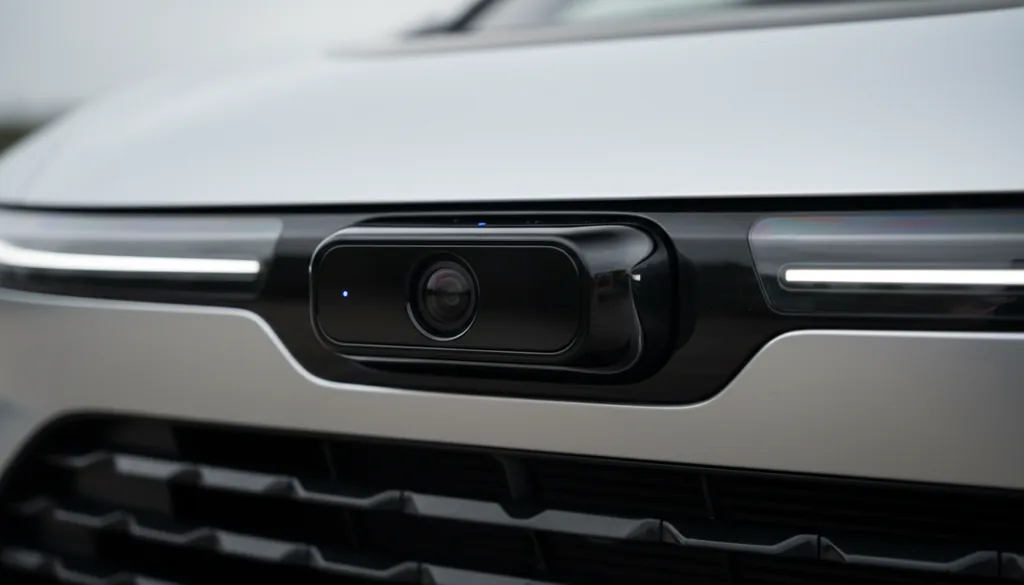
United States of America has modernized safety standards for ADS-equipped vehicles through the updating of FMVSS No. 135 and FMVSS No. 110, while withdrawing its prior safety evaluation program, reflecting a comprehensive regulatory shift in autonomous vehicle oversight
The US National Highway Traffic Safety Administration (NHTSA) has proposed sweeping changes to federal vehicle safety standards to accommodate autonomous driving systems (ADS), removing requirements designed for human drivers while extending the public comment period for key rules to 26 August 20261.
The measures target four core safety standards—braking, transmission controls, windshield systems and tire placards—covering passenger cars, light trucks and robotaxis under 4,536 kg (10,000 lb). Manufacturers will no longer need to install manual shift displays, defrosting controls or wiper stalks in vehicles that lack steering wheels or pedals, but must still meet the same crash-avoidance performance2. The delivered cost of compliance is expected to fall for ADS-dedicated vehicles, while conventional models retain all existing requirements.
It comes after a decade of piecemeal exemptions and voluntary guidance that left the same vehicle subject to conflicting rules. Under the 2015 FAST Act, companies could test non-compliant prototypes on public roads as long as they did not sell them; Zoox, for example, received a temporary waiver in 2025 for a robotaxi that omitted manual controls3. The new proposals replace that patchwork with a single set of performance-based standards for vehicles that will never be driven by humans.
The brake standard that no longer needs a driver
NHTSA published a notice of proposed rulemaking (NPRM) on 26 June 2026 to amend FMVSS No. 135, the light-vehicle brake standard, distinguishing between vehicles with and without manually operated driving controls1. The proposal keeps the same stopping distances—53 m from 100 km/h for passenger cars—but removes the requirement for a foot-operated service brake in ADS-only models4. Instead, the braking system must be capable of being activated by the ADS itself, with the same reliability and redundancy as a human-operated system.
FMVSS No. 135, two compliance paths
| Requirement | With manual controls | ADS-only models |
|---|---|---|
| Stopping distance | 53 m from 100 km/h | Same 53 m from 100 km/h |
| Foot-operated service brake | Required | Removed |
| Brake activation | By the human driver | By the ADS itself |
| Reliability and redundancy | As a human-operated system | Same as human-operated |
The change is the first to a crash-avoidance standard since NHTSA updated occupant-protection rules in 2022 to exclude vehicles designed without any seats5. That earlier rulemaking defined “manually operated driving controls” as any device intended for use by a human driver, a definition now used to split every FMVSS into two compliance paths. Manufacturers must still certify that every vehicle meets the standard applicable to its design, but the testing and approval process is streamlined for models that will never carry a human operator.
Public comments on the brake proposal were originally due on 27 July 2026; NHTSA extended the deadline by 30 days after a request from law firm Varnum LLP1. The agency said the extra time would allow stakeholders to assess the technical translations of test procedures, which now include scenarios where the ADS initiates emergency braking without human input2.
Transmission, windshield and tire rules rewritten for robotaxis
Three further NPRMs, published between 16 March and 1 April 2026, remove regulatory barriers in FMVSS Nos. 102, 103, 104 and 1102. FMVSS No. 102, which governs transmission shift sequences, will no longer require a visible gear indicator in vehicles that lack a manual shifter. FMVSS Nos. 103 and 104, covering windshield defrosting and wiping systems, are amended to exempt ADS-only vehicles from controls intended for human drivers; the systems themselves must still function, but can be activated automatically by the ADS.
Comment deadlines by standard
| Deadline | Standards caught | What changes |
|---|---|---|
| 1 May 2026 | FMVSS No. 110 (tire and rim) | Placard to left side if no driver’s side |
| 26 Aug 2026 | FMVSS Nos. 102, 103 and 104 | Shift display, defrost and wipe controls exempted for ADS-only |
FMVSS No. 110, which sets tire and rim requirements, is the only standard to receive a targeted change: the placard that lists tire pressure and load capacity must now be affixed to the left side of the vehicle if there is no driver’s side. The rule applies only to vehicles under 4,536 kg (10,000 lb) and does not alter the information that must be displayed. NHTSA estimates the modification will save manufacturers up to $1.2m annually in redesign costs without reducing safety5.
All four proposals are open for comment until 1 May 2026 for FMVSS No. 110 and 26 August 2026 for the others5. The agency has not set a date for final rules, but the documents indicate that the changes will take effect no earlier than 2027, with a phase-in period for new models.
The safety program that replaces voluntary guidance
Alongside the rulemakings, NHTSA has proposed a new Automated Driving System Safety, Transparency, and Evaluation Program (AV STEP), a voluntary framework for manufacturers and developers of ADS-equipped vehicles6. Participants would submit independent safety assessments—including safety cases and conformance to industry standards—for review by NHTSA before deploying vehicles on public roads. The program requires periodic reporting on incidents, disengagements and software updates, with all data made public unless protected by confidentiality agreements.
What AV STEP asks of participants
AV STEP is designed to fill the gap between the current self-certification regime and future minimum performance standards for ADS. Under existing law, manufacturers can sell ADS-equipped vehicles as long as they certify compliance with all applicable FMVSS; NHTSA has no authority to approve or reject the technology itself6. The new program does not change that legal structure, but adds a layer of oversight for companies that choose to participate. NHTSA said the voluntary approach would allow it to gather data on real-world performance while the technology matures, with the goal of eventually developing mandatory standards6.
The proposal is the first major update to NHTSA’s ADS guidance since 2017, when the agency published Automated Driving Systems 2.0: A Vision for Safety (ADS 2.0)7. That document streamlined earlier voluntary guidance into 12 priority safety design elements, but did not include a formal application process or public reporting requirements. AV STEP retains the 12 elements while adding new transparency measures, including a public docket for all safety assessments and incident reports8.
What the changes leave untouched
The proposals do not alter crashworthiness standards for vehicles that carry human occupants, nor do they create new performance requirements for ADS itself. FMVSS No. 135, for example, still mandates the same stopping distances regardless of whether the vehicle is operated by a human or an ADS; the only change is the removal of the foot-pedal requirement for ADS-only models4. Similarly, FMVSS Nos. 201, 202a, 207, 209, 210, 214, 216a, 219 and 226—covering occupant protection, seating and glazing—remain unchanged for vehicles with traditional seating positions2.
The agency has also declined to amend FMVSS No. 111, the rear visibility standard, which requires a rearview camera and image display for human drivers. NHTSA said the standard meets a motor vehicle safety need regardless of whether the vehicle is operated by a human or an ADS, and that removing the requirement would violate federal law9. The decision leaves manufacturers of ADS-only vehicles with two options: install a camera and display for human occupants, or seek a temporary exemption under the existing process.
Temporary exemptions remain available under 49 U.S.C. 30112, which allows NHTSA to grant waivers for up to 2,500 vehicles per manufacturer per year if the agency determines the vehicle provides an equivalent level of safety3. Zoox received the first such exemption in 2025 for a robotaxi that omitted manual controls, defrosting systems and wiper stalks; the company was required to affix a label to every vehicle stating which standards it did not meet3. The new rulemakings would eliminate the need for similar exemptions for ADS-only vehicles, but the exemption process will remain in place for other non-compliant designs.
The timeline and the next steps
NHTSA has extended the comment period for the brake standard to 26 August 2026, matching the deadlines for the transmission, windshield and tire proposals1. The agency said it would review all comments before issuing final rules, which are expected to take effect no earlier than 20272. Manufacturers will then have a phase-in period to comply with the new requirements, though the exact timeline has not been announced.
From proposal to binding rules
The AV STEP program is also open for comment, with a one-year public docket that may be extended7. NHTSA said it would release draft chapters of updated guidance as they become available, with the goal of consolidating them into a single document after reviewing public feedback. The agency has not set a date for finalizing the program, but the documents indicate it could be operational by 2028.
For now, the proposals signal a shift from voluntary guidance to binding rules, with the same safety performance required of every vehicle regardless of how it is operated. The changes remove redundant requirements for ADS-only models while preserving the existing framework for conventional vehicles, setting the stage for a mixed fleet of human-driven and autonomous vehicles on US roads.
Sources
- ↩ Federal Motor Vehicle Safety Standards; Modernization of FMVSS No. 135 To Accommodate ADS-Equipped Vehicles https://docs.wto.org/imrd/directdoc.asp?DDFDocuments/T/G/TBTN26/USA2294A1.docx
- ↩ AV Framework Updates and Request for Comments on Interim Guidance https://www.federalregister.gov/documents/2026/07/31/2026-15483/av-framework-updates-and-request-for-comments-on-interim-guidance
- ↩ Zoox Grants Temporary Exemption from Vehicle Safety Requirements https://www.federalregister.gov/documents/2026/07/31/2026-15485/zoox-grant-of-temporary-exemption-from-portions-of-various-requirements-of-the-federal-motor-vehicle
- ↩ Modernization of FMVSS 103 and 104 for ADS-Equipped Vehicles https://www.federalregister.gov/index/2026/national-highway-traffic-safety-administration
- ↩ Modernization of FMVSS No. 110 for ADS-Equipped Vehicles https://www.federalregister.gov/documents/2026/04/01/2026-06254/federal-motor-vehicle-safety-standards-modernization-of-fmvss-no-110-to-accommodate-ads-equipped
- ↩ ADS-Equipped Vehicle Safety, Transparency, and Evaluation Program https://www.federalregister.gov/documents/2025/01/15/2024-30854/ads-equipped-vehicle-safety-transparency-and-evaluation-program
- ↩ Updating and Expanding Guidance on Safe Development and Deployment of Automated Driving Systems https://www.federalregister.gov/documents/2026/07/31/2026-15484/updating-and-expanding-guidance-on-safe-development-and-deployment-of-automated-driving-systems
- ↩ Federal Register Notice 2026-15484 https://public-inspection.federalregister.gov/2026-15484.pdf
- ↩ NHTSA Docket No. NHTSA-2026-0728 – July 23, 2026 https://downloads.regulations.gov/NHTSA-2026-0728-0051/attachment_1.pdf