
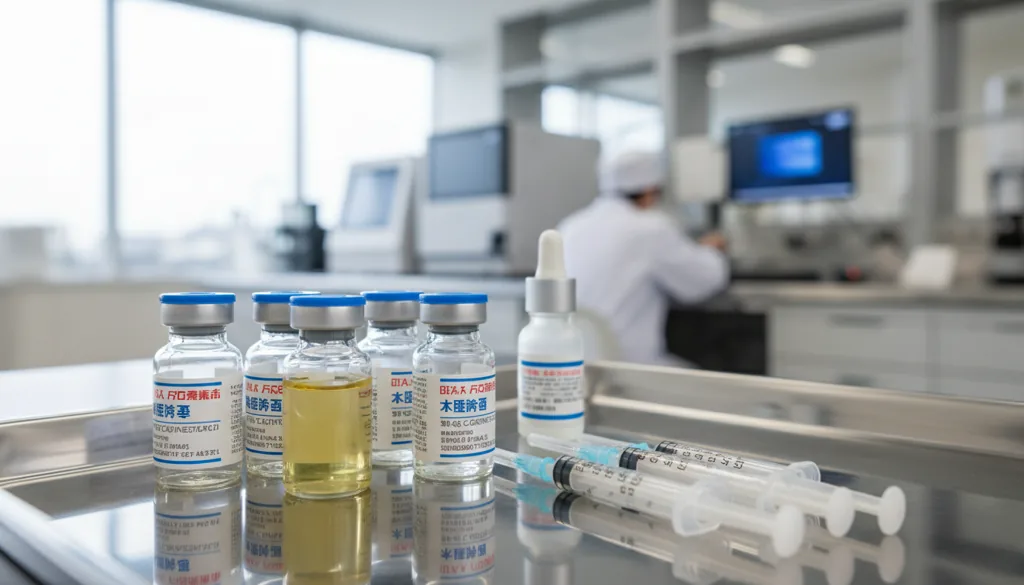
Japan has refined standards for product quality and safety in biological products through partial amendments to national release testing requirements. The updates also emphasize product quality and consistency, reinforcing regulatory oversight in the sector. A separate amendment further strengthens the minimum requirements for biological products, ensuring compliance with evolving safety benchmarks.
Japan’s health ministry has tightened release testing and safety standards for biological products, affecting importers, manufacturers and distributors of vaccines, blood products and cell-based therapies. The changes, which take effect on 1 April 2027, raise the bar for quality control, viral clearance and traceability of animal-derived raw materials. Every batch shipped into Japan will now face stricter pre-market scrutiny, adding time and cost to supply chains that already run on narrow margins.
The new rules cover the full spectrum of pharmaceuticals classified under Harmonised System chapter 30—from seasonal flu vaccines to monoclonal antibodies and gene therapies. Delivered cost for a single 10-litre bioreactor batch can rise by ¥2.5 million ($16,500; £13,000) once testing, documentation and potential rework are factored in. The ministry said in a statement that the amendments “reflect evolving international benchmarks and address gaps identified in recent adverse-event reports”1.
The testing regime expands
National release testing now applies to every biological product, regardless of whether it is manufactured domestically or imported. Importers must submit a pre-issued import permit for each shipment, accompanied by a full certificate of analysis that meets the new minimum requirements1. The certificate must list every animal-derived raw material—down to the species, organ and country of origin—and confirm that it has passed viral inactivation steps set out in the ministry’s updated standards2.
What every batch must now clear
Testing protocols have been harmonised with World Health Organization guidelines. For example, bovine-derived materials must now withstand a minimum of 121 °C for 15 seconds or 101 °C for 30 seconds to inactivate prions3. Similar heat treatments are prescribed for porcine, avian and human-derived inputs. The ministry’s Q&A document clarifies that “simulated viral clearance studies are no longer accepted; actual process validation data must be submitted”4.
Animal-derived materials face stricter sourcing rules
A separate set of amendments to the “Standards for Biological Raw Materials” introduces a risk-tiered approach. Materials from ruminants—cattle, sheep, goats and deer—are now classified as high-risk and require additional documentation. Importers must provide a certificate of origin that traces each animal back to its birth farm and slaughterhouse, including negative test results for bovine spongiform encephalopathy and scrapie3.
Sourcing rules by risk tier
| Requirement | Ruminant (high-risk) | Non-ruminant (medium-risk) | Human-derived |
|---|---|---|---|
| Covers | Cattle, sheep, goats, deer | Chicken eggs, pig gelatin | Plasma, stem cells |
| Traceability | Birth farm and slaughterhouse | Waived if negligible-risk country | Existing blood-product rules |
| TSE test results | Negative BSE and scrapie tests | Not required | Not required |
| Viral clearance | Required | Required | Per existing standards |
| Record retention | Per new standards | Per new standards | 20 years |
Non-ruminant animal materials, such as chicken eggs or pig gelatin, fall into a medium-risk category. These still require viral clearance validation, but the ministry has waived the full traceability requirement if the supplier can demonstrate that the material was sourced from a country recognised as negligible-risk by the World Organisation for Animal Health3. Human-derived materials, including plasma and stem cells, remain subject to the existing blood-product regulations, which mandate 20-year record retention5.
Documentation burden grows
Every shipment must now carry a product-specific dossier that includes:
- the pre-issued import permit
- the certificate of analysis
- the certificate of origin for animal-derived materials
- a declaration that the manufacturing site complies with Japan’s Good Manufacturing Practice (GMP) standards6.
The dossier must be submitted electronically via the Pharmaceuticals and Medical Devices Agency (PMDA) portal at least 15 working days before the shipment arrives. Late filings trigger automatic rejection; there is no grace period1. The PMDA’s annual GMP report, published in July 2026, noted that “incomplete dossiers were the single largest cause of import delays in the previous fiscal year”6.
Who pays, and how much
The importer bears all costs. Testing fees range from ¥120,000 ($790) for a simple viral clearance certificate to ¥1.8 million ($11,900) for a full prion validation study3. Storage and quarantine fees add another ¥300,000 ($1,980) per 20-foot container if the shipment is held pending laboratory results. Industry estimates, based on the PMDA’s published fee schedule, suggest that delivered cost for a typical monoclonal antibody shipment will rise by 3-5 %6.
Importer-borne fees per shipment, ¥
Small-volume products—such as orphan drugs or personalised cell therapies—face a disproportionate impact. A single patient dose of a CAR-T therapy, for example, may now require a dedicated import permit and a full viral clearance dossier, even though the batch size is only 50 millilitres. The ministry has not carved out any exemptions for low-volume or life-saving products7.
What the changes leave untouched
The amendments do not alter the existing tariff rates for HS chapter 30, which remain at 0 % for most biological products. They also leave intact the parallel import scheme that allows companies to source cheaper versions of patented drugs from third countries, provided the products meet Japanese quality standards. However, the new testing requirements effectively raise the compliance bar for parallel importers, who must now replicate the full viral clearance and traceability documentation that the originator company already holds1.
The ministry has also declined to extend the transition period beyond the 1 April 2027 deadline. A PMDA spokesperson said in a statement that “the 18-month lead time is sufficient for industry to adapt”6. The agency’s GMP annual report for 2025-26 projects that 90 % of manufacturers will achieve compliance by the deadline, but warns that “the remaining 10 %—primarily small biotech firms and contract manufacturers—risk losing market access”6.
The next milestone
The ministry will conduct a formal review in March 2028, focusing on the impact of the new rules on drug shortages and innovation. A separate working group, convened under the Pharmaceutical Affairs Council, is already drafting recommendations for a risk-based tiering system that could reduce testing requirements for products with a long safety record7. Until then, importers must navigate the stricter regime or face the prospect of shipments being turned away at the border.
Sources
- ↩ Partial amendment to the Minimum Requirements for Biological ProductsPartial amendment to the Public Notice on National Release Testing https://docs.wto.org/imrd/directdoc.asp?DDFDocuments/T/G/TBTN26/JPN913.docx
- ↩ Standards for Biological Products and Raw Materials https://www.mhlw.go.jp/stf/seisakunitsuite/bunya/kenkou_iryou/iyakuhin/seibutsuyurai/index.html
- ↩ Ministry of Health, Labour and Welfare https://www.mhlw.go.jp/content/11120000/001683097.pdf
- ↩ Q&A on the Operation of Standards for Biological Raw Materials https://www.mhlw.go.jp/content/11120000/001683098.pdf
- ↩ Pharmaceutical Safety Notice 0430 No. 1 https://www.mhlw.go.jp/content/001697202.pdf
- ↩ PMDA GMP/GCTP Annual Reports https://www.pmda.go.jp/review-services/gmp-qms-gctp/gmp/0011.html
- ↩ Pharmaceutical Affairs Council Second Subcommittee Meeting Minutes: Standards for Biological Raw Materials https://www.mhlw.go.jp/stf/newpage_73132.html