
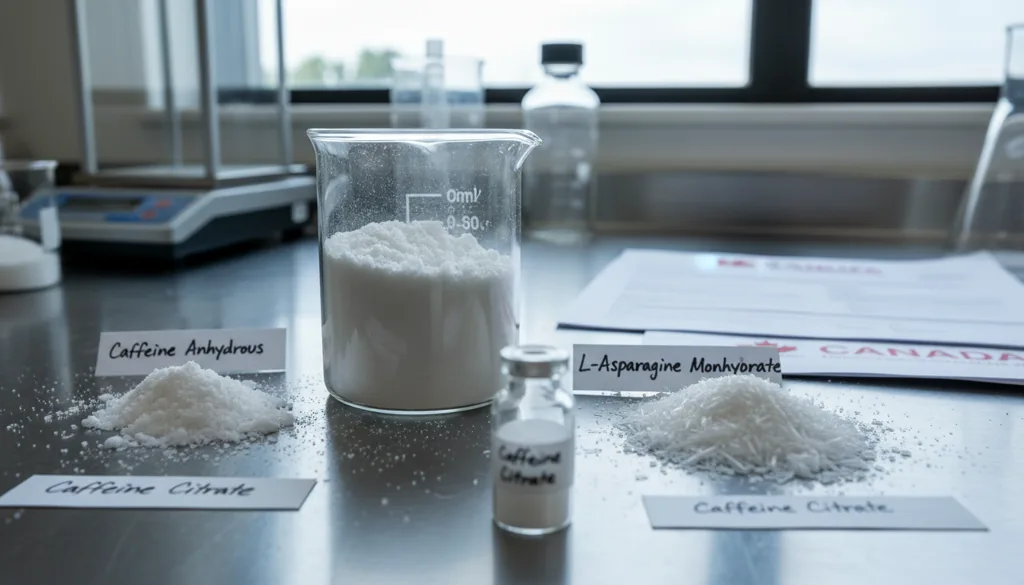
Canada has expanded the list of permitted supplemental ingredients to include caffeine and L-asparagine in food products, allowing their use in a range of dietary supplements and beverages. Additional updates clarify the approved uses of caffeine citrate and refine the regulatory framework for caffeine in food applications.
Health Canada has expanded the list of permitted supplemental ingredients in food products to include caffeine and L-asparagine, while tightening limits on caffeine in cola-type beverages. The changes, which take effect on 13 August 2026, allow up to 30% juice content in certain caffeinated drinks and lower the maximum caffeine level in colas to 150 parts per million (ppm) from 200 ppm.
The new rules affect energy drinks, dietary supplements, and carbonated beverages, with manufacturers now required to adjust formulations and labelling. Importers and producers must ensure compliance with updated thresholds for caffeine, caffeine citrate, and juice content, or risk shipments being rejected at the border.
What the new rules permit
The latest modification to the List of Permitted Supplemental Ingredients allows caffeinated beverages to contain up to 30% fruit or vegetable juice, a significant increase from the previous 25% limit1. This applies to drinks with a total caffeine content exceeding 150 ppm, including those marketed as energy drinks or performance beverages2. The change aligns conditions for high-caffeine products with those containing lower caffeine levels, preventing discrepancies in labelling and formulation requirements.
Caffeine, by concentration
| Question | Up to 150 ppm | Above 150 ppm |
|---|---|---|
| Regulatory status | Food additive | Supplemental ingredient |
| Juice content allowed | Up to 25% | Up to 30% |
| Label terms “juice”, “purée”, “nectar” | Permitted | Restricted |
Health Canada also corrected a typographical error in the French version of the list, adjusting the unit of measurement for L-asparagine to milligrams (mg) to match the English version3. The ingredient, an amino acid, is now explicitly permitted in supplemented foods, though its maximum permitted level remains unchanged at 937 micrograms per serving2.
Lower caffeine limits for cola drinks
From 1 January 2026, the maximum permitted level of caffeine and caffeine citrate in cola-type beverages will be reduced to 150 ppm, down from 200 ppm4. The change removes an inconsistency in how caffeine is regulated: previously, it was classified as a food additive in colas but as a supplemental ingredient in other carbonated soft drinks when used above 150 ppm. Under the new rules, caffeine will be treated as a food additive in all carbonated beverages at levels up to 150 ppm, and as a supplemental ingredient only when exceeding that threshold4.
Maximum caffeine levels, ppm
The adjustment follows a 2022 regulatory framework for supplemented foods, which established caffeine as a supplemental ingredient in non-alcoholic carbonated drinks with total caffeine levels above 150 ppm4. The lower limit for colas ensures uniformity across the sector, though manufacturers must still comply with stricter labelling requirements for products exceeding the threshold.
Labelling and compliance obligations
Products containing added caffeine must now display a "contains caffeine" statement on the principal display panel, with a minimum type height of 3.2 millimetres2. For beverages with caffeine levels above 150 ppm, labels must also avoid terms like "juice", "purée", or "nectar" unless required in the ingredients list, to prevent consumers from perceiving these products as healthier alternatives3.
What labels must now carry
Additional cautionary statements are mandatory for certain supplemented foods. For example, products with more than 58 mg of calcium per serving must carry warnings such as "Not recommended for those under 14 years old" and "Do not consume on the same day as other supplemented foods"2. Similar restrictions apply to vitamin E and other nutrients, with daily intake limits enforced through label declarations.
Who bears the cost
Manufacturers and importers are responsible for reformulating products, updating labels, and ensuring compliance with the new thresholds. The delivered cost of compliance will vary by product: energy drink producers may need to reduce caffeine levels or adjust juice content, while cola manufacturers must lower caffeine concentrations to meet the 150 ppm limit4. Testing and certification costs will fall on companies, though Health Canada has not introduced new pre-market approval requirements for these changes.
The timeline for implementation is tight. The juice content rule takes effect in August 2026, while the caffeine limit for colas applies from the start of next year3, 4. Companies that fail to meet these deadlines risk having shipments detained or rejected by the Canada Border Services Agency.
What the changes leave unchanged
The new rules do not alter the maximum permitted levels of caffeine in other supplemented foods, which remain at 400 ppm for most products2. Nor do they affect the existing prohibition on marketing caffeinated beverages to children or the requirement for individual wrapping of high-caffeine products sold in multi-serving packages.
Health Canada has also maintained the distinction between food additives and supplemental ingredients, ensuring that caffeine remains subject to different regulatory pathways depending on its concentration and use. The agency has signalled no immediate plans to expand the list of permitted supplemental ingredients beyond caffeine, L-asparagine, and existing entries.
Next steps for industry
Companies have until 13 August 2026 to reformulate products and update labels to comply with the 30% juice limit3. For cola-type beverages, the 150 ppm caffeine threshold applies from 1 January 2026, giving manufacturers less than six months to adjust formulations4. Health Canada has indicated it will not grant extensions, though it has left open the possibility of further consultations if new scientific evidence emerges.
Deadlines for manufacturers
The changes reflect a broader effort to modernise Canada’s food additive regulations, with recent updates also addressing enzymes, sweeteners, and preservatives5. While the immediate impact will be felt most keenly by beverage producers, the long-term effect may be a more consistent regulatory framework for supplemented foods across the country.
Sources
- ↩ Modification to the List of Permitted Supplemental Ingredients (caffeine and L-asparagine) https://docs.wto.org/imrd/directdoc.asp?DDFDocuments/T/G/SPS/NCAN1599A1.docx
- ↩ Permitted Supplemental Ingredients for Foods – Health Canada https://www.canada.ca/en/health-canada/services/food-nutrition/supplemented-foods/list-permitted-food-ingredients.html
- ↩ Modification to the List of Permitted Supplemental Ingredients https://www.canada.ca/en/health-canada/services/food-nutrition/legislation-guidelines/acts-regulations/notices-proposal-notices-modification/list-permitted-supplemental-ingredients-caffeine-l-asparagine.html
- ↩ Modification of caffeine and caffeine citrate limits in cola type beverages https://www.canada.ca/en/health-canada/services/food-nutrition/legislation-guidelines/acts-regulations/notices-proposal-notices-modification/list-permitted-food-additives-other-purposes-use-revise-caffeine-citrate.html
- ↩ Health Canada Food and Nutrition Legislation and Guidelines https://www.canada.ca/en/health-canada/services/food-nutrition/legislation-guidelines/acts-regulations/notices-proposal-notices-modification.html