
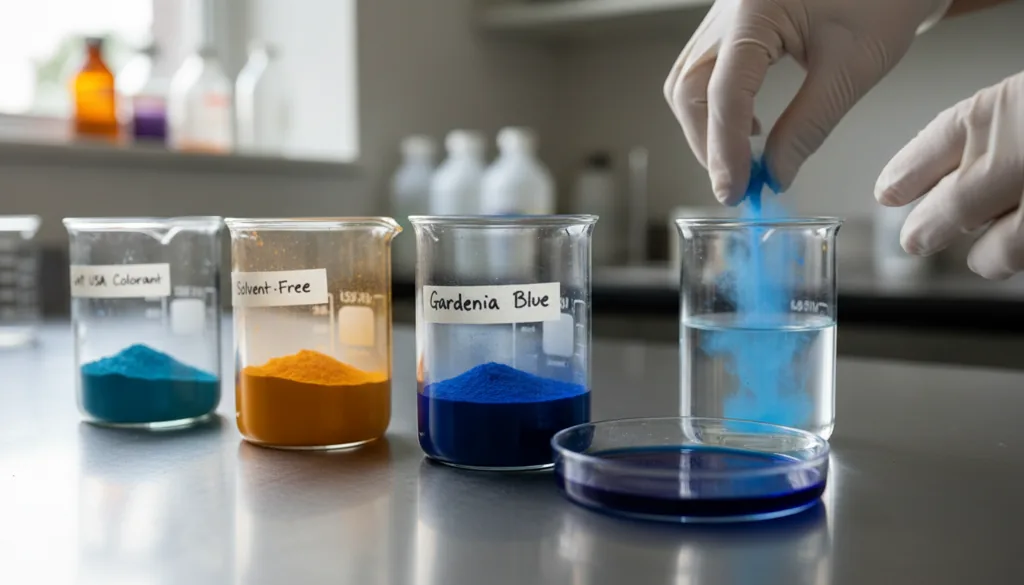
United States of America has initiated regulatory actions concerning color additives, including petitions for new approvals and amendments to solvent restrictions, reflecting broader industry engagement
The US Food and Drug Administration has filed three petitions to change the rules on food colouring, removing outdated solvents, revoking two long-unused dyes and expanding the use of a plant-based blue. The measures take effect in stages from next month to March 2027 and affect every company that imports, manufactures or sells coloured food, drugs or cosmetics in the United States.
The changes cut delivered costs for some natural colours and raise them for synthetic ones. Importers pay for the new testing and paperwork; processors pay for reformulating products that contain the banned solvents or the revoked dyes.
It comes after years of petitions from industry groups and environmental advocates. The FDA said in a statement that the moves “reflect current manufacturing practices and reduce unnecessary regulatory burdens while maintaining public health protections.”
The solvent ban
On 19 August 2026 the FDA published a petition from the International Association of Color Manufacturers (IACM) proposing to remove three solvents—methylene chloride, trichloroethylene and ethylene dichloride—from the list of permitted substances in the manufacture of annatto extract, paprika oleoresin and turmeric oleoresin1. The same petition also removes methylene chloride as a diluent in inks used to mark fruit and vegetables.
What may no longer cross the border
The solvents are no longer used in commercial production, the IACM said. Certification records show that none of the three has been submitted for batch approval since 20201. The FDA is not seeking comments on the safety of the solvents; it is acting solely on the grounds that the authorised uses have been abandoned.
The rule takes effect on 1 March 20272. Until then, any shipment that contains the solvents in the listed extracts or inks will be refused entry. Importers must provide a certificate of analysis showing that the solvents are absent1.
Two dyes revoked
The FDA has already revoked the listing for Orange B, a dye once used to colour the casings of frankfurters and sausages. The final order was published on 12 May 2026 and took effect immediately3. Certification records show that Orange B was last batch-certified in 1978; no requests for certification have been received since then3.
Two dyes, two stages of revocation
| Question | Orange B | Citrus Red No. 2 |
|---|---|---|
| Status | Final, effective immediately | Proposed |
| Was used in | Frankfurter and sausage casings | Skins of mature oranges |
| Last certified | 1978 | 2020 |
| Comments close | None | 18 October 2026 |
| Effective | 12 May 2026 | 1 January 2027 if adopted |
A second proposal, published on 19 August 2026, would revoke the listing for Citrus Red No. 2, a dye used to colour the skins of mature oranges. Certification records show that Citrus Red No. 2 has not been certified for use in food since 20204. The FDA is accepting comments until 18 October 2026; if the proposal is adopted, the revocation will take effect on 1 January 20274.
Both revocations are final for Orange B and proposed for Citrus Red No. 2. Any shipment that contains either dye after the effective date will be deemed adulterated and refused entry.
Gardenia blue expanded
On 4 August 2026 the FDA filed a petition from the Gardenia Blue Interest Group (GBIG) to expand the permitted uses of gardenia (genipin) blue, a plant-based colour derived from the fruit of the gardenia plant. The petition proposes to allow the colour in all foods at levels consistent with good manufacturing practice and to lower the specification for arsenic from 3 parts per million to 1 part per million5.
The current regulation, adopted in 2018, permits gardenia blue only in confectionery, baked goods and beverages. The new petition would extend it to dairy products, meat analogues, snacks and sauces. The FDA is accepting comments until 3 October 2026; if the petition is granted, the expanded uses will take effect on 1 June 20275.
GBIG said in its submission that the change would reduce the need for synthetic blues and simplify labelling. Importers of gardenia blue will have to provide batch certificates showing compliance with the new arsenic limit5.
Acetone added for carrot oil
A fourth petition, filed on 19 August 2026 by the IACM, proposes to add acetone as a permitted solvent in the manufacture of carrot oil. The petition also proposes to add heavy-metal limits and secondary names for carrot oil6. The FDA is accepting comments until 18 September 2026; if the petition is granted, the new rule will take effect on 1 December 20266.
Carrot oil is currently manufactured with hexane. The IACM said acetone is safer and more sustainable. Importers will have to provide solvent-free certificates for every shipment6.
Who pays and what it costs
The solvent ban and the dye revocations shift costs to importers and processors. Importers must pay for the new certificates of analysis and solvent-free testing; processors must reformulate any product that contains the banned solvents or the revoked dyes.
Expected fall in delivered cost
The gardenia blue expansion and the acetone amendment cut costs for natural-colour users. The expanded use of gardenia blue reduces the need for synthetic alternatives, and acetone is cheaper than hexane. The FDA said in a statement that the changes “reflect current industry practice and reduce unnecessary regulatory burdens”1.
The delivered cost of gardenia blue is expected to fall by 10-15 % once the new uses are permitted, according to the GBIG petition. The cost of carrot oil is expected to fall by 5-8 % once acetone is permitted6.
The next review
The FDA is required to review every colour additive listing every five years. The next review cycle begins in 2028. The agency said in a statement that it will “continue to evaluate petitions and proposals to ensure that the colour additive regulations reflect current science and manufacturing practices”4.
The measures take effect in stages
The changes mark the first major update to the colour additive regulations since 2018. They remove two dyes that have not been used in decades, ban three solvents that are no longer used, and expand the use of a plant-based blue. The measures take effect in stages over the next eight months, giving importers and processors time to adjust.
Sources
- ↩ Amendment to Color Additive Regulations: Ban on Methylene Chloride, Trichloroethylene, and Other Solvents https://www.federalregister.gov/documents/2026/04/01/2026-06295/filing-of-color-additive-petition-from-the-international-association-of-color-manufacturers-request
- ↩ 2026 FDA Federal Register Index https://www.federalregister.gov/index/2026/food-and-drug-administration
- ↩ Revocation of Orange B Color Additive Listing for Frankfurters and Sausages https://www.federalregister.gov/documents/2026/07/23/2026-14910/revocation-of-the-color-additive-listing-for-use-of-orange-b-on-casings-or-surfaces-of-frankfurters
- ↩ Proposal to Revoke Color Additive Listing for Citrus Red No. 2 on Orange Skins https://www.federalregister.gov/documents/2026/07/23/2026-14909/proposal-to-revoke-the-color-additive-listing-for-use-of-citrus-red-no-2-on-the-skins-of-mature
- ↩ Gardenia Blue Interest Group; Filing of Color Additive Petition; Notification of Petition https://docs.wto.org/imrd/directdoc.asp?DDFDocuments/T/G/SPS/NUSA3592.docx
- ↩ International Association of Color Manufacturers Proposes Acetone Safety Amendment https://www.federalregister.gov/documents/2026/08/19/2026-16943/international-association-of-color-manufacturers-filing-of-color-additive-petition