
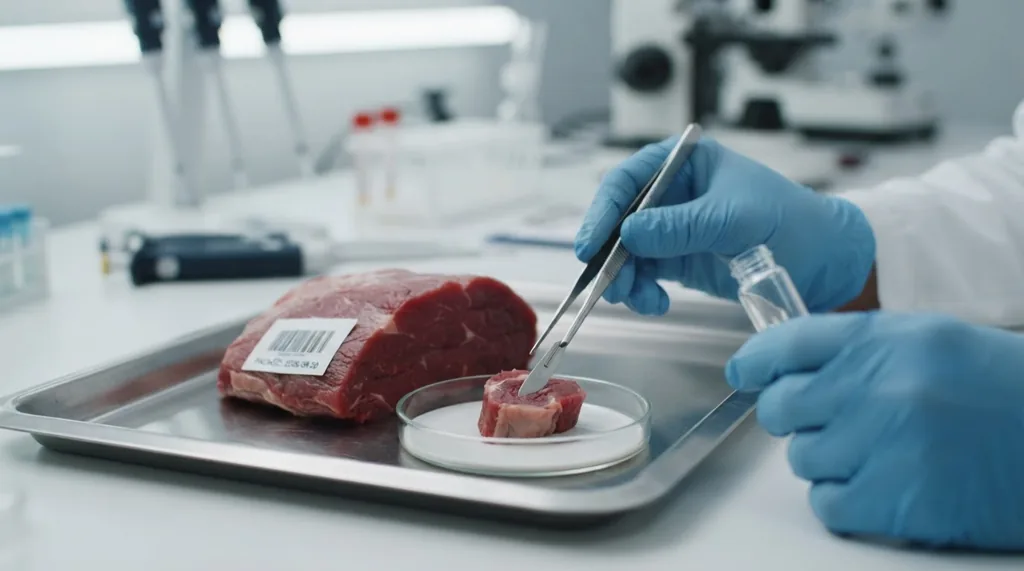
European Union has suspended entry of fresh cattle, sheep and goat meat and biltong from Namibia’s previously disease-free zone, with Sept. 23, 2026 as the closing date.
The European Union has temporarily stopped fresh beef, sheep meat and goat meat, and some dried meat snacks, from entering its territory from Namibia’s previously disease-free zone, with Sept. 23, 2026 set as the closing date for these goods1.
The EU acted after Namibia confirmed an outbreak of foot-and-mouth disease on a commercial farm in the south of the country1. The measure was published in the Official Journal of the European Union on Oct. 5, 20261.
In short, Namibian fresh red meat from cattle, sheep and goats can no longer be sold into the EU for now. Shipments certified in Namibia before Sept. 23 may still enter for 90 days, but border vets in each EU country decide on each one.
What has the EU suspended from Namibia?
The EU Delegation to Namibia set out the measure in a statement dated Oct. 5, 20261. The EU has suspended the entry of fresh meat of cattle, sheep and goats from Namibia1. The ban also covers the meat of other hoofed animals, both farmed and wild, that can catch the disease1.
The ban reaches beyond fresh meat. It also covers dried meat snacks such as biltong and jerky1. These are processed products, yet the EU still keeps them out.
The suspension applies to the zone of Namibia that had been free of foot-and-mouth disease until the outbreak1. The EU calls the move temporary and precautionary1.
Why did the EU act on Namibian meat?
Foot-and-mouth disease is an animal virus. Namibia’s controls target animals with split hooves, such as cattle, sheep and goats1. The EU statement calls it one of the most serious and highly contagious animal diseases1.
Namibian authorities told the EU of an outbreak that occurred on Sept. 23, 20261. It was found on a commercial farm in the Karasburg State Veterinary District, in the //Kharas Region1. The World Organisation for Animal Health (WOAH), the global body that sets animal-disease standards, then suspended Namibia’s disease-free status with effect from Sept. 22, 20261.
The EU said it acted to protect animal health inside the EU, in line with international standards1. It also recalled its own last major outbreak, in 2001. More than six million animals had to be killed then, across the United Kingdom, France, Ireland and the Netherlands1.
The direct costs of that outbreak were about N$20.7 billion, or around N$86 billion in 2026 terms, according to the EU statement1. Indirect losses to tourism and rural business were much larger1.
How serious is the outbreak in Karasburg?
A report from the US Department of Agriculture’s Foreign Agricultural Service, dated Sept. 29, 2026, gives more detail2. It says 10 of 11 samples tested positive and 63 cattle were affected2.
Samples from the Karasburg outbreak
The farm lies south of Namibia’s veterinary cordon fence, a long fence that separates disease-free areas from areas with disease risk2. The US report notes that local herds there have no immunity, and that neighbouring South Africa is also fighting the disease2.
Namibia reacted with its own controls. It notified WOAH and restricted the movement of animals with split hooves1. It also banned the export of these animals and their products1.
Which Namibian meat can still reach the EU?
Some processed meat can still enter. Products that have had the most severe risk-mitigating treatment set out in EU law remain eligible1. A risk-mitigating treatment is a processing step that lowers the chance the meat carries the virus.
What can still enter the EU
Shipments already on their way also have a path. Fresh meat that Namibia’s veterinary authority certified before Sept. 23, 2026 should be allowed to enter the EU1. This applies during a period of 90 days from that date1.
Each shipment still faces checks at a Border Control Post, the EU entry point where vets inspect animal products. The EU says the 90-day entry is without prejudice to the decisions of these posts in each member state1. In plain terms, a border vet can still refuse a shipment.
Which EU rules sit behind the ban?
The EU statement points to two laws1. Commission Implementing Regulation (EU) 2021/404 lists the countries and zones from which animals and animal products may enter the EU1. Commission Delegated Regulation (EU) 2020/692 sets the animal-health conditions for those goods1.
The suspension works through these lists. Once a zone loses its disease-free standing, its fresh meat can no longer be certified for the EU. The EU statement says the change was published in the Official Journal on Oct. 5, 20261.
Does the ban change Namibia’s trade deal with the EU?
No. The EU says the restrictions do not alter Namibia’s preferential access under the EU–SADC Economic Partnership Agreement1. The ban concerns only the animal-health conditions for the affected products1. Once health conditions allow the meat back in, the trade deal still applies to it.
Who is affected by the Namibia meat ban?
The ban falls hardest on Namibian cattle, sheep and goat farmers in the affected zone, and on the meat plants that export from it. The EU statement recognises the serious impact on farmers’ livelihoods and the wider economy1.
The US report puts the size of the livestock sector at about 3.1% of Namibia’s GDP, worth N$8.8 billion a year2. It estimates up to 12,000 lost job-years in 2026 and 20272.
For EU buyers, the effect is simple. Importers of Namibian beef, lamb, goat meat and biltong lose that supply source for now. Their only fresh-meat shipments are those certified before Sept. 23, and border vets may still stop those.
Other markets have closed too. The US report says exports to China, South Africa and the United States were halted2.
How does the UK’s own ban compare?
The United Kingdom, which runs its own import rules, acted earlier. On Sept. 25, 2026, its farm ministry, the Department for Environment, Food and Rural Affairs (Defra), updated its list of approved fresh meat3. It removed Namibia’s certificates for fresh beef and fresh sheep and goat meat from the zone coded NA-13.
EU and UK rules on Namibian meat
| Question | European Union | United Kingdom |
|---|---|---|
| Fresh beef, sheep and goat meat | Suspended | Certificates removed |
| Farmed and wild game meat | Suspended | Listings removed |
| Treated meat products | Most severe treatment still enters | Treatment B need not be held |
| Date of action | Published Oct. 5, 2026 | Sept. 25, 2026 |
Defra also removed Namibia’s listings for meat of farmed and wild game3. It told vets to keep holding animal casings, untreated wool and hair, and other animal by-products from these species3. Namibian beef, sheep and goat meat products that have had a set treatment, called treatment B, which lowers the virus risk, do not need to be held3.
The UK and EU rules are separate, but they point the same way. Both stop fresh meat and both let fully treated meat products through.
What happens next for Namibian meat exports?
The EU will keep assessing the disease situation together with Namibia1. It says it stands ready to review the measures as animal-health conditions allow1. The statement gives no date for a review.
Key dates in the Namibia meat ban
Inside Namibia, the picture is already shifting. The US report says confirmed containment to the //Kharas Region allowed a partial lifting of controls north of the cordon fence2. The southern zone stays locked down, and international bans continue2.
The 90-day window for meat certified before Sept. 23 is the next fixed point. Counting from that date, it runs to about Dec. 22, 2026.
Key points on the EU ban on Namibian meat
The table sums up the measure.
| Question | Answer |
|---|---|
| What changed? | EU suspended entry of certain Namibian meat |
| Who acted? | European Union |
| Why? | Foot-and-mouth disease outbreak in Namibia |
| Where was the outbreak? | Commercial farm, Karasburg, //Kharas Region |
| Which goods? | Fresh cattle, sheep and goat meat; biltong and jerky |
| Which area? | Namibia’s previously disease-free zone |
| What still enters? | Meat with the most severe risk treatment |
| Closing date | Sept. 23, 2026 |
| Published | Official Journal, Oct. 5, 2026 |
| Meat certified before Sept. 23 | May enter within 90 days |
| Trade deal access | Unchanged under EU–SADC agreement |
| Next step | EU review as health conditions allow |
Until the EU reviews the suspension, Namibian fresh beef, sheep meat and goat meat certified on or after Sept. 23, 2026 cannot enter the EU1. Shipments certified before that date have 90 days, subject to the border vet’s decision.
Sources
- ↩ EU Statement on the foot and mouth disease outbreak in Namibia | EEAS https://www.eeas.europa.eu/delegations/namibia/eu-statement-foot-and-mouth-disease-outbreak-namibia_en
- ↩ Namibia: Foot and Mouth Disease Outbreak in Namibia 2026 | USDA Foreign Agricultural Service https://www.fas.usda.gov/data/gain/2026/09/namibia-foot-and-mouth-disease-outbreak-namibia-2026
- ↩ 25 September 2026: Outbreak of foot and mouth disease in Namibia – GOV.UK https://www.gov.uk/government/publications/official-veterinary-surgeon-ovs-notes/25-september-2026-outbreak-of-foot-and-mouth-disease-in-namibia