
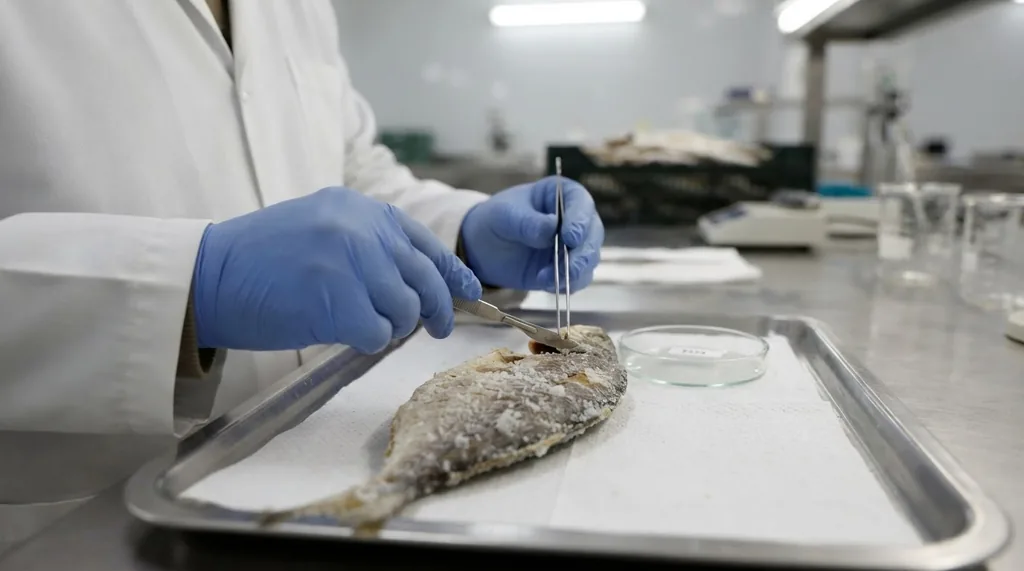
Egypt has implemented comprehensive regulations to ensure food safety, quality, and hygiene for salted fish products through standardized production, labeling, and handling practices
Egypt has adopted a decree giving salted fish producers and importers six months to meet a revised national standard, ES 1725.
The measure is Ministerial Decree No. 209/2026, adopted on 21 Sept. 20261. Egypt told the World Trade Organization (WTO) about it in notice G/SPS/N/EGY/76/Add.2, dated 7 Oct. 20261.
In short, salted fish sold in Egypt must meet a new version of the Egyptian standard. Local makers and foreign suppliers have a six-month window to adjust their products before the new rules apply in full.
What does Decree 209/2026 change for salted fish?
The decree makes a revised version of Egyptian Standard ES 1725, titled "Salted fish", compulsory1. An Egyptian standard sets the quality and safety rules that a product must meet to be sold in the country. Once the decree makes it compulsory, it is no longer voluntary.
The decree also gives a six-month transition period to producers and importers1. During this time, they can bring their products and production methods into line with the revised standard. After the period ends, salted fish that does not meet ES 1725 can no longer be sold under the old rules.
The WTO notice is filed under the WTO rules on food safety, animal health and plant-health measures1.
Which goods does the salted fish standard cover?
The notice lists the products as fish and fishery products1. The standard itself is titled "Salted fish"1. It therefore covers fish that is preserved with salt and sold for people to eat.
The decree applies to both producers and importers1. Imported salted fish must therefore meet the same standard as fish made in Egypt.
The notice summary does not list tariff codes or the fish species covered. The full text of the standard decides whether a product falls inside it.
Why does Egypt say the standard is sound?
Egypt states that the revised standard follows Codex standard CXS 2441. Codex is the international food code that sets shared food standards. CXS 244 is the Codex standard for salted Atlantic herring and salted sprat1.
That Codex standard was first adopted in 20041. It was later amended in 2011, 2013, 2016, 2018 and 20241. By basing its rules on Codex, Egypt aligns its salted fish rules with a text that many trading partners already use.
For exporters, this matters in a practical way. A maker that already meets the Codex rules for salted herring and sprat should find the Egyptian rules familiar.
How did the rules for salted fish develop?
Egypt has made a salted fish standard compulsory since 2005. The history runs through several decrees and versions of ES 1725:
- Ministerial Decree No. 130/2005 made the 2005 version of ES 1725 compulsory2.
- Ministerial Decree No. 256/2016 made ES 1725/2016 compulsory and replaced the 2005 version2. It also gave producers and importers six months to comply2.
- The draft of the new version was notified to the WTO on 7 April 2026, in notice G/SPS/N/EGY/76/Add.11.
- Ministerial Decree No. 209/2026 adopted the new version on 21 Sept. 20261.
Egypt’s salted fish rules, 2016 and 2026
| Question | 2016 rules | 2026 rules |
|---|---|---|
| Decree | Ministerial Decree No. 256/2016 | Ministerial Decree No. 209/2026 |
| Standard | ES 1725/2016 | Revised ES 1725 |
| Transition period | Six months | Six months |
| WTO notice | G/SPS/N/EGY/76, Aug. 11, 2016 | G/SPS/N/EGY/76/Add.2, 7 Oct. 2026 |
The 2016 decree was notified to the WTO on Aug. 11, 2016, in notice G/SPS/N/EGY/762. The new decree is a second addendum to that same notice1. This shows Egypt treats the new text as an update of the same salted fish rules, not a new subject.
When does the new salted fish standard apply?
The decree takes effect on the day after it is published in Egypt’s official gazette1. The WTO notice does not give the publication date.
Key dates for the salted fish standard
The six-month transition then gives producers and importers time to comply1. The six months run from the decree’s entry into force, so the final date depends on when the gazette prints it.
The notice also sets a comment deadline of 6 Dec. 20261. Other WTO members can send questions or comments on the measure to Egypt before that date.
Who must act under the new rules?
The decree names two groups: producers and importers1. Both must bring their salted fish into line with ES 1725 within the six months1.
For Egyptian producers, the change is direct. Their factories must make and pack salted fish that meets the revised standard.
For importers, the change reaches back to their suppliers abroad. An importer that buys salted fish from another country must make sure that the fish meets the Egyptian standard. Shipments that do not meet ES 1725 after the transition period can face problems when they are checked for sale in Egypt.
For foreign makers, the six months is the time to compare their recipes, processes and packs with the new text.
Is the salted fish decree part of a wider package?
Decree No. 209/2026 is not limited to salted fish. Egypt notified the same decree to the WTO for several other foods2. These include:
- Canned tuna and bonito, under standard ES 804, with a transition period (notice G/SPS/N/EGY/60/Add.4)2.
- Bottled and packaged drinking water other than natural mineral water, under a partial amendment of ES 1589 (notice G/SPS/N/EGY/144/Add.1)2.
- Electronic cigarette liquids, under a partial amendment of ES 8205-1 (notice G/SPS/N/EGY/180/Add.1)2.
- Pasteurized milk, under ES 1616, with a six-month transition for producers and importers (notice G/SPS/N/EGY/185)2.
Other foods under Decree 209/2026
| Food | Standard and change |
|---|---|
| Canned tuna and bonito | ES 804, transition period |
| Bottled drinking water | ES 1589, partial amendment |
| Electronic cigarette liquids | ES 8205-1, partial amendment |
| Pasteurized milk | ES 1616, six-month transition |
Seafood suppliers to Egypt may therefore face more than one change at once. A trader that ships both salted fish and canned tuna must check both standards.
What happens next for salted fish suppliers?
The next step is publication of the decree in Egypt’s official gazette1. That date starts the clock on both entry into force and the six-month transition.
After that, the six months pass quickly for suppliers abroad. Fish salted and packed months before shipment must already meet the revised rules when it reaches Egypt’s market.
Meanwhile, WTO members have until 6 Dec. 2026 to comment1.
Key points on Egypt’s salted fish standard
The main facts of the decree are set out below.
| Question | Answer |
|---|---|
| What changed? | Revised salted fish standard made compulsory |
| Which measure? | Ministerial Decree No. 209/2026 |
| Which standard? | ES 1725, "Salted fish" |
| Which goods? | Fish and fishery products, salted fish |
| International basis | Codex CXS 244, salted herring and sprat |
| Who must act? | Producers and importers |
| Transition period | Six months |
| Date adopted | 21 Sept. 2026 |
| WTO notice date | 7 Oct. 2026 |
| Start date | Day after official gazette publication |
| Comment deadline | 6 Dec. 2026 |
| Earlier version | ES 1725/2016, under Decree 256/2016 |
Once the gazette publishes Decree 209/2026, producers and importers will have six months before salted fish sold in Egypt must meet the revised ES 17251.
Sources
- ↩ G/SPS/N/EGY/76/Add.2 – VĂN PHÒNG SPS VIỆT NAM http://www.spsvietnam.gov.vn/en/gspsnegy76add.2-1
- ↩ G/SPS/N/EGY/76 – VĂN PHÒNG SPS VIỆT NAM http://www.spsvietnam.gov.vn/en/gspsnegy76