
United States keeps 178 Chinese products free of extra Section 301 duties from Nov. 10, 2026 until Jan. 9, 2027.
The Office of the United States Trade Representative (USTR) has extended 178 tariff exclusions for certain Chinese goods until Jan. 9, 20271.
The exclusions free these goods from the extra Section 301 duties on Chinese products, and they were due to end on Nov. 9, 20261. The notice appeared in the Federal Register, the US government’s official journal, on Nov. 10, 20261.
In short, nothing changes at the border for now. A shipment of a covered Chinese product can still enter without the extra Section 301 duty until early January 2027.
What did USTR decide on the 178 exclusions?
USTR decided to extend all 178 current exclusions without removing any of them1. An exclusion is a written carve-out. It takes a named product out of the extra duties that the United States places on goods from China.
The Federal Register notice says the extension runs through 11:59 p.m. eastern time on Jan. 9, 20271. USTR also posted the same notice on its own website2.
The notice was signed by Jennifer Thornton, General Counsel of USTR2. It is published as document 2026-229251.
Which Chinese goods keep their exclusion?
The 178 exclusions fall into two groups. Each group has its own line in the Harmonized Tariff Schedule of the United States (HTSUS), the US import tariff list1.
The 178 extended exclusions, by group
The two groups are:
- 164 earlier exclusions, entered under heading 9903.88.69. USTR first extended these on May 30, 20241.
- 14 exclusions for solar manufacturing equipment, entered under heading 9903.88.70. USTR granted these on Sept. 18, 20241.
The notice does not list each product again. Instead, it points to the product descriptions already written into the US tariff schedule1.
How does customs decide if a product is covered?
An exclusion is open to any product that meets the description in the exclusion1. It does not matter which company first asked for it.
The scope of each exclusion is set by a 10-digit tariff number and a written product description1. These are found in US notes 20(vvv) and 20(www) of chapter 99 of the tariff schedule1. A product must match both the number and the description.
U.S. Customs and Border Protection (CBP), the US border agency, will give instructions on how to declare these entries1. Questions about classification go to CBP, according to the notice1.
When do the extended exclusions apply?
The extension covers goods entered for consumption on or after 12:01 a.m. eastern time on Nov. 10, 20261. "Entered for consumption" means cleared by customs for sale or use in the United States.
The extension at a glance
| Point | What the notice says |
|---|---|
| Goods covered | Products matching the exclusion descriptions |
| Tariff headings | 9903.88.69 and 9903.88.70 |
| Start | 12:01 a.m. eastern time, Nov. 10, 2026 |
| End | 11:59 p.m. eastern time, Jan. 9, 2027 |
| Entry guidance | U.S. Customs and Border Protection |
It also covers goods taken out of a customs warehouse for sale or use in the same period1. The period ends before 11:59 p.m. eastern time on Jan. 9, 20271.
From Nov. 10, 2026, the text of both tariff headings changes. The date "November 9, 2026" is deleted and "January 9, 2027" is inserted1. This makes the new end date part of the tariff schedule itself.
Why did USTR give only two more months?
USTR said it acted "in light of ongoing discussions with China"1. The notice does not give other reasons for the short period.
USTR also said it took into account public comments from a September 2025 request1. It also weighed advice from its advisory committees and from the interagency Section 301 Committee1.
In September 2025, USTR asked whether extending each exclusion fit the government’s priorities1. It also asked how each exclusion affected the goal of making China end the practices under investigation1.
How is the extension tied to the 2025 US-China deal?
On Nov. 1, 2025, the White House announced a trade and economic deal between President Trump and President Xi Jinping of China3. Under that deal, the United States promised to extend certain Section 301 exclusions until Nov. 10, 20263.
From the deal to the new end date
The White House fact sheet listed other steps as well. China agreed to suspend its retaliatory tariffs on many US farm goods, such as soybeans, pork and beef3. China also agreed to extend its own tariff exclusions for US imports until Dec. 31, 20263.
The United States agreed to keep a 10% reciprocal tariff on Chinese imports during the suspension of higher rates3. That suspension also ran until Nov. 10, 2026, according to the fact sheet3.
USTR carried out the exclusion promise on Nov. 26, 2025. It extended all 178 exclusions through Nov. 9, 20261. The new notice adds two more months on top of that.
What is the history of the Section 301 China duties?
USTR placed extra duties on Chinese products in four rounds between 2018 and 20191. They came from an investigation into China’s practices on technology transfer, intellectual property and innovation1.
USTR later let US businesses ask for exclusions for particular products. Most of those exclusions expired in 2019 and 20201.
The exclusions that still apply have been extended many times since 20241:
- On Dec. 29, 2023, USTR asked for comments on 352 reinstated exclusions and 77 COVID-related exclusions.
- On May 30, 2024, it extended 164 of them through May 31, 2025.
- On Sept. 18, 2024, it granted 14 exclusions for solar manufacturing equipment.
- In May 2025, it extended all 178 through Aug. 31, 2025.
- In September 2025, it extended them for 90 days, through Nov. 29, 2025.
- On Nov. 26, 2025, it extended them through Nov. 9, 2026.
The newest notice is the seventh step in this chain. The number of exclusions has stayed at 178 since 20241.
What legal power did USTR use?
The Section 301 rules are in sections 301 to 308 of the Trade Act of 19741. Section 307(a)(1) lets the Trade Representative change or end an action taken under Section 3011.
The law allows this when the burden from the foreign practices has grown or fallen1. It also allows it when an action is no longer appropriate1.
Who is affected by the extension?
US importers of the covered Chinese goods gain the most. Without the extension, their goods would have faced the extra Section 301 duty from Nov. 10, 2026.
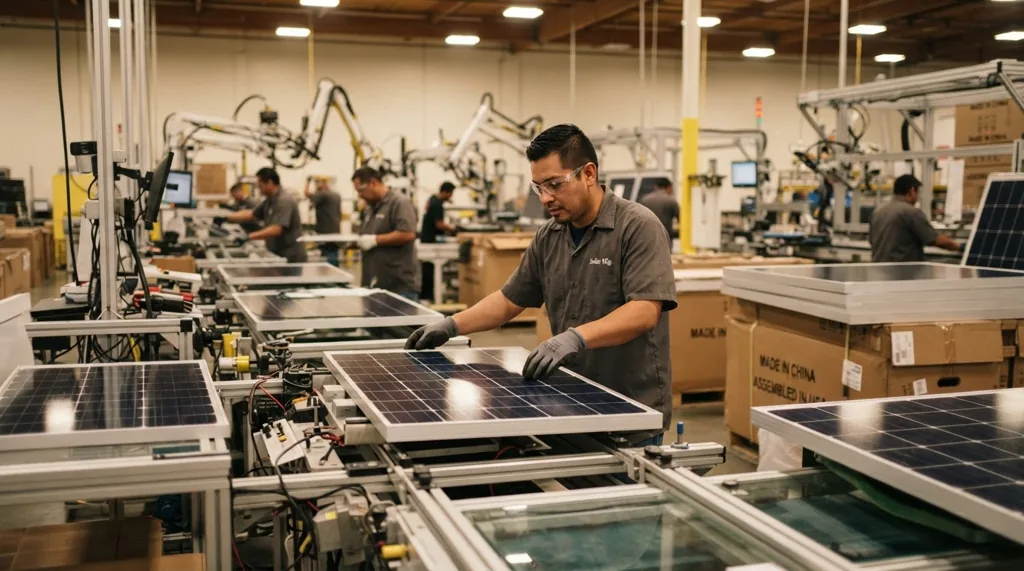
Makers of solar products in the United States also gain. The 14 solar exclusions cover equipment used to make solar products1.
Customs brokers must keep using the two exclusion headings, 9903.88.69 and 9903.88.70, for entries in the new period. Chinese exporters of these goods can keep shipping without the extra duty being added to their US buyers’ costs.
What happens after Jan. 9, 2027?
The notice says the Trade Representative may consider further extensions or other changes1. It does not promise any.
If USTR takes no new step, the exclusions will end after 11:59 p.m. eastern time on Jan. 9, 20271. Goods entered after that would then face the extra Section 301 duty again.
Key points on the Section 301 China exclusions
The table below sums up the extension.
| Question | Answer |
|---|---|
| What changed? | 178 exclusions extended |
| Who issued it? | Office of the United States Trade Representative |
| Where was it published? | Federal Register, Nov. 10, 2026 |
| Which goods? | Listed Chinese products, including solar manufacturing equipment |
| How many groups? | 164 earlier exclusions and 14 solar exclusions |
| Tariff headings | 9903.88.69 and 9903.88.70 |
| Start of new period | 12:01 a.m. eastern time, Nov. 10, 2026 |
| End of new period | 11:59 p.m. eastern time, Jan. 9, 2027 |
| Stated reason | Ongoing discussions with China |
| Who issues entry guidance? | U.S. Customs and Border Protection |
The next date to watch is Jan. 9, 2027. After that day, the 178 exclusions end unless USTR extends them again1.
Sources
- ↩ Federal Register :: Notice of Product Exclusion Extensions: China’s Acts, Policies, and Practices Related to Technology Transfer, Intellectual Property, and Innovation https://www.federalregister.gov/documents/2026/11/10/2026-22925/notice-of-product-exclusion-extensions-chinas-acts-policies-and-practices-related-to-technology
- ↩ USTR FRN Extending Section 301 China FTT Exclusions to Jan 2027.pdf https://ustr.gov/sites/default/files/files/Issue_Areas/Enforcement/Section%20301/USTR%20FRN%20Extending%20Section%20301%20China%20FTT%20Exclusions%20to%20Jan%202027.pdf
- ↩ Fact Sheet: President Donald J. Trump Strikes Deal on Economic and Trade Relations with China – The White House https://www.whitehouse.gov/fact-sheets/2025/11/fact-sheet-president-donald-j-trump-strikes-deal-on-economic-and-trade-relations-with-china/