


 Mar 12,2026
  By Alice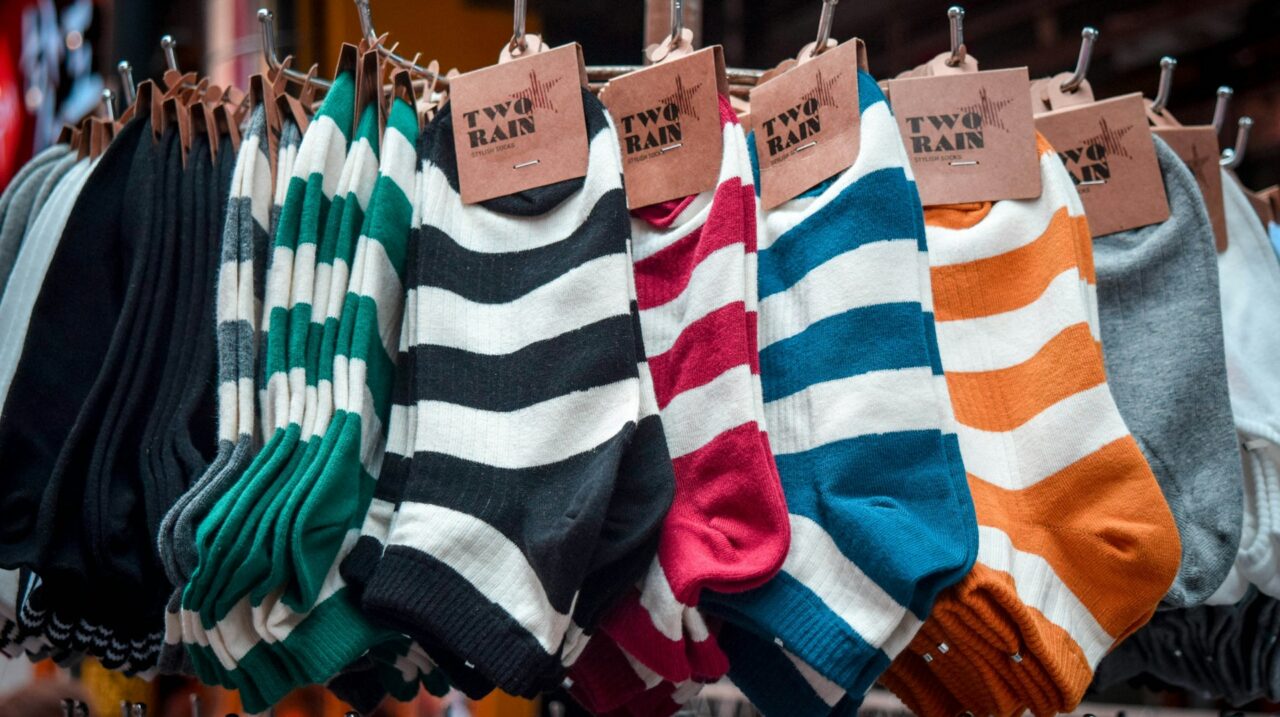
Socks might be one of the overlooked products in the market because most people focus on shoes or common shirts in terms of clothing or apparel products. However, the existence of socks is crucial as extra protection for our feet from friction while wearing shoes. Without wearing socks, our feet will be vulnerable to blisters and cold during the winter season. No wonder that socks have become the main traded garment goods in international trade. For facilitating cross-border trade, one of the requirements is the declaration of the Harmonized System (HS) code. This article will examine what the HS code for socks is. The major socks exporters and importers, as well as how to find the accurate HS code for socks.
What are socks, and what are their functions?
Socks are always in par with footwear products, including sandals, boots, and most commonly with shoes. The definition of socks is the garment products that are specially designed for the feet or the lower part of the legs. Even though socks are perhaps only seen as a complement to footwear. These products have a more important function than they look. Here are the functions of socks for our lives that we should not neglect.
- Stabilizing the feet’ temperature
The most important and original function of socks is to stabilize the feet’s temperature. Whether the temperature is cold or hot, wearing socks is still recommended. During the cold weather, socks will give us warmth and prevent the danger of frostbite. Meanwhile, in hot weather, they will protect our feet from sweating and keep moisture because of our activities. One of the examples of this is ankle socks.
- Prevent bacterial and fungal growth
One thing that might be one of the considerations of using socks is to prevent bacterial growth. When wearing sneakers or other shoes, there is most likely we produce sweat due to our activities. If we are not wearing socks, it results in excessive bacterial growth, which can lead to body odour, athlete’s foot or infection cause of fungal infection and other health problems.
- Prevent blisters
Wearing shoes or footwear is obviously important to protect our feet from hazards. However, wearing shoes without socks will reduce comfort and stability during our activities, especially while doing sports or other outdoor activities. Some of the spots on our feet are vulnerable and can be impacted by friction. Socks help to reduce the friction and shield our feet from blisters, such as socks running.
- For fashion and room decoration
Not only for protecting our feet, but the existence of socks has also expanded to other functions these days. The most visible functions are fashion for the complement of our outfit style, with many colors and pattern designs. Socks can also be found as decorative items for a room, especially for some occasions, such as Christmas or xmas socks.
What is the structure of the HS code for socks?
As mentioned above, what is HS code for socks? HS codes are one of the main requirements for transferring socks across the border. Without an HS code or an inaccurate HS code declaration, it will lead to serious impacts, including delays, seizure of the products, fines, and even legal consequences. Therefore, the accuracy of the HS code for socks is a crucial component of a streamlined customs process.
HS code for socks is categorized under Chapter 61, which includes apparel and clothing accessories, whether they are knitted or crocheted. The important factors for the classification of socks are their materials and functions. The heading of the HS code for stocks is 6115, and they can be classified further into several 2 digit of subheadings to complete the 6-digit HS code. For more understanding, we can see the common list of 6-digit HS codes for socks as follows:
| HS code | Description |
| 6115.12 | Socks, stockings, or other hosiery made from synthetic fibres with 67 decitex or more. |
| 6115.20 | A woman’s socks or stocking knee-length hosiery with single yarn less than 67 decitex |
| 6115.94 | Socks made from regular wool or animal hair. |
| 6115.95 | Socks or stockings made from cotton |
| 6115.96 | Socks or stockings made from synthetic fibres |
Those 6-digit HS codes for socks are identified by the materials, size, and the length of decitex. However, the HS code for socks is only the initial steps for identification process. You need to know and declare the national code for your destination country in order to make your products more eligible to be transferred to other countries.
The top 5 major international trade players in socks
Before declaring the HS code for socks, we also need to grasp the major international trade players in the socks industry worldwide. This knowledge is important to know the majority of trade lanes of socks globally. To narrow information, we can choose the trade lanes from the socks made from animal wool under HS code 6115.94. Here are the biggest sock producers of exporting countries in the world.
| Country | Total Export Value (USD) |
| China | 110,103,328 |
| Germany | 38,777,125 |
| United States | 23,262,573 |
| Turkiye | 20,364,756 |
| Italy | 20,176,932 |
Source: UN Comtrade Database, retrieved February 20, 2026
From the provided data above, we can see that China has been crowned as the biggest producer or exporter of socks made from animal hair or wool in 2024, with a value of more than 110 million USD. The second place is Germany with a total of socks export amount of more than 38 million USD. The following are the biggest exporting countries: the United States, Turkiye, and Italy.
Other than the major producing countries of socks, we also need to know where the destinations of the socks made from animal wool are. Here are the largest importing countries of socks under HS code 6115.94.
| Country | Total Import Value (USD) |
| Germany | 37,984,807 |
| United States | 21,437,858 |
| Canada | 19,779,547 |
| Netherlands | 19,290,913 |
| Norway | 18,819,024 |
Source: UN Comtrade Database, retrieved February 20, 2026
Based on the data above, Germany is the largest importing country of socks made from animal hair under HS code 6115.94, with a valuation of slightly less than 38 million USD. The second largest importer is the United States, with a total amount of more than 21 million USD. These two countries are followed by Canada, the Netherlands, and Norway as the third to fifth biggest importers of animal hair-made socks.
How to find the accurate HS code for socks
In order to declare the HS code for socks, we should ensure that the HS code is accurate and avoid discrepancies. It might seem simple, but we must know that the process of finding HS codes for socks and other products must be patient due to its complexity. However, the most important thing is how you recognise your products and align them with the applicable HS code that is administered by the World Customs Organisation (WCO).
To ease the task of finding the HS code for socks, we can use a third-party application, such as HSCodeMatch. This application is easy to use and offers the recommendation of the most preferred HS code for your products in order to reduce tariffs and other costs during the customs process. Here is the step-by-step procedure to find the HS code for socks easily with HSCodeMatch.
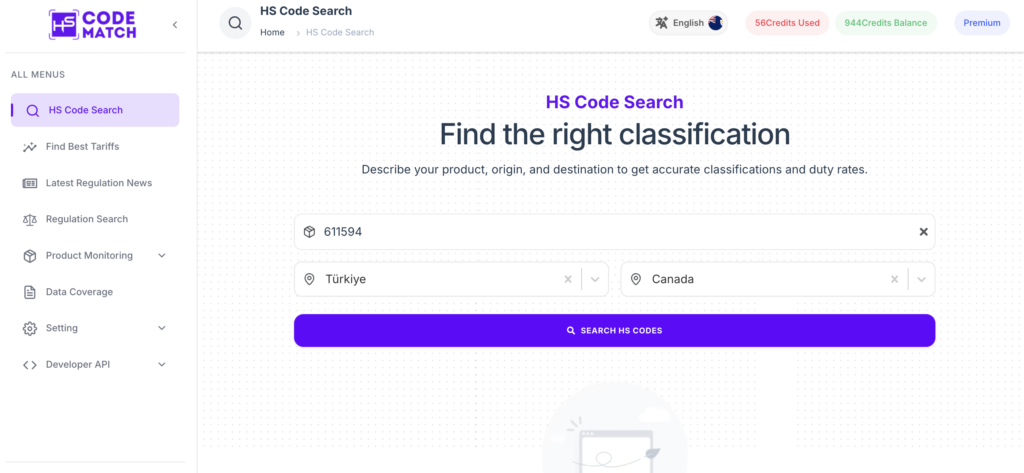
- First step: Open the HSCodeMatch application by accessing hscodematch.com and choosing Go to App. Then, choose the HS Code Search feature to find the HS code for socks. For this example, we can use trade lanes of wool socks under HS code 6115.94 from Turkiye to Canada.
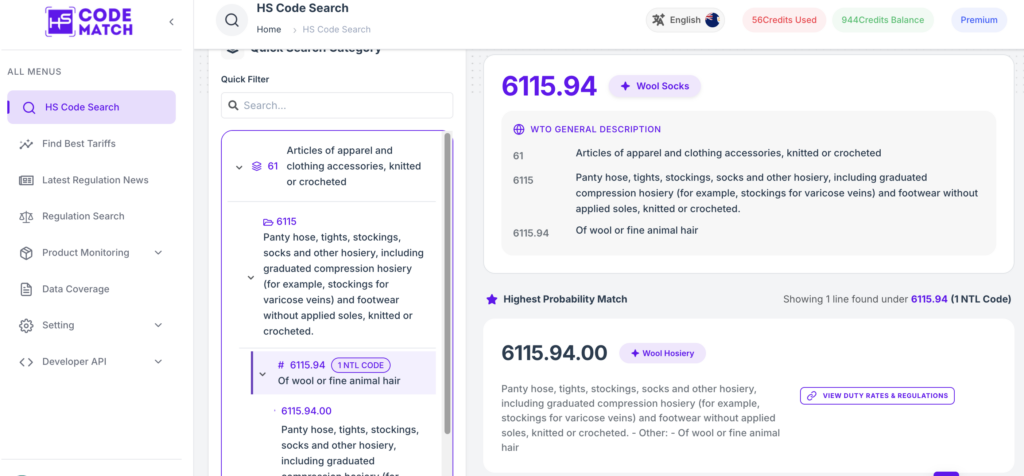
- Second step: HSCodeMatch will provide the most relevant HS code for you based on your submitted query. Then, choose the most relevant HS code for your products based on the summary. For this example, you can choose the HS code 6115940000 from Turkiye to Canada.
- Third step: Click the View Details option to know more about the information within the products on HS Code Details. This page allows you to get insight regarding import duty and a full description of the HS code for socks.
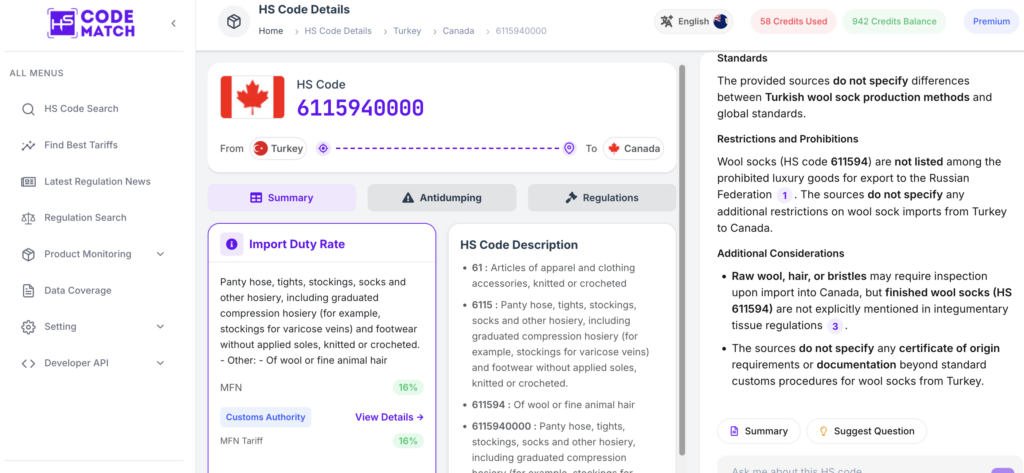
- Fourth step: On the bottom part of the page, there is full information regarding tariff rates and applicable regulations in Canada. On the right side, there is an AI Assistant which will help you find the summary and other information from the provided regulations.
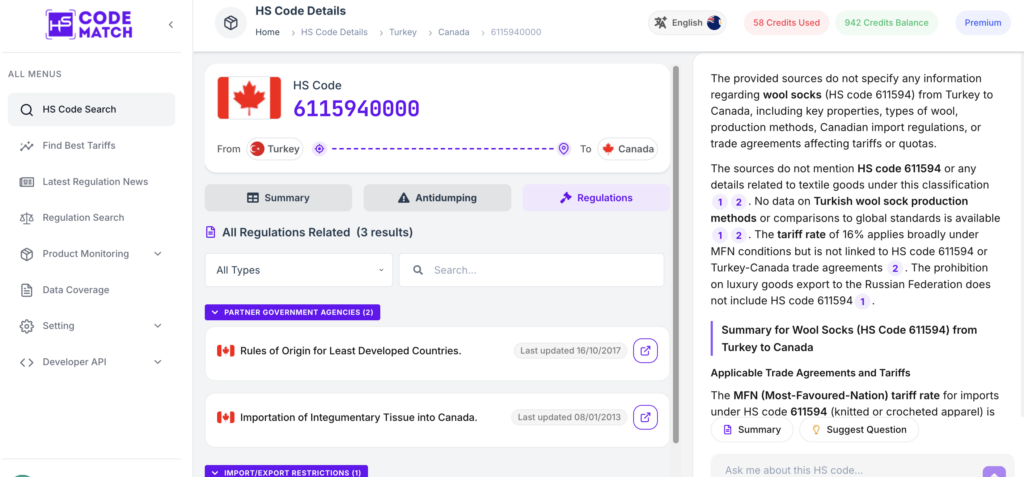
The AI chatbot assistant is an advanced feature from HSCodeMatch to assist you in finding the right regulations. For more information about the AI chatbot assistant, we can provide the example of questions and answers for exporting wool socks from Turkiye to Canada as follows:
What are the specific labelling requirements for imported hosiery (e.g., cotton knitted or crocheted) under the Textile Labelling and Advertising Regulations in Canada?
For importing hosiery, including socks are must follow the Textile Labelling and Advertising Regulation in Canada. The labelling information must include several requirements below:
- Fibre content is based on the percentage by weight and the source of materials of the products.
- Dealer identity, including name, full postal address from the Canadian dealer and manufacturer.
- Country of origin is the requirement for ensuring that the products are manufactured wholly from the Turkiye or not.
- Bilingual labelling because Canada is a bilingual countries and to be eligible to sell in Canada must be labelled in English and French. This is a required information in Canada.
What are the documentation requirements for exporting socks from Turkiye to Canada?
There are several documents required for exporting socks from Turkiye to Canada. This is important to ensure that socks from Turkiye can enter Canadian territory without problems. Here are several documents:
- A commercial invoice is a detailed document containing shipment information, especially on value, description, and origin for exporting socks from Turkiye to Canada.
- A certificate of origin is a requirement to qualify for the preferential tariff rates under the trade agreements.
- A bill of lading or airway bill is an evidence document for the shipping process.
- A packing list is a document that needs to inform about the weight, dimensions, and contents of the products.
- Import/export permits are required to import socks into Canada, but it depends on the Canadian textile import controls.
- Labelling documentation is the documentation that is needed to inform about the label regulation before entering and selling in the Canadian territory.
Are there exemptions to bilingual labelling requirements for imported apparel in Canada?
Yes, there are limited exemptions to the bilingual labelling requirement for importing apparel products, including socks, to Canada. This is only applicable for small material constraints, and the exemptions only apply when the labelling is insufficient to facilitate English and French text without legibility. However, the exemption does not eliminate the requirement for labelling as a whole, and the information must be provided in one of the languages.
| Requirement/Exemption | Description |
| Bilingual labelling | The information must appear on the surface of products in English and French. |
| Small garment exemption | It can be exempted if the surface area is insufficient and must be provided in one of the official languages in Canada |
| Fibre content declaration | It must be included fibre type and the percentage of the material mass |
| Dealer identity | Must include the postal address of the Canadian manufacturer or buyers from other countries |
| Country of origin | It must state where the products come from. |
Conclusion
HS code for socks is required for transferring socks from one country to another. The declaration of the HS code cannot be neglected and must be included in the documentation of products. Therefore, exporters or importers must know how to find the accurate HS code for socks and other products. In order to find the HS code for socks, the most important factors are material, size, and the functions of the products. Even though finding the HS code is only the beginning process of international trade, it is critical for determining the tariff rate and taking advantage of the applicable Free Trade Agreement (FTA) between the two countries.
Frequently Asked Questions (FAQs) about HS Code for Socks
1. What is the tariff rate for importing wool socks from Turkiye to Canada?
The tariff rate for exporting wool socks under HS code 6115940000 from Turkiye to Canada is 16%. However, there are no non-preferential tariff rates for exporting these products in the two countries.
2. What is the structure of the HS code for socks from cotton?
The structure of the HS code for socks made from cotton is 6115.95. Subheading 95 is the main difference in the structure of the HS code for socks to identify that it is made from cotton materials.
3. What are the main factors to determine the HS code for socks?
The main factors to determine the HS code for socks are the composition of materials, size, and the functions of socks.
4. What are the main functions of socks?
The main functions of socks are to protect our feet from blisters while wearing shoes and ensure the stability of temperature, as well as to keep our feet warm and prevent frostbite during the winter season.
5. Are stocking parts of socks in HS code?
Yes, stocking is part of socks in HS code identification. Therefore, you must follow the rule of identification of the HS code for socks to find the accurate HS code for your products.
Find and Match the Right HS Code for Your Products.
Try Our App

 Sep 10, 2026

