
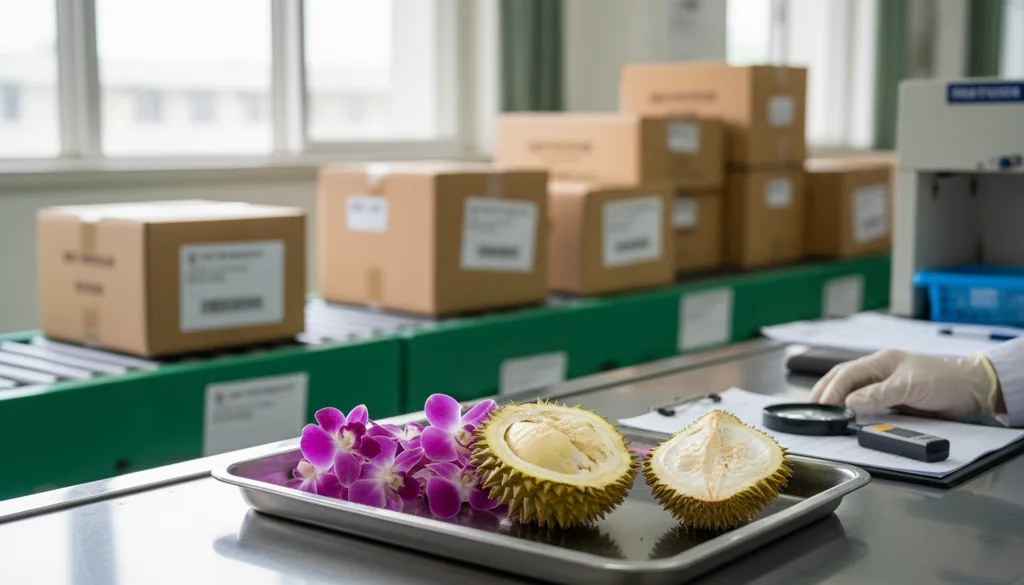
Taipei, Chinese has introduced updated quarantine requirements for plants and plant products to strengthen biosecurity and prevent pest and disease entry.
Taipei tightens plant quarantine rules to block pests from every shipment
Taipei, Chinese has overhauled its plant quarantine rules, requiring every shipment of seeds, cuttings and nursery stock to carry pre-issued import permits from 1 April 2026. The new regime, published by the Animal and Plant Health Inspection Agency (APHIA), covers all trading partners and adds testing for five bacterial diseases and one moth species not previously regulated. The delivered cost of every shipment will rise: importers must pay for laboratory tests and post-entry quarantine — the seeds are grown out under watch before anyone may use them.
The changes hit everything from soybean seed (1201.90) to ornamental orchids (0602.90), nursery stock (0602.20) and fresh citrus (0805.10). APHIA said in a statement that the rules are designed to keep out pests that could damage crops and forests across the island. The agency removed 37 species from the quarantine list at the same time, bringing the total number of regulated pests down to 4231.
It comes after a decade in which the same authority has updated the list only twice. The last revision, in 2018, added 12 pests; the one before that, in 2012, removed 41. This time the agency has both added and subtracted, signalling a shift to a more dynamic, science-based system.
The permit that must travel with every box
Every shipment of plants or plant products must now carry a pre-issued import permit1. The permit is valid for 180 days and must be obtained before the shipment leaves the country of origin. APHIA will issue it only after the exporter provides a plant-health certificate from the plant-health agency in the country of origin, a pest-risk analysis for the specific species, and proof that the seeds or cuttings have been tested for the five bacterial diseases and the light-brown apple moth (Epiphyas postvittana)2.
Paperwork behind one permit
The testing must be done in a laboratory accredited by APHIA or by an agency recognised under the International Plant Protection Convention. Results must be attached to the permit application; if they are missing or inconclusive, the permit will not be issued. Once the permit is granted, it must travel with the shipment and be presented to Taiwanese customs at the point of entry.
The quarantine bill that the importer pays
Seeds and cuttings that pass the border tests must still go through post-entry quarantine1. The importer pays for the land, the labour and the second round of tests. APHIA inspectors will grow the plants out in a government-approved nursery for 30 to 90 days, depending on the species. If any pests are found, the entire shipment will be destroyed at the importer’s expense.
How long plants sit in post-entry quarantine
The agency has not set a fee schedule, but industry estimates put the cost at between NT$5,000 and NT$20,000 (US$150 to US$600) per shipment. For high-value nursery stock, the quarantine period can extend to 180 days, doubling the cost. APHIA said in a notification that the quarantine is mandatory for all regulated species, regardless of the country of origin1.
The pest list that has grown and shrunk
The new rules add the light-brown apple moth and five bacterial diseases to the quarantine list. The moth, a leaf-roller that attacks apples, grapes and roses, is now regulated for shipments from Australia, New Zealand and the United States2. The five bacteria — including Xanthomonas campestris, which causes black rot in cruciferous vegetables — are regulated for all countries.
At the same time, APHIA removed 37 species from the list, including the citrus blackfly and the coconut rhinoceros beetle. The agency said the removals were made to align with World Trade Organization sanitary and plant-health principles, which require that measures be based on scientific evidence and not be more trade-restrictive than necessary1.
The timeline that leaves little time to prepare
The draft rules were first circulated to trading partners on 8 January 2026, giving them 60 days to comment3. The final text was published on 17 March 2026 and takes effect on 1 April 20263. That leaves importers and exporters 15 days to obtain the new permits and arrange the required testing.
Dates importers must work to
| Date | Who it catches | What falls due |
|---|---|---|
| 8 Jan 2026 | Trading partners | Comment window opens, 60 days |
| 17 Mar 2026 | All importers and exporters | Final rules published |
| 1 Apr 2026 | Every shipment arriving on or after the date | Permits and testing required; no grace period announced |
| 1 Dec 2027 | Trading partners | Data submissions for the next review |
| Mar 2028 | APHIA | First two-yearly list review |
APHIA has not said whether it will grant any grace period for shipments already in transit. The agency said in a statement that it expects all shipments arriving on or after 1 April to comply with the new requirements4.
The international standard that Taipei follows
The new rules conform to International Standard for Plant-health Measures No. 14, which sets out the use of integrated measures in a systems approach for pest risk management2. APHIA said the changes were made to bring the island’s regulations in line with the latest scientific evidence and to reduce the risk of pest introduction.
The agency has also committed to reviewing the list every two years, starting in 2028. That review will be based on new scientific data and pest-risk analyses submitted by trading partners. APHIA said it will publish any proposed changes at least 60 days before they take effect, giving importers time to adjust2.
The next review is due in March 2028, and the agency has already invited trading partners to submit data by 1 December 20272. Until then, the rules published in March 2026 will remain in force, leaving importers with a system that is both stricter and more predictable than the one it replaces.
Sources
- ↩ Draft amendment of the “Quarantine Requirements for the Importation of Plants or Plant Products” https://docs.wto.org/imrd/directdoc.asp?DDFDocuments/T/G/SPS/NTPKM659.docx
- ↩ Draft amendment of Part B of the “Quarantine Requirements for the Importation of Plants or Plant Products” https://docs.wto.org/dol2fe/Pages/SS/directdoc.aspx?filename=Q:/G/SPS/NTPKM655.pdf&Open=True
- ↩ The implementation on Part B of the “Quarantine Requirements for the Importation of Plants or Plant Products” https://docs.wto.org/dol2fe/Pages/SS/directdoc.aspx?filename=Q:/G/SPS/NTPKM655A1.pdf&Open=True
- ↩ The implementation of the amendment of the "Quarantine Requirements for the Importation of Plants or Plant Products" https://docs.wto.org/dol2fe/Pages/SS/directdoc.aspx?filename=Q:/G/SPS/NTPKM649A1.pdf&Open=True