
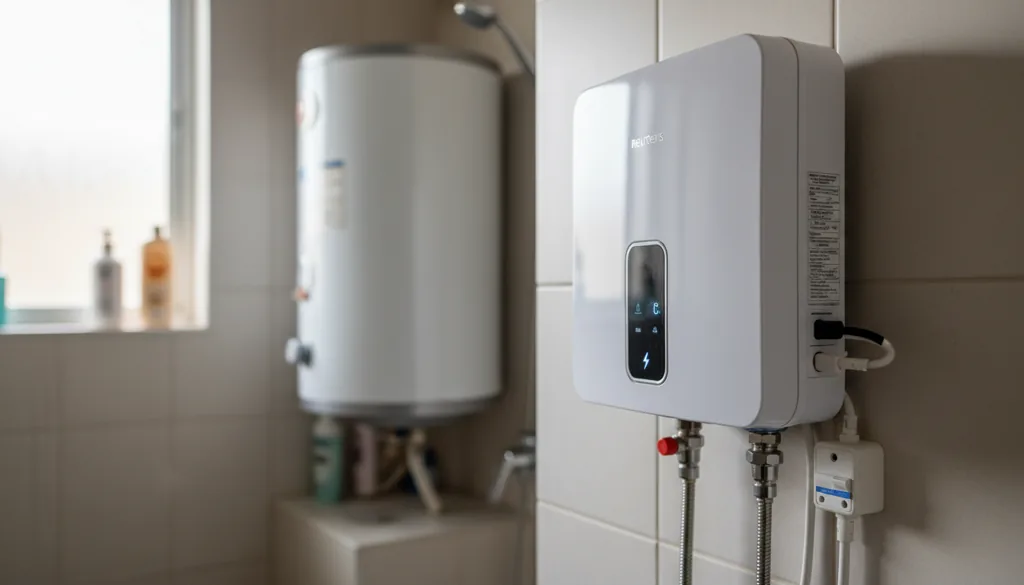
Ecuador proposes revisions to energy efficiency and electrical safety standards for domestic electric water heaters, targeting storage and instant models, with key changes under Regulation and Regulation
Ecuador has proposed new energy efficiency and electrical safety standards for domestic electric water heaters, covering both storage and instant models, with the changes set to take effect in March 20271. The regulations, notified to the World Trade Organization (WTO) in February 2026, introduce stricter testing requirements and mandatory energy labelling for all models sold in the country. Manufacturers and importers will bear the cost of compliance, including certification and updated labelling.
The rules target two product categories: storage water heaters (commonly used in households) and instant models, which heat water on demand. Under the new standards, every unit must meet minimum efficiency thresholds and display a visible energy label at the point of sale1. The delivered cost of imported models is expected to rise, as suppliers adjust to the additional testing and documentation requirements.
It follows a broader push by Ecuador’s Ministry of Production, Foreign Trade, Investment and Fisheries (MPCEIP) to align domestic standards with international benchmarks. The move mirrors similar regulations in neighbouring Andean nations, where energy efficiency labelling has been mandatory for household appliances since 2020. For Ecuador, the changes come as the country grapples with rising electricity demand and periodic supply shortages during peak usage hours.
The efficiency classes and testing rules
The new standards divide water heaters into seven efficiency classes, ranging from A (most efficient) to G (least efficient)1. Storage models must achieve at least 82% efficiency to qualify for Class D, while instant heaters face a lower threshold of 75%. The classification system is based on the COPANT 1713:2014 standard, a regional benchmark for energy performance in household appliances.
Minimum efficiency to qualify, %
Testing must now follow either the COPANT 1713 or IEC 60379:2023 methods, both of which measure energy consumption under controlled conditions1. Importers must provide a certificate of conformity issued by an accredited laboratory, confirming that each model meets the required efficiency class. The certificate must accompany every shipment, and failure to produce it will result in customs clearance delays.
The rules also mandate a standardised energy label, measuring at least 85mm by 170mm, which must be affixed to the product or its packaging1. The label must include the efficiency class, the manufacturer’s name, and the model number in Spanish. While other languages are permitted, the primary information must be in Spanish to ensure consumer understanding.
Who pays for compliance
The financial burden of compliance falls squarely on manufacturers and importers. Testing costs, which can range from $200 to $500 per model depending on the laboratory, must be borne by the supplier1. For small importers, the additional expense could squeeze already tight margins, particularly for low-cost models that dominate the market.
The new labelling requirements add another layer of cost. Suppliers must redesign packaging to include the efficiency label, and some may need to invest in new printing equipment to meet the size and legibility standards. The ministry has not offered subsidies or transitional support, leaving businesses to absorb the costs independently.
Retailers are not directly responsible for compliance but will face pressure to stock only certified models. Uncertified units already in warehouses or on store shelves before March 2027 may be sold until stocks are depleted, but no new uncertified models will be permitted for sale after the deadline.
The safety standards and certification process
Alongside efficiency rules, the new regulations introduce stricter electrical safety requirements. All water heaters must now comply with IEC 60335-2-21, which sets limits on leakage current, insulation resistance, and mechanical durability1. The standard also mandates that units withstand 2,000 volts during high-voltage testing, up from the previous 1,500-volt requirement.
Paperwork before a model reaches the market
Certification must be conducted by laboratories recognised under Ecuador’s National Quality System (SNC). The process includes both type testing (for design approval) and factory inspections to ensure consistent production quality. Importers must submit test reports to the ministry before placing any model on the market, and random post-market surveillance will be conducted to verify ongoing compliance.
The ministry has not yet published a list of approved laboratories, but it has indicated that foreign certifications from countries with mutual recognition agreements will be accepted. This could ease the burden for multinational manufacturers, who may already hold certifications from laboratories in the US or EU.
What the rules replace and what they leave alone
The new standards replace a patchwork of older regulations that lacked uniform testing methods and labelling requirements. Previously, water heaters were subject to general electrical safety rules but no specific efficiency benchmarks. The old system allowed models with widely varying performance to enter the market, making it difficult for consumers to compare options.
Compliance, old regime and new
| Requirement | Old rules | New rules |
|---|---|---|
| Efficiency benchmarks | None | Class D minimum, A–G scale |
| Testing methods | General safety rules only | COPANT 1713 or IEC 60379 |
| Certification | Self-declaration | Third-party testing |
| Energy labelling | Not required | Mandatory at point of sale |
| Duty, HS 8516.10 | 15% since 2023 | 15%, unchanged |
The rules do not cover commercial or industrial water heaters, which remain subject to separate regulations. They also leave unchanged the tariff classification for imported models, which fall under HS code 8516.10 (electric instantaneous or storage water heaters)2. Duties on these products remain at 15%, unchanged since Ecuador’s Seventh Amendment to its tariff schedule in 2023.
For importers, the biggest change is the shift from self-declaration to third-party certification. Under the old regime, suppliers could self-certify compliance with basic safety standards, but the new rules require independent testing for both safety and efficiency. This aligns Ecuador with practices in Colombia and Peru, where third-party certification has been mandatory for household appliances since 2021.
The timeline and next steps
The regulations were published in draft form in February 2026 and are expected to be finalised by June 20261. A six-month transition period will follow, giving businesses until March 2027 to clear existing stock and obtain certification for new models. The ministry has indicated that no extensions will be granted, and non-compliant shipments arriving after the deadline will be refused entry.
From draft to enforcement
The changes come as Ecuador’s electricity sector faces growing strain. A government protocol issued in March 2026 identified five coastal provinces—Manabí, Los Ríos, El Oro, Guayas, and Esmeraldas—as high-risk zones for power outages during the rainy season3. While the new efficiency standards will not solve supply shortages, they are part of a broader strategy to reduce peak demand and improve grid stability.
For businesses, the key challenge will be securing certification in time. With only a year between finalisation and enforcement, suppliers must act quickly to test models and update documentation. Those who delay risk losing market access, as customs authorities have been instructed to prioritise compliance checks for high-energy appliances. The ministry has not ruled out further revisions, with a review of the standards scheduled for 2028.
Sources
- ↩ WTO TBT notification 26-03909 — Ecuador https://members.wto.org/crnattachments/2026/TBT/ECU/26_03909_00_s.pdf
- ↩ Decision No. 140 of October 7, 2025, by the Constitutional Court of Ecuador https://esacc.corteconstitucional.gob.ec/storage/api/v1/10_DWL_FL/eyJjYXJwZXRhIjoicm8iLCJ1dWlkIjoiZTdhNTg2NzMtYzE3My00MzUyLWI0MTctYzIxYWE0NjE2ZTFjLnBkZiJ9
- ↩ Noboa Government implements electrical service response protocol for rainy season https://www.ambienteyenergia.gob.ec/gobierno-de-daniel-noboa-implementa-protocolo-de-respuesta-para-garantizar-el-servicio-electrico-durante-la-epoca-lluviosa/