
Brazil has proposed amendments to multiple active ingredient monographs for pesticides and plant growth regulators through three draft resolutions, with public comment periods extending through January 16, 2027.
Brazil’s health regulator, the National Health Surveillance Agency (Anvisa), proposed on Nov. 5, 2026 new pesticide residue limits for 25 farm chemicals used on food crops.
The main draft, Public Consultation No. 1,434, appeared in Brazil’s official gazette on Nov. 5, 20261. Two smaller drafts deal with a seed treatment made from a harpin protein and a new weedkiller made from oil palm2.
In short, the drafts change how much pesticide may remain on food such as coffee, cotton, beans, citrus and mangoes. Growers and food shippers would have to meet the new limits once the final rules take effect.
What is Anvisa changing in the pesticide list?
Brazil keeps an official list of approved pesticide ingredients. Each ingredient has a "monograph", a fact sheet that sets the crops it may be used on and the limits that apply. The list was published by Normative Instruction No. 103 of Oct. 19, 20211.
Each monograph sets two key numbers for each crop. The first is the maximum residue limit (MRL), the highest amount of pesticide allowed on the harvested crop, in milligrams per kilogram. The second is the safety interval, the number of days between the last spraying and the harvest1.
The largest draft would update the monographs of 25 active ingredients1. Some changes add new crops. Others raise or lower an existing limit, or change the waiting time before harvest.
Which three drafts are open for comment?
Anvisa’s toxicology department, the General Management of Toxicology, issued all three drafts. Each one is a proposed Normative Instruction, a type of binding rule set by the agency’s board2.
Anvisa’s three pesticide drafts
| Draft | What it does |
|---|---|
| Public Consultation No. 1,434 | Updates 25 monographs with residue limits and safety intervals |
| Public Consultation No. 1,433 | Limits harpin protein peptides to seed treatment |
| Public Consultation No. 1,431 | Adds an oil palm kernel extract weedkiller |
The three drafts are:
- Public Consultation No. 1,434, dated Nov. 3, 2026, which updates 25 monographs with new residue limits and safety intervals1.
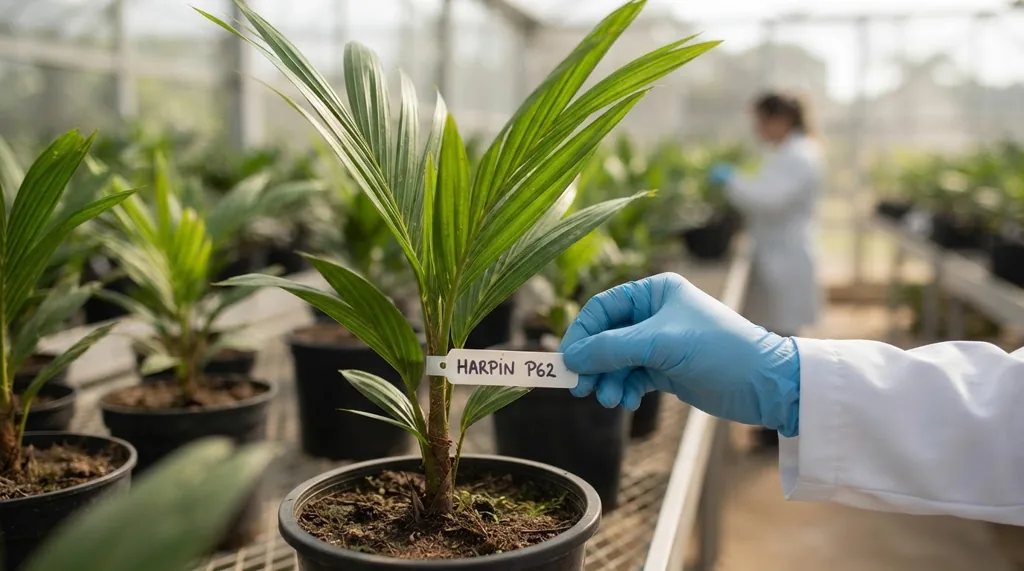
- Public Consultation No. 1,433, dated Oct. 14, 2026 and published in the gazette on Nov. 6, 2026, which changes the uses of peptides derived from harpin protein (monograph P62)2.
- Public Consultation No. 1,431, dated Oct. 14, 2026 and published in the gazette on Oct. 16, 2026, which adds a new ingredient from the oil palm tree (monograph E36)3.
The largest draft is part of Anvisa’s 2026-2027 regulatory agenda. It falls under topic 2.9, the regular update of the list of pesticide monographs1.
Which crops get new residue limits?
The 25-ingredient draft covers insecticides, fungicides and weedkillers. Many changes concern export crops such as coffee, cotton, soybeans and fruit1.
Some of the main changes are:
- Acetamiprid, an insecticide: the limit for coconut, oil palm and macauba palm would be 0.3 mg/kg, with a 7-day safety interval1.
- Bifenthrin, an insecticide: cotton would be set at 0.2 mg/kg, coffee at 0.15 mg/kg, and millet, maize and sorghum at 0.04 mg/kg. Macauba palm would be added at 0.08 mg/kg with a 7-day interval1.
- Captan, a fungicide: peas, beans, chickpeas, lentils and buckwheat would be added for seed treatment at 1 mg/kg. Millet would be added at 2 mg/kg, and shallots at 10 mg/kg with a 7-day interval1.
- Chlorfluazuron, an insecticide: coffee would be added at 0.01 mg/kg with a 30-day interval, and beans at 0.01 mg/kg with a 4-day interval1.
- Chlorfenapyr, an insecticide: watermelon and melon would be set at 0.1 mg/kg with a 10-day interval1.
- Cyclaniliprole, an insecticide: peanuts, peas, beans, chickpeas and lentils would be added at 0.01 mg/kg with a 14-day interval1.
These limits apply to the harvested crop. A crop with more residue than the limit would not meet Brazil’s rules.
How do the limits change for fruit and grains?
Other changes in the same draft affect fruit, root crops and cereals. For cotton, the limit for diafenthiuron would be 0.4 mg/kg, and for ethiprole 0.5 mg/kg1.
Proposed waiting time before harvest, days
The ethiprole changes also set a 60-day safety interval for sugar cane. Millet, maize and sorghum would get a 21-day interval1.
Several fruit limits change as well:
- Formetanate hydrochloride: grapes would be added at 0.07 mg/kg with a 56-day interval1.
- Fenpropidin: apples would be added at 1 mg/kg with a 7-day interval, and soybeans would be set at 0.2 mg/kg1.
- Pydiflumetofen: papaya would be set at 0.4 mg/kg and mango at 0.3 mg/kg. Buckwheat would be added at 0.01 mg/kg1.
- Pyriofenone: the safety interval for watermelon would be 3 days1.
- Tolfenpyrad: citrus would be set at 0.01 mg/kg with a 150-day safety interval1.
- Thiabendazole: olives and pitaya would be added at 2 mg/kg with a 14-day interval1.
Thiabendazole would also be allowed as a seed treatment for root crops. These include sweet potato, yacon, beet, yam, ginger, turnip and radish, at 0.01 mg/kg1.
For carrots, the fosthiazate limit would be 0.3 mg/kg1. Mancozeb and prothioconazole would each be allowed on buckwheat with a 14-day interval1.
What changes for weedkillers on cereals and soybeans?
The draft adds many crops for metproxybicyclone, a weedkiller. Cotton would get a limit of 0.6 mg/kg and coffee 0.04 mg/kg1.
Oats, rye, barley, wheat and triticale would also get 0.04 mg/kg when sprayed before the weeds come up. The same limit would apply to millet, maize, sorghum, peanuts, peas, beans, chickpeas, lentils and buckwheat1.
Soybeans would get 0.15 mg/kg for metproxybicyclone. When sprayed after the weeds come up, soybeans would have a 60-day interval1.
Tolpyralate, another weedkiller, would be allowed on barley and wheat at 0.01 mg/kg with a 60-day interval1. Clomazone would be allowed on sweet potato at 0.05 mg/kg1.
Some uses carry no limit because the crop is not eaten. Turf, ornamental plants and pasture are marked as "non-food use" for clomazone, mesotrione and terbuthylazine1.
How is the residue measured under the new texts?
Several monographs would gain a sentence that defines what is measured. This "residue definition" tells laboratories which substance to test when checking the limit1.
For captan, chlorfluazuron, fosthiazate and metominostrobin, the residue is the ingredient itself1. For metproxybicyclone, the residue is the sum of the ingredient and two breakdown products, SYN548086 and SYN5524211.
This matters for testing. A laboratory checking a shipment must count the breakdown products too, not only the original chemical.
What does the harpin protein draft change?
The second draft concerns peptides derived from harpin protein, a product that triggers a plant’s own defences against disease. The protein was first taken from a bacterium, Erwinia amylovora2.
The monograph calls it an activator of plant metabolism. It says the protein gives resistance to many diseases, reduces some insects and improves crop growth and yield2.
The draft rewrites items 2.2 and 2.3 of the monograph. Products may be used only for seed treatment, on crops that the Ministry of Agriculture and Livestock (Mapa) has approved2. Mapa keeps those crops in its Agrofit system2.
Anvisa found no evidence of toxicity in the scientific literature. With low use rates and fast breakdown in the field, no residue is expected on treated crops2.
The least strict health classification for these products would be "Not Classified". Workers applying the product must still wear the protective equipment on the label: overalls, boots, mask, goggles and gloves2.
What is the new oil palm weedkiller?
The third draft adds a new ingredient, Elaeis guineensis, the oil palm tree3. Its first product type is an extract from palm kernels, the seeds inside the ripe fruit3.
The extract is a mix of fatty acids made by splitting and distilling crude palm kernel oil. Its two marker substances are caprylic acid and capric acid3.
The draft classes it as a plant-based weedkiller. It works by contact on weed leaves, damaging the membranes of the weed’s cells3.
It may be used on any crop where the weeds approved by Mapa occur3. No residue limit would be set, because the substances are natural fatty acids3. Workers must wait 24 hours before re-entering a field, or until the spray has fully dried3.
Anvisa notes that the United States Food and Drug Administration lists both acids as generally recognised as safe3. Health warnings would be set for each finished product3.
Who is affected by Anvisa’s pesticide drafts?
Pesticide makers and their local agents are the first group affected. The monographs decide which crops their products may be sold for in Brazil.
Farmers and exporters of Brazilian crops are affected too. A grower of coffee, citrus or cotton must respect the new limits and waiting times before harvest.
Food importers who sell in Brazil also face the new limits. Brazil’s residue limits apply to food sold there, so imported fruit, grains and beans with residues above the limit would not meet the rules.
How can companies comment, and when?
Each draft has a 60-day comment period. The period starts 3 working days after the draft is published in the official gazette1.
From draft to final rule
Comments must be sent through an online form on Anvisa’s website. Comments sent another way, or after the deadline, will not be considered1. All comments received will be made public1.
After the period ends, Anvisa will review the comments. Its board will then decide, and the result will be posted on Anvisa’s website1.
When would the new limits take effect?
The 25-ingredient rule would take effect on the date it is published in final form1. No date has been set yet, because the board must first approve it.
The harpin protein and oil palm drafts leave the start date blank, stating only that it will be in 20262. The oil palm draft does the same3.
Key points on Brazil’s pesticide residue drafts
The table below sums up the three drafts.
| Question | Answer |
|---|---|
| Who issued the drafts? | Anvisa, Brazil’s health regulator |
| What is the main draft? | Public Consultation No. 1,434 |
| When was it published? | Nov. 5, 2026 |
| How many ingredients change? | 25 monographs |
| What is set? | Residue limits and safety intervals |
| Example limit | Coffee, bifenthrin, 0.15 mg/kg |
| Longest interval | Citrus, tolfenpyrad, 150 days |
| Harpin protein use | Seed treatment only |
| New ingredient | Oil palm kernel extract weedkiller |
| Comment period | 60 days |
| Start of main rule | On final publication |
The next step is the end of each 60-day comment period. After that, Anvisa’s board will decide on the final texts, and the 25-ingredient rule would apply from its publication1.
Sources
- ↩ SEI – 25351.930009/2026-35 https://members.wto.org/crnattachments/2026/SPS/BRA/26_05980_00_x.pdf
- ↩ 26_05981_00_x.pdf https://members.wto.org/crnattachments/2026/SPS/BRA/26_05981_00_x.pdf
- ↩ 26_05983_00_x.pdf https://members.wto.org/crnattachments/2026/SPS/BRA/26_05983_00_x.pdf