
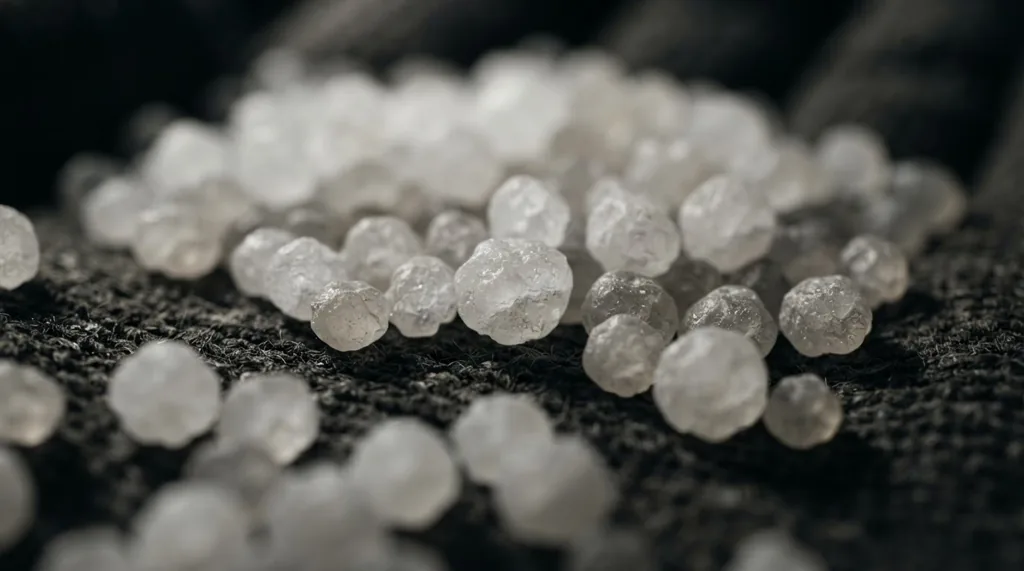
The European Union closed its anti-dumping case on Russian urea fertiliser without any duty, effective Nov. 24, 2026.
The European Commission has closed its anti-dumping case on urea fertiliser from Russia without duties, with effect from Nov. 24, 20261.
The Commission ended the case because the European fertiliser makers who asked for it withdrew their complaint1. The decision was published in the Official Journal of the European Union on Nov. 23, 2026, and takes effect the next day1.
In short, no anti-dumping duty will come out of this case. Russian urea shipments will not face an extra charge from this investigation, and none can be collected later on past imports from it.
What did the Commission decide on Russian urea?
Commission Implementing Decision (EU) 2026/2579 is dated Nov. 20, 20261. Its first article states that the anti-dumping investigation on urea from Russia is hereby terminated1. Its second article says it enters into force on the day after its publication1.
An anti-dumping duty is an extra import tax on goods that a foreign maker sells abroad below their normal price. The Commission investigates such cases for the whole European Union (EU). In this case, it will now set no duty at all.
The decision is short. It gives no findings on prices, harm to EU makers or margins. The case ended before the Commission reached any final view on whether dumping took place.
Why did the urea case end?
The case started with a complaint from Fertilizers Europe, an association of European urea makers1. In a letter dated Oct. 9, 2026, the association withdrew its complaint1. The decision does not give a reason for the withdrawal.
Under the EU’s basic anti-dumping law, Regulation (EU) 2016/1036, the Commission may end a case once a complaint is withdrawn1. It must not do so if ending the case would harm the wider interest of the EU1. The Commission found nothing in its investigation to show such harm1.
The Commission told the parties in the case about its plan and invited comments1. It received no comments that changed its view1. A committee of EU member state experts also gave its opinion on the decision1.
Which urea products does the decision cover?
The case covered urea, a common nitrogen fertiliser, from Russia1. The product description is wide. It includes urea whether or not in a water solution, with or without additives, and with different levels of nitrogen1.
What the closed case covered
| Point | Detail |
|---|---|
| Goods | Urea, whether or not in a water solution, with or without additives |
| Origin | Russia only |
| Tariff codes | CN 3102 10 12, 3102 10 15, 3102 10 19, 3102 10 90 |
| Outcome | Case terminated, no duty |
| In force | Nov. 24, 2026 |
The goods fall under four tariff codes of the EU’s Combined Nomenclature (CN), the customs product list used across the bloc1:
- CN 3102 10 12
- CN 3102 10 15
- CN 3102 10 19
- CN 3102 10 90
The same four codes appeared in the notice that opened the case2. That notice said the codes are given for information only2. The product description, not the code, set the scope of the case.
The case covered urea that originates in Russia only1. It did not cover urea from any other country.
What did the complaint claim about Russian prices?
The notice that opened the case set out the complaint’s main argument2. Fertilizers Europe said Russia fixes natural gas prices at artificially low levels2. Gas is a key input for making urea2.
Estimated dumping margins in the complaint, 2024, %
According to the complaint, gas makes up more than 17% of the cost of making urea2. The complaint compared Russian gas prices with prices on international markets, in particular the Dutch gas price for 20242. It claimed Russian gas prices were well below those markets2.
The complaint also said imports from Russia had grown in volume and in market share2. It claimed these imports hurt the sales, prices, finances and jobs of EU urea makers2.
The Commission’s registration rule gave figures from the complaint. It estimated dumping margins of 34.5% to 78.9% for 20243. A dumping margin is the gap between the normal price and the export price. The complaint also put the level needed to remove harm to EU makers at 86% to 120%3.
The Commission stressed that these figures came from the complaint only3. It said they could not create any expectation about a final duty3. With the case closed, they will never be tested.
How did the case run before it was closed?
The Commission received the complaint on Aug. 11, 20251. It opened the investigation on Sept. 25, 2025 with a notice in the Official Journal1. The registration rule said the complaint came from makers producing more than 25% of the EU’s urea3.
The urea case from start to end
The notice set the period the Commission would examine for dumping and harm2. That period ran from July 1, 2024, to June 30, 20252. For trends in harm, the Commission planned to look back to Jan. 1, 20222.
The notice also invited Russian exporters and unrelated importers in the EU to take part2. The Commission said it might pick a sample of each group to study2. It had already picked a provisional sample of EU urea makers2.
What was customs registration of urea imports?
On Dec. 10, 2025, the Commission adopted Implementing Regulation (EU) 2025/24903. It told EU customs authorities to register imports of Russian urea under the same four codes3. The rule was published on Dec. 11, 2025, and took effect the next day3.
Registration means customs keep a record of each import while a case runs. Its purpose was to let the EU collect anti-dumping duties later on those imports3. That could only happen if a final duty was set and the legal conditions were met3.
The Commission said it made imports subject to registration on its own initiative3. It also said any future charge on registered imports would depend on the findings of the investigation3.
The registration rule had a built-in end date. It said registration expires nine months after the rule took effect3. That nine-month period ended before the Commission closed the case.
What changes for importers and buyers of Russian urea?
For EU importers, the main change is legal certainty. The case will set no duty, so no anti-dumping duty from it can be charged on registered imports. The risk of a later bill on past shipments from this case is gone.
For Russian urea makers, the case no longer threatens their sales to the EU with an extra duty. The decision does not change any other rules that may apply to Russian goods. It deals only with this anti-dumping case.
For EU urea makers, the decision ends the case they started. Fertilizers Europe chose to withdraw, and the Commission accepted that choice1.
Farmers and other buyers of urea in the EU will not see a price rise from an anti-dumping duty under this case. The decision itself makes no statement about prices or supply.
What happens next for the urea case?
The decision is final for this case. It entered into force on Nov. 24, 2026, the day after its publication on Nov. 23, 20261. The decision sets no further step or date.
Customs authorities now have no anti-dumping case to apply to Russian urea under these codes. Any new case would need a new complaint or a new decision by the Commission. None is announced in the decision.
Key points on the Russian urea case
The table sums up the Commission’s decision.
| Question | Answer |
|---|---|
| What changed? | Anti-dumping case closed without duties |
| Who decided? | European Commission |
| Which instrument? | Implementing Decision (EU) 2026/2579 |
| Which goods? | Urea fertiliser, including in water solution |
| Which country? | Russia |
| Which codes? | CN 3102 10 12, 3102 10 15, 3102 10 19, 3102 10 90 |
| Why did it end? | Fertilizers Europe withdrew its complaint |
| When was the complaint withdrawn? | Oct. 9, 2026 |
| Estimated margins in the complaint | 34.5% to 78.9% |
| When did the case open? | Sept. 25, 2025 |
| When does the decision apply? | Nov. 24, 2026 |
From Nov. 24, 2026, Russian urea under the four codes faces no anti-dumping duty from this case1. No later charge on past imports can come from it.
Sources
- ↩ Implementing decision – EU – 2026/2579 – EN – EUR-Lex https://eur-lex.europa.eu/legal-content/EN/TXT/?uri=OJ:L_202602579
- ↩ EUR-Lex – 52025XC05240 – EN – EUR-Lex http://data.europa.eu/eli/C/2025/5240/oj
- ↩ Implementing regulation – EU – 2025/2490 – EN – EUR-Lex http://data.europa.eu/eli/reg_impl/2025/2490/oj