
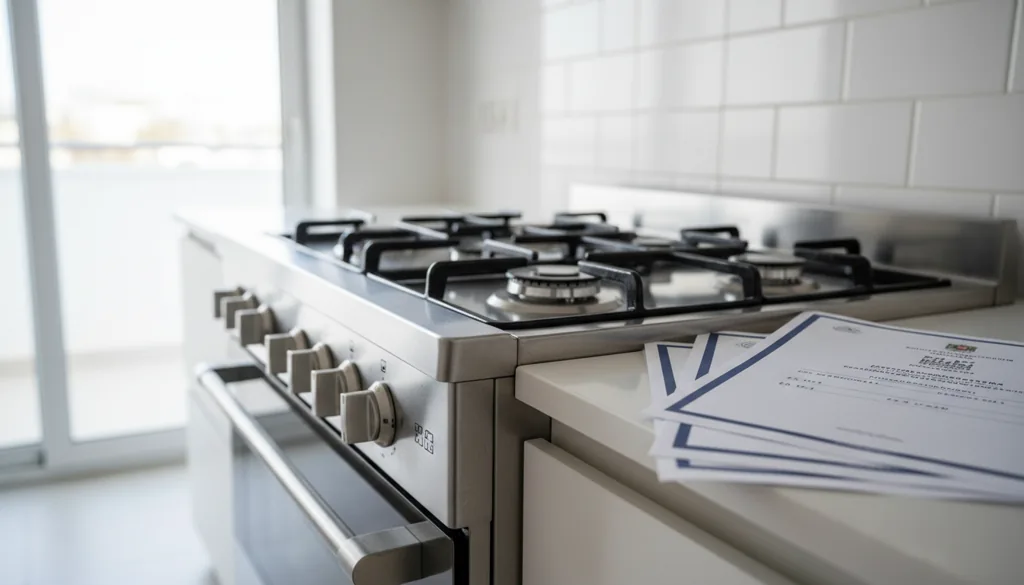
Egypt has established comprehensive safety standards for domestic gas cooking appliances, including requirements for safety and energy efficiency, under Egyptian Standard ES 164, ES 164-1-1, and ES 164-1-2
Egypt sets new safety rules for gas cookers
Egypt has extended the deadline for importers and manufacturers to comply with new safety and efficiency standards for domestic gas cooking appliances by six months, pushing the enforcement date to 7 January 2027. The move, announced in Ministerial Decree No. 159/2026, gives businesses until the new year to meet requirements under Egyptian Standard ES 164 and its three supporting documents. The rules cover everything from pressure valves to energy consumption, and apply to all cookers sold in the country that run on liquified petroleum gas (LPG).
Years of delay, one new deadline
The standards affect a wide range of products, including freestanding stoves, built-in ovens, and portable camping cookers. Importers must now ensure every shipment meets testing requirements for gas leaks, flame stability, and carbon monoxide emissions before it can clear customs. The delivered cost of non-compliant models will rise, as manufacturers face either redesigning their products or paying for additional certification.
It comes after years of piecemeal regulation. Earlier versions of the standard were first introduced in 2005 and updated in 2017, but enforcement was repeatedly delayed. The latest extension, published in the official gazette on 13 August 2026, marks the third time the government has pushed back the compliance date since the current rules were notified in January.
What the new rules demand
The standards set 17 mandatory tests that every gas cooker must pass before it can be sold in Egypt. These include checks for gas leakage at pressures up to 50 millibars, flame failure devices that cut the gas supply within 60 seconds if the flame goes out, and thermal efficiency ratings of at least 55% for burners1. Cookers must also carry permanent markings showing the model number, gas type, and pressure range, and instructions must be provided in Arabic.
What every cooker must pass
The rules adopt parts of international standards, but with local adjustments. ES 164-1-1 mirrors ISO 21364-1:2025 for general safety, while ES 164-1-2 is based on Egyptian research into household cooking habits1. ES 164-1-4, which covers energy efficiency, aligns with ISO 21364-22:2025 but sets stricter limits on standby power consumption1. Manufacturers must now submit test reports from accredited laboratories before any new model can enter the market.
The standards also introduce new labelling requirements. Every cooker must display a sticker showing its energy efficiency class, from A (most efficient) to G (least efficient), along with its annual energy consumption in kilowatt-hours1. Retailers must keep these labels visible on the appliance until it is sold. The rules do not specify penalties for non-compliance, but earlier decrees allow customs to seize shipments that fail inspection.
Who bears the cost
The testing and certification costs fall on manufacturers and importers. Each new model must be tested at an accredited laboratory, with fees ranging from 5,000 to 20,000 Egyptian pounds (£80 to £320) per appliance type, depending on the number of burners and features1. Importers must also pay for pre-shipment inspections, adding roughly 1-2% to the delivered cost of each unit. Smaller businesses, particularly those importing low-cost models from Asia, are likely to feel the impact most.
Lab test fees per appliance type, EGP
The government has not offered subsidies or tax breaks to offset the costs. However, the six-month extension gives businesses more time to adjust their supply chains. Some manufacturers have already begun redesigning products to meet the new efficiency standards, while others are stockpiling compliant models ahead of the January deadline. The rules do not apply to cookers already in the country before the enforcement date, but retailers must sell through existing stock by 30 June 2027 or face penalties1.
How the rules fit into Egypt’s broader energy push
The new standards are part of Egypt’s wider effort to reduce energy waste and improve household safety. The country has been phasing out older, less efficient appliances since 2017, when it first mandated energy labels for refrigerators and air conditioners. The gas cooker rules align with Egypt’s National Energy Efficiency Action Plan, which aims to cut household energy consumption by 15% by 20302. The plan also includes subsidies for solar water heaters and LED lighting, but the cooker standards are the first to target LPG appliances directly.
The energy arithmetic behind the rules
The timing coincides with Egypt’s push to expand its renewable energy sector. The New and Renewable Energy Authority (NREA) recently won a bronze award at the UAE Energy Awards for its work in training African engineers in clean energy technologies2. While the cooker rules do not require the use of renewable energy, they are designed to reduce LPG consumption, which remains heavily subsidised. The government spends roughly $3 billion annually on LPG subsidies, and inefficient cookers are estimated to waste up to 20% of the gas used in Egyptian homes2.
What happens after January
The rules come into force on 7 January 2027, but enforcement will be gradual. Customs will begin rejecting non-compliant shipments on that date, while retailers have until 30 June 2027 to sell through existing stock1. The Egyptian Organization for Standardization and Quality (EOS) will conduct random market checks to ensure compliance, and businesses found selling non-compliant models could face fines or product recalls.
Who is caught, and when
| Date | Who it catches | What falls due |
|---|---|---|
| 7 Jan 2027 | Importers and manufacturers | Customs begins rejecting non-compliant shipments |
| 30 Jun 2027 | Retailers | Existing stock must be sold through or penalties apply |
| 2028 | The standard itself | Review, with possible updates to newer international benchmarks |
The government has not said whether it will extend the deadline again, but the six-month grace period suggests it is serious about enforcement this time. The standards will be reviewed in 2028, with potential updates to align with newer international benchmarks1. For now, importers and manufacturers must focus on meeting the current requirements—or risk losing access to one of the Middle East’s largest markets for household appliances.
Sources
- ↩ The Egyptian Standard ES 164for "Domestic gas cooking appliances working for use with liquified petroleum gases". https://docs.wto.org/imrd/directdoc.asp?DDFDocuments/T/G/TBTN05/EGY3A105.docx
- ↩ Egypt News Updates https://nrea.gov.eg/en/Media/News