
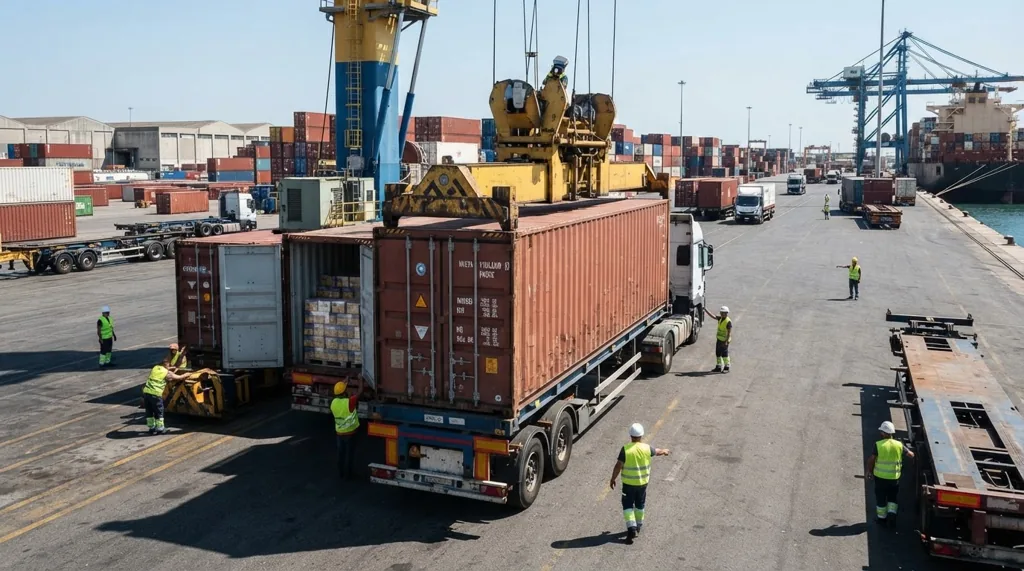
United States sets preliminary anti-dumping rates of 3.62% to 6.47% on Italian pasta from four makers, published Oct. 15, 2026.
The U.S. Department of Commerce on Oct. 15, 2026 set preliminary anti-dumping rates of 3.62% to 6.47% on pasta from four Italian makers1.
The notice covers pasta shipped to the United States between July 1, 2024 and June 30, 20251. It also drops 15 companies or company groups from the review because the requests to examine them were withdrawn1.
In short, importers of pasta from La Molisana, Garofalo, Gruppo Milo and the Rummo group may owe these new rates on past shipments once the rates are final. For the 15 companies dropped from the review, past shipments will be charged at the deposit rate paid when the pasta entered the country.
What did Commerce decide on Italian pasta?
The notice was published in the Federal Register, the U.S. government’s official journal, by the International Trade Administration (ITA), the trade agency within Commerce1. It gives the preliminary results of an "administrative review", a yearly check of how much extra duty each company should pay1.
Preliminary anti-dumping rates, 2024-2025 review, %
The duty in question is an anti-dumping duty, an extra import tax on goods sold abroad below their normal price. Commerce found that the companies it checked sold pasta in the United States at less than "normal value" during the review period1. Normal value is, broadly, the price or cost the agency uses as a fair benchmark.
The preliminary rates are:
- La Molisana, S.p.A.: 3.62%, set from its own sales data.
- Pastificio Lucio Garofalo S.p.A.: 6.47%, set from its own sales data.
- Companies not individually checked: 5.05%, the simple average of the two rates above.
These figures are estimates of the "dumping margin", the gap between the U.S. price and normal value, given as a share of the price1. They are not yet final, and they can change after comments.
Which pasta makers does the review name?
Commerce chose two companies for a full examination on Sept. 24, 2025: La Molisana and Garofalo1. In trade cases these are called mandatory respondents, the firms that must answer the agency’s detailed questions on prices and costs.
Two more companies or groups stayed in the review without a full check. They receive the 5.05% average rate1:
- Gruppo Milo SpA
- The Rummo group, listed as Rummo S.p.A., Pasta Castiglioni S.r.l., Molino e Pastifico and Rummo Lenta Lavorazione S.p.A.
Commerce explained its choice of the average. When both checked companies have rates above zero and not based only on estimates, it averages them for the others1. It compares a simple average and a weighted average and picks the one closer to the true weighted figure1.
Why were 15 companies dropped from the pasta review?
Under U.S. rules, Commerce ends a review for a company when every party that asked for the review withdraws the request within 90 days of the start1. The review was opened on Aug. 22, 20251.
Several parties withdrew, according to the notice1:
- La Doria Pasta PL S.r.l. withdrew its request on Sept. 3, 2025.
- Two U.S. makers, 8th Avenue Food & Provisions, Inc. and Winland Foods, Inc., withdrew their request for 17 companies on Oct. 28, 2025.
- Pastificio Di Martino Gaetano e Flli S.p.A. withdrew on Oct. 29, 2025.
- Marchesi Frescobaldi Soc. Agricola S.r.l. withdrew on Nov. 10, 2025.
- Barilla withdrew on Jan. 27, 2026.
As a result, the review ends for 15 companies or company groups. They include Barilla G. e R. Fratelli, Andriani S.p.A., Agritalia S.r.L., George DeLallo Company, Inc. and Pastificio Sgambaro1. The list also covers the Liguori and PAM group, the Fratelli Cellino firms and the Aldino group, which includes Pastificio Tamma, Chiavenna and Rigo1.
What happens to shipments from the dropped companies?
For these 15 companies, there will be no new rate for the review period. Instead, U.S. Customs and Border Protection (CBP), the border agency, will charge duty at the cash deposit rate paid at the time of entry1. A cash deposit is the estimated duty an importer pays when the goods arrive.
In practice, the deposit already paid becomes the final duty on those shipments. Commerce plans to send these instructions to CBP no earlier than 35 days after Oct. 15, 20261. After that, CBP can close the entries, which in trade language is called "liquidation".
How do the new rates compare with last year’s pasta review?
The previous review covered July 1, 2023 to June 30, 20242. Its preliminary results, published on Sept. 4, 2025, set a rate of 91.74% for La Molisana, Garofalo and the unchecked companies3. Commerce then based the rate on "adverse facts available", a penalty rate used when firms do not give the data requested3.
Pasta rates, last review and this one
| Company | 2023-2024 final | 2024-2025 preliminary |
|---|---|---|
| La Molisana | 2.65% | 3.62% |
| Garofalo | 7.00% | 6.47% |
| Unchecked companies | 5.21% | 5.05% |
That picture changed before the final results. On March 16, 2026, Commerce set final rates of 2.65% for La Molisana and 7.00% for Garofalo2. Companies not selected for a full check received 5.21%2.
Compared with those final rates, the new preliminary figures move in different directions:
- La Molisana rises from 2.65% to 3.62%.
- Garofalo falls from 7.00% to 6.47%.
- The rate for unchecked companies falls from 5.21% to 5.05%.
This time Commerce calculated both rates from the companies’ own sales1. It did not use a penalty rate.
How will customs collect the pasta duties?
The duty is collected in two steps. First, importers pay a cash deposit when the pasta enters the United States. Later, after a review, CBP sets the final duty on those past shipments1.
For La Molisana and Garofalo, Commerce plans to set a separate rate for each U.S. importer1. It will divide the total dumping found on that importer’s sales by their entered value, the value declared to customs1. When the entered value is missing, it will use a rate per unit of quantity instead1.
Some rules limit the charge:
- If a final company rate or importer rate is below 0.5%, it counts as "de minimis", too small to charge1.
- In that case, CBP will close the entries without any anti-dumping duty1.
- For pasta sold through a middleman, where the maker did not know it was going to the United States, CBP will use the all-others rate from the original investigation1.
Commerce plans to send these instructions to CBP no earlier than 35 days after the final results are published1. If a party files a case at the U.S. Court of International Trade, CBP will wait before closing the entries1.
What deposit rates apply to new pasta shipments?
The new rates do not change deposits yet. New deposit rates take effect only for shipments entered on or after the date the final results are published1.
Deposit rules after the final results
| Who | Deposit rate |
|---|---|
| Companies in this review | Final review rate, zero if below 0.5% |
| Companies reviewed before | Rate from latest completed review |
| Exporter not covered, maker covered | Maker’s latest rate |
| All other makers and exporters | 15.45% |
Once the final results are out, the deposit rules will be1:
- Companies in this review pay the rate set in the final results, or zero if that rate is below 0.5%.
- Companies reviewed before, but not in this review, keep the rate from their latest completed review.
- If the exporter is not covered but the maker is, the maker’s latest rate applies.
- All other makers and exporters keep paying the all-others rate of 15.45%.
The 15.45% rate was set in 2007, when the United States carried out a World Trade Organization (WTO) ruling1. The same rate was confirmed in the March 2026 final results2. These deposit rules stay in place until further notice1.
What must importers of Italian pasta file?
The notice reminds importers of one document. They must file a certificate on reimbursement of duties before CBP closes their entries for the review period1. The certificate states whether the foreign seller paid back the anti-dumping duty to the importer.
If an importer does not file it, Commerce may assume the duty was paid back1. CBP could then charge double anti-dumping duties1. The duty could also rise by the amount of any countervailing duty, a separate tax that offsets foreign subsidies1.
When will the pasta rates become final?
The process now moves to checks and comments. Commerce plans to share its calculations with the parties within five days of the notice1. It also intends to verify, or check on site, the information it used before issuing final results1.
Interested parties can then argue their case1:
- They may file written arguments, called case briefs, no later than seven days after Commerce issues its last verification report.
- They may file replies, called rebuttal briefs, within five days after the case brief deadline.
- They may ask for a hearing within 30 days of Oct. 15, 2026, through the agency’s online filing system.
The notice does not give a date for the final results. When the review opened in August 2025, Commerce said it intended to issue final results by July 31, 20264. That target has passed, so the timing of the final step is not yet set out in the documents.
Key points on the Italian pasta review
The table below sums up the preliminary results.
| Question | Answer |
|---|---|
| What changed? | Preliminary anti-dumping rates for Italian pasta |
| Who issued it? | U.S. Department of Commerce, ITA |
| Which goods? | Pasta from Italy |
| Period covered | July 1, 2024 to June 30, 2025 |
| La Molisana rate | 3.62% |
| Garofalo rate | 6.47% |
| Gruppo Milo and Rummo group | 5.05% |
| Companies dropped | 15 companies or groups |
| Rate for all others | 15.45% deposit |
| Who must act? | Importers file reimbursement certificate |
| Hearing request deadline | 30 days after Oct. 15, 2026 |
| When do deposits change? | When final results are published |
For now, importers keep paying the deposit rates already in place. The next dates in the process are the hearing request deadline, 30 days after Oct. 15, 2026, and the rescission instructions to CBP, no earlier than 35 days after that date1.
Sources
- ↩ AGENCY: — 15 / 2026 21042 https://www.federalregister.gov/documents/full_text/html/2026/10/15/2026-21042.html
- ↩ AGENCY: — 16 / 2026 05099 https://www.federalregister.gov/documents/full_text/html/2026/03/16/2026-05099.html
- ↩ AGENCY: — 04 / 2025 16911 https://www.federalregister.gov/documents/full_text/html/2025/09/04/2025-16911.html
- ↩ AGENCY: — 22 / 2025 16131 https://www.federalregister.gov/documents/full_text/html/2025/08/22/2025-16131.html