
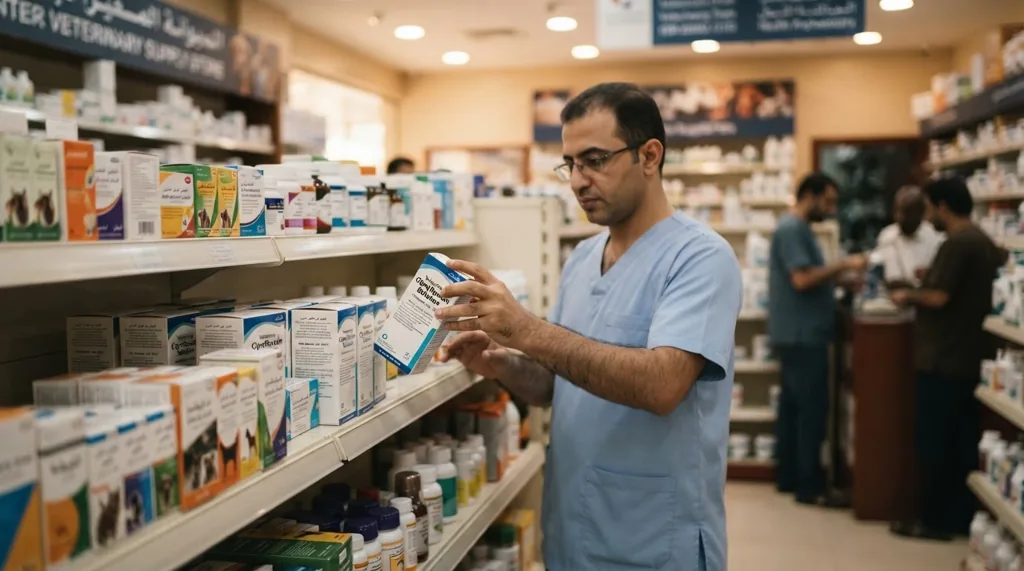
The United Arab Emirates bans animal medicines and raw materials containing the antibiotic ciprofloxacin from Nov. 1, 2026.
The Emirates Drug Establishment (EDE) will ban animal medicines and raw materials containing the antibiotic ciprofloxacin in the United Arab Emirates from Nov. 1, 2026.
The ban affects nine veterinary products: eight imported products and one product registered inside the country1. The EDE, the national regulator of medical and pharmaceutical products, announced the decision on Oct. 20, 20262.
In short, from Nov. 1 no shipment of animal medicine or raw material containing ciprofloxacin may enter or be sold in the UAE. Stock already in the country must leave the market before that date, then go back abroad or be destroyed.
What is ciprofloxacin and why does the ban matter?
Ciprofloxacin is an antibiotic, a medicine that kills bacteria. It belongs to a group of antibiotics called fluoroquinolones1. Doctors use this group to treat certain bacterial infections in people.
The EDE’s ban covers only the veterinary sector, meaning medicines for animals1. It does not cover medicines for people. The EDE announcement says the decision protects the effectiveness of treatments used in human medicine2.
For traders, the ban removes a whole active ingredient from the UAE market for animal medicines. Any product with ciprofloxacin in it is caught, whatever its brand or form.
Why did the Emirates Drug Establishment act?
The EDE gives three stated aims. It wants to fight antimicrobial resistance, which happens when bacteria stop responding to medicines. It also wants to promote the safe use of antibiotics and keep human treatments effective1.
The fluoroquinolone group is classed as Critically Important Antimicrobials (CIAs) for human medicine1. This label marks medicines that are most needed to treat people. The EDE says wrong use of these medicines in animals can help bacteria become resistant2. That could make treatments for people work less well and create a public health problem.
The decision rests on a scientific review of data on drug resistance1. This review included studies submitted by United Arab Emirates University. The EDE says it used these findings to support a decision based on evidence.
How does the regulator explain its approach?
Dr. Ruqaya Aqeel Al Bastaki is acting executive director of the EDE’s Medical Products Regulation Sector. She said antibiotic rules should be based on the risks of each substance1. She also said the rules should consider how those risks affect treatment priorities in different sectors.
According to the EDE statement, scientific evidence helps decide how strongly the regulator should act1. The regulator takes action when findings point to risks that need a response. It considers the nature of each substance and how people use it.
Al Bastaki said the EDE wants its decisions to follow the latest science2. She said the regulator aims to act early on risks linked to drug resistance. The stated goals include protecting public health and keeping medicine supplies secure.
Which veterinary products does the ban cover?
The ban covers two kinds of goods1:
- Veterinary medicinal products containing ciprofloxacin, meaning finished medicines for animals.
- Raw materials containing ciprofloxacin, meaning the ingredients used to make such medicines.
What the ciprofloxacin ban covers
| Point | Rule |
|---|---|
| Authority | Emirates Drug Establishment (EDE) |
| Goods | Veterinary medicines and raw materials with ciprofloxacin |
| Products counted | Nine: eight imported, one local |
| Sector | Veterinary sector only |
| Start date | Nov. 1, 2026 |
The EDE counted nine veterinary products under the ban2. Eight are imported and one is registered locally. The announcement does not name the products or their makers.
The EDE says it has already taken the regulatory steps to identify every product and raw material covered1. In practice, the regulator has its own list of the affected items. The announcement does not give customs tariff codes.
The UAE law on veterinary medicines defines raw materials broadly. They are active or inactive substances used to make a veterinary medical product, from chemical, biological or natural sources3. That definition helps explain why ingredient shipments fall under the ban, not only finished medicines.
What must importers and makers do before Nov. 1?
The EDE has told the businesses concerned what they must do1. These are licensed businesses that make, import or supply veterinary medicines. The steps are:
- Stop making, importing and supplying the affected products.
- Withdraw all existing quantities from the local market before Nov. 1, 2026.
- Re-export the remaining stock, or destroy it under approved procedures.
- Submit supporting documents to show that these steps are complete.
Steps before the ban starts
The documents are the proof the regulator will check1. A business that sends stock back abroad or destroys it must be able to show it did so.
What changes for each group in the trade?
Foreign makers of the eight imported products lose the UAE as a market for these goods. No new shipments of them may be imported once the ban applies.
Banned ciprofloxacin products, by origin
Importers and licensed warehouses carry most of the work. Under the 2025 veterinary law, the EDE issues import, export and re-export permits to licensed veterinary warehouses and factories3. These businesses must clear their stock and prove where it went.
The one local maker must stop making its registered product2. Its unsold stock must also be re-exported or destroyed.
Vets, farms and pet owners will no longer be able to buy these medicines in the UAE. The ban covers the whole veterinary sector of the UAE1.
What law gives the EDE this power?
The UAE issued Federal Decree by Law No. (21) of 2025 on veterinary medical products and veterinary pharmaceutical establishments3. This law names the Emirates Drug Establishment as the regulator for these goods.
The law defines "prohibited veterinary substances" as products and materials that may not circulate in the country3. These substances are named by a decision of the EDE’s board of directors. The law also covers "restricted substances", which may be used in some areas but not in others.
The law treats every veterinary medical product imported, exported or passing through the UAE as a veterinary consignment3. That means border controls apply to goods in transit as well as to imports. The EDE says the ciprofloxacin decision falls within its power to regulate medical products and check that businesses follow the rules1.
What happens after the ban starts?
The EDE is preparing a monitoring plan1. The plan will check whether the businesses concerned follow the decision. It will also confirm that they finish the required steps within the set time.
The EDE says the ban is part of wider work to tighten control of veterinary medicines1. That work also supports national efforts against drug resistance and aims to protect both human and animal health.
The announcement does not state penalties for breaking the ban. It also does not list other antibiotics for future action.
Key points on the UAE ciprofloxacin ban
The table below sums up the main facts of the decision.
| Question | Answer |
|---|---|
| What changed? | Ban on ciprofloxacin in animal medicines |
| Who issued it? | Emirates Drug Establishment (EDE) |
| When was it announced? | Oct. 20, 2026 |
| When does it start? | Nov. 1, 2026 |
| Which goods? | Veterinary medicines and raw materials with ciprofloxacin |
| How many products? | Nine: eight imported, one local |
| Why? | To slow drug resistance and protect human treatments |
| What must businesses stop? | Making, importing and supplying the products |
| What happens to old stock? | Withdrawn, then re-exported or destroyed |
| What proof is needed? | Supporting documents on completed steps |
| What comes next? | An EDE monitoring plan |
From Nov. 1, 2026, the nine ciprofloxacin products must be off the UAE market. Any remaining stock must have gone back abroad or been destroyed, with documents to prove it1.
Sources
- ↩ Home | Emirates News Agency https://www.wam.ae/en/article/c2u6p6g-emirates-drug-establishment-bans-veterinary-use
- ↩ "الإمارات للدواء" تحظر استخدام "سيبروفلوكساسين" في القطاع البيطري اعتباراً من 1 نوفمبر – مؤسسة الإمارات للدواء – EDE Portal https://www.ede.gov.ae/w/emirates-drug-establishment-bans-veterinary-use-of-ciprofloxacin-from-november-1
- ↩ download https://uaelegislation.gov.ae/en/legislations/3942/download