
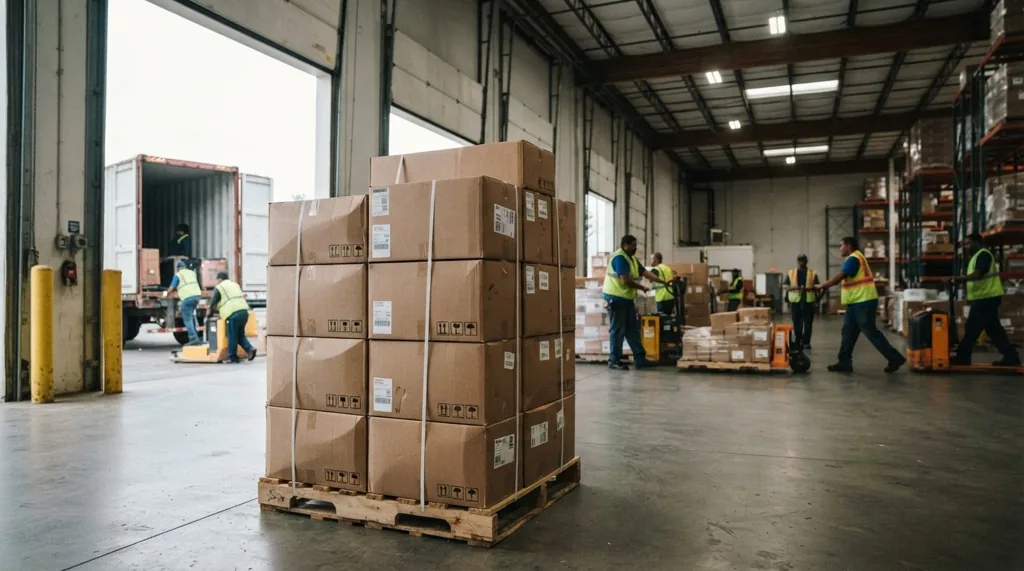
United States opened anti-dumping investigations into cardboard boxes from China, Malaysia and Türkiye, effective Oct. 19, 2026.
The U.S. Commerce Department has opened investigations into imports of corrugated cardboard boxes from China, Malaysia and Türkiye, in notices published Oct. 26, 2026.
The Department of Commerce (Commerce) opened three anti-dumping investigations, one for each country, and one subsidy investigation for boxes from Türkiye1. The notices took effect on Oct. 19, 2026, and were published in the Federal Register, the U.S. government’s official journal, a week later2.
In short, no new duty is charged on these boxes yet. But Commerce has started the process that can lead to extra import taxes on boxes from the three countries, and the U.S. makers who asked for it claim prices far below fair value.
Which cardboard boxes are under investigation?
The goods are "certain corrugated die-cut cardboard boxes", which Commerce shortens to corrugated die-cut boxes1. Corrugated board is the strong cardboard with a wavy middle layer. Die-cut means the board is cut to a set shape by a press.
The U.S. companies that asked for the case call themselves the American Pizza Boxes Manufacturers Coalition1. The full product description sits in an appendix to the Commerce notice, which says the petitioners revised the scope several times between Sept. 21 and Oct. 6, 20261.
Commerce’s fact sheet lists import figures under one customs code: subheading 4819.10.0020 of the Harmonized Tariff Schedule of the United States (HTSUS), the U.S. list of customs codes3. The fact sheet warns that this code may cover both boxes inside the case and boxes outside it3. So the code alone does not decide whether a shipment is covered. The written product description does.
What are anti-dumping and subsidy investigations?
An anti-dumping duty is an extra import tax on goods sold abroad below their normal price. Commerce calls such sales "less than fair value"1. A countervailing duty is an extra import tax that cancels out help a foreign government gives its makers4.
The anti-dumping cases cover all three countries1. The subsidy case covers only Türkiye4. Both kinds of case run together, and comments on product scope must be filed on the records of all of them at the same time1.
These notices only start the cases. Duties can follow only if Commerce finds unfair pricing or subsidies and the U.S. International Trade Commission (ITC), the agency that judges injury, finds harm to U.S. industry1.
Who asked Commerce to act on pizza boxes?
The requests, called petitions, reached Commerce on Sept. 9, 20261. They were filed on behalf of two groups:
- The American Pizza Boxes Manufacturers Coalition, whose members are Smurfit Westrock plc and Pratt Industries, Inc.1
- A steel, paper and forestry workers’ union, in full the United Steel, Paper and Forestry, Rubber, Manufacturing, Energy, Allied Industrial and Service Workers International Union1
Commerce’s fact sheet says both coalition members are based in Atlanta, Georgia3. The union represents workers who make these boxes in the United States1.
How did Commerce check the industry’s support?
U.S. law lets Commerce open a case only when enough of the home industry backs it1. Supporters must make at least 25% of total U.S. production. They must also make more than 50% of the output of those makers who state a view, for or against1.
Commerce needed more time to check this. On Sept. 29, 2026, it extended its deadline by 20 days, because the petitions did not make clear whether support was high enough1. It then sent several sets of follow-up questions between Sept. 11 and Oct. 9, 20261.
Because 2025 production figures were not available, the petitioners compared their own 2025 shipments with estimated shipments for the whole U.S. industry1. Commerce accepted shipments as a fair stand-in for production. It found that supporters account for more than 50% of total U.S. production, so it did not need to poll the industry1.
Why do the U.S. box makers say they are harmed?
The petitioners claim imports are harming the U.S. industry or threaten to harm it1. They point to a list of signs:
- a sharp rise in the volume of imports from the three countries
- lost market share, lost sales and lost revenue
- imports sold below U.S. prices, pushing prices down
- falls in production, plant use, shipments and jobs
- factory closures and weaker profits1
Commerce said these claims are backed by enough evidence to open the cases1. The ITC will make its own decision on harm.
How high are the claimed dumping margins?
A dumping margin is the gap between the export price and the fair price, shown as a percentage. The rates below are claims by the petitioners, not duties3. According to the Commerce fact sheet, the claimed margins are:
- China: 97.71% to 297.26%
- Malaysia: 83.72% to 116.58%
- Türkiye: 51.27% to 92.81%3
Margins and rates claimed by the petitioners
| Country | Claimed margin or rate |
|---|---|
| China (dumping) | 97.71% to 297.26% |
| Malaysia (dumping) | 83.72% to 116.58% |
| Türkiye (dumping) | 51.27% to 92.81% |
| Türkiye (subsidies) | Above de minimis |
For the subsidy case, the claimed subsidy rate for Türkiye is "above de minimis"3. De minimis means a level too small to count: below 1% for developed countries and below 2% for developing countries3.
To estimate U.S. prices, the petitioners used average unit values from official import statistics for each country1. For China and Türkiye, they also used price offers for boxes sold or offered for sale in the United States1.
How much trade do the boxes from China, Malaysia and Türkiye carry?
Commerce’s fact sheet gives U.S. import figures from the U.S. Census Bureau for code 4819.10.00203. The three countries moved in different directions between 2023 and 2025.
U.S. imports under code 4819.10.0020 in 2025, USD
Imports from Türkiye grew fastest in value. They rose from $10,494,199 in 2023 to $20,344,190 in 2024 and $35,191,701 in 20253. By weight, they grew from 6,699,673 kg to 27,919,555 kg over the same years3.
Imports from Malaysia were almost nothing in 2023, at $13,0893. They reached $2,022,644 in 2024 and $5,944,010 in 20253.
Imports from China fell. They were $13,928,701 in 2023 and $13,935,538 in 2024, then dropped to $8,367,079 in 20253. Again, the fact sheet notes the code also includes boxes outside the case3.
Which time periods will Commerce examine?
Each case looks at sales during a fixed window, called the period of investigation1. The windows differ by country:
- Malaysia and Türkiye (dumping): July 1, 2025, to June 30, 20261
- China (dumping): Jan. 1, 2026, to June 30, 2026, because Commerce treats China as a non-market economy, where prices are not set freely by the market1
- Türkiye (subsidies): Jan. 1, 2025, to Dec. 31, 20254
Why did Commerce talk with Türkiye and Russia?
U.S. law requires Commerce to offer talks to the government accused of subsidies4. Commerce held these consultations with the Government of Türkiye on Sept. 25, 20264.
The petition also names some subsidy programmes whose nature involves Russia4. Commerce therefore also offered the Government of Russia a meeting and met its officials on Sept. 23, 20264. Commerce calls these "alleged transnational subsidy programs", meaning help that may cross borders4.
What must exporters and importers file, and by when?
Commerce invites comments on which boxes the cases should cover1. Scope comments are due by 5:00 p.m. Eastern Time on Nov. 9, 20261. Replies to other parties’ comments are due by 5:00 p.m. Eastern Time on Nov. 19, 20261.
Filing deadlines at Commerce
Each comment must start with a public summary of no more than 450 words for each issue raised1. Any facts in scope comments should be limited to public information1.
Commerce also wants comments on the physical features it should use to compare boxes, such as those that matter commercially1. These are due on the same dates: Nov. 9 for first comments and Nov. 19 for replies1. All filings go through ACCESS, Commerce’s online filing system for these cases1.
These dates matter most for box makers and exporters in the three countries and for U.S. importers. A company that thinks its boxes should be left out must make the case in this window.
When could duties on cardboard boxes start?
The ITC opened its own preliminary cases, numbered 701-TA-806 and 731-TA-1805-1807, and published a revised schedule on Oct. 5, 20265. Commerce’s fact sheet says the ITC is due to give its preliminary decision on or around Nov. 13, 20263.
If the ITC finds likely harm, Commerce’s first rulings follow3. The subsidy ruling on Türkiye is scheduled for Dec. 24, 20263. The dumping rulings are scheduled for March 9, 20273. Commerce says these deadlines may be extended under U.S. law3.
For U.S. buyers of these boxes, the next five months decide whether boxes from these suppliers become more costly. Commerce already keeps 854 anti-dumping and subsidy orders in place3.
Key points on the cardboard box investigations
The table sums up the main facts.
| Question | Answer |
|---|---|
| What changed? | Investigations opened into dumping and subsidies |
| Who acted? | U.S. Department of Commerce |
| Which goods? | Corrugated die-cut cardboard boxes |
| Which countries? | China, Malaysia and Türkiye |
| Subsidy case? | Türkiye only |
| Customs code named | HTSUS 4819.10.0020 |
| Claimed dumping margins | 51.27% to 297.26% |
| Who asked? | Pizza box makers’ coalition and a workers’ union |
| Scope comments due | Nov. 9, 2026 |
| ITC preliminary decision | Around Nov. 13, 2026 |
| Commerce first rulings | Dec. 24, 2026 and March 9, 2027 |
The next date is Nov. 9, 2026, the deadline for scope comments to Commerce1. If both agencies find against the imports, boxes from China, Malaysia and Türkiye could face extra duties at the U.S. border.
Sources
- ↩ 2026-21783.pdf https://www.govinfo.gov/content/pkg/FR-2026-10-26/pdf/2026-21783.pdf
- ↩ Federal Register :: Certain Corrugated Die-Cut Cardboard Boxes From the People’s Republic of China, Malaysia, and the Republic of Türkiye: Initiation of Less-Than-Fair-Value Investigations https://www.federalregister.gov/documents/2026/10/26/2026-21783/certain-corrugated-die-cut-cardboard-boxes-from-the-peoples-republic-of-china-malaysia-and-the
- ↩ Initiation of AD CVD Investigations of Corrugated Die-Cut Cardboard Boxes from the People’s Republic of China, Malaysia, and the Republic of Türkiye https://www.trade.gov/initiation-ad-cvd-investigations-corrugated-die-cut-cardboard-boxes-peoples-republic-china-malaysia
- ↩ 2026-21778.pdf https://www.govinfo.gov/content/pkg/FR-2026-10-26/pdf/2026-21778.pdf
- ↩ Corrugated Die-Cut Cardboard Boxes from China, Malaysia, and Turkey | United States International Trade Commission https://www.usitc.gov/fed_reg_notices/antidumpingcountervailing_duty_701731/corrugated_die_cut_cardboard_boxes_china