
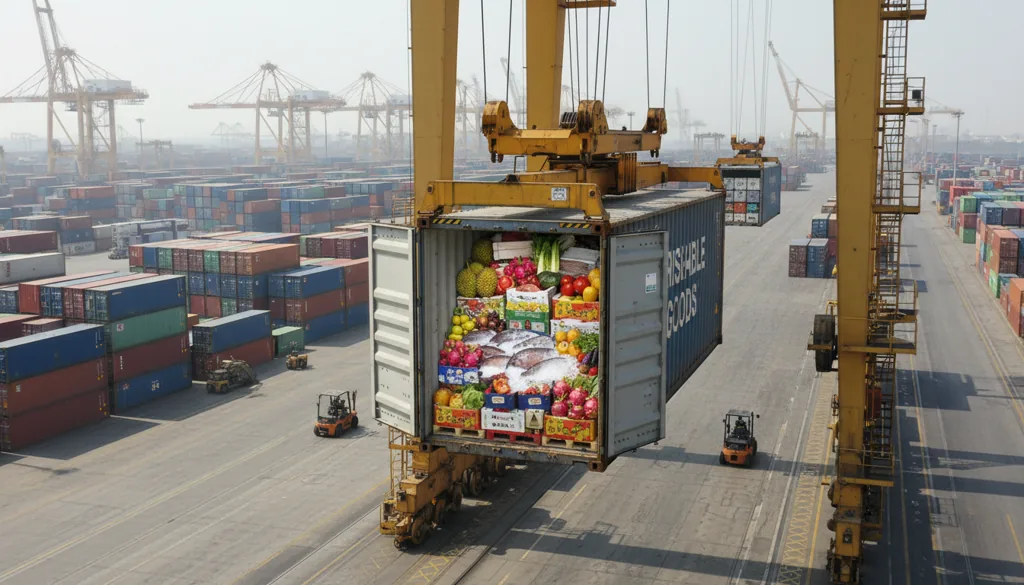
Singapore Customs issued an advisory on September 10, 2026, targeting the under-declaration of import values for seafood, fruits, and vegetables following audits that uncovered $1.4 million in short-paid GST.
Singapore Customs warned traders and declaring agents on Sept. 10, 2026, that they must declare the full value of imported seafood, fruits and vegetables, after audits found goods declared far below their true value1.
The warning came in Circular No. 11/2026, titled "Advisory on Under-Declaration of Values for Imports of Seafood, Fruits and Vegetables"1. Singapore Customs lists it among its circulars for 10 September 20262.
In short, customs has found food importers who stated low prices on their permits and so paid too little GST, Singapore’s goods and services tax. Every seafood, fruit or vegetable shipment must show its true value, and customs will watch these goods closely. Past mistakes can still be corrected.
What did Singapore Customs find on seafood imports?
Customs used targeted profiling, which means picking out traders whose declarations look unusual. It also ran post-clearance audits, which are checks on imports after the goods have already left the border1. These checks found traders who had consistently declared much lower import values for seafood, fruits and vegetables1.
What the audits found
The audits found about $1.4 million in GST that was not paid over three years1. GST on imports is charged on the value of the goods. So a lower declared value means less tax is collected at the border.
Who is responsible for the declared value?
The circular is addressed to traders and to declaring agents, the firms that file customs papers for importers1. It says both are responsible for making sure the details in their import permits are accurate and complete1.
In Singapore, an import permit is the declaration filed with customs for each shipment. The value on it sets the GST that is paid. A freight agent who files a wrong value cannot simply pass the blame to the importer, because the circular holds both to the same duty.
Seafood, fruits and vegetables are also controlled goods in Singapore. The Immigration and Checkpoints Authority (ICA), which runs the border checkpoints, lists them under the Singapore Food Agency, the national food safety authority3. Anyone bringing them in needs an import licence or approval from that agency to bring them in3.
What penalties apply to a wrong declaration?
Submitting an incorrect declaration is an offence under the Customs Act, Singapore’s main customs law1. A person found guilty can be fined up to $10,000 or the duty and GST due, whichever is higher1. The court can also send the person to prison for up to 12 months, or order both a fine and prison1.
Penalties for a wrong declaration
For a trader who under-declared many shipments, the unpaid tax can be much larger than $10,000. In that case the fine can match the full unpaid duty and GST, according to the circular’s wording.
How can importers correct past food declarations?
Customs strongly encourages all traders and declaring agents to review their past imports for any GST short-payment1. Where a declaration was wrong, they should file a voluntary disclosure, which is a report to customs of their own mistake1.
Filing a voluntary disclosure
The Voluntary Disclosure Programme page of Singapore Customs sets the rules. A disclosure qualifies only if it is complete and filed before customs starts an audit, a query or an investigation4. There is no fixed time limit for making one, but customs rejects incomplete filings or those missing documents4.
A trader files the disclosure in three steps4:
- log in with Singpass or Singpass (Corporate);
- submit the online disclosure form with the permit details;
- attach an Excel sheet that lists the affected permits and errors.
Customs says it processes a disclosure within 3 working days and may email the trader for more information4.
Which cases cannot use voluntary disclosure?
Some mistakes are outside the programme4. These include failing to show required permits at checkpoints, such as transhipment permits4. They also include failing to pay duty or GST under the GIRO bank-payment conditions on a permit4.
A disclosure is also not accepted once customs has told the trader about an investigation or query on that permit4. For food importers, this means the chance to disclose ends as soon as customs makes contact.
What records must food importers keep?
The circular asks traders and agents to keep proper records and to take care when preparing declarations1. It points to two earlier circulars, No. 03/2016 and No. 08/2020, for guidance on customs valuation and permit rules1. Customs valuation means the method used to set the value of imported goods for tax.
Singapore Customs has since issued a similar warning for another product. On 23 September 2026 it published Circular No. 13/2026, an advisory on under-declared values for furniture imports2. Seafood, fruit and vegetable importers who stated low values on past permits can still come forward, but only until customs contacts them4.
Sources
- ↩ 11/2026 10 Sep 2026 Traders and Declaring Agents Dear Sir …. https://isomer-user-content.by.gov.sg/174/df6efdb4-c307-4222-b8e9-6813c681802f/112026%20ADVISORY%20ON%20UNDER-DECLARATION%20OF%20VALUES%20FOR%20IMPORTS%20OF%20SEAFOOD,%20FRUITS.pdf
- ↩ Singapore Customs News & Media https://www.customs.gov.sg/news/
- ↩ Prohibited / Controlled / Dutiable Goods – Singapore – ICA https://www.ica.gov.sg/enter-transit-depart/entering-singapore/what-you-can-bring/prohibited-controlled-dutiable-goods
- ↩ Voluntary Disclosure Programme | Singapore Customs https://www.customs.gov.sg/doing-business/compliance/voluntary-disclosure-programme/