
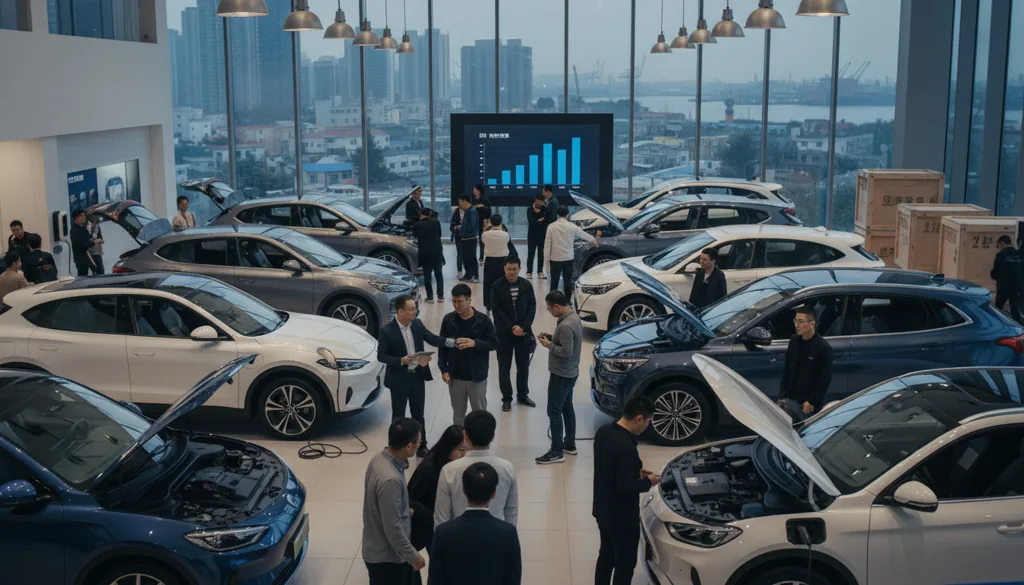
Canada established an import quota system for electric vehicles originating from China and repealed the 100% surtax, taking effect on March 1, 2026.
Canada has replaced its 100% surtax on electric vehicles from China with an annual import quota, taking effect on March 1, 2026, under a new bilateral trade arrangement.
The first quota allows 49,000 vehicles into Canada, with eligible imports facing a 6.1% most-favoured-nation tariff instead of the former surtax. The system covers passenger electric vehicles from China, but excludes electric tricycles and certain other non-passenger vehicles.
The measure is intended to reopen controlled access to Chinese EVs while managing their effect on Canadian vehicle producers. The lower tariff reduces the delivered cost of every vehicle within the quota, but importers also face a permit system and a hard annual ceiling.
The 49,000-vehicle opening
The quota was created through amendments to Canada’s Import Control List, which is the government list of goods requiring import controls. The first-year volume is 49,000 vehicles, and it will rise by 6.5% each year. The quota is available from March 1, 2026, to Feb. 28, 2027.1
The dates that bind
The change follows the Canada-China strategic partnership announced on Jan. 16, 2026. Canada’s regulatory documents link the EV concession to wider bilateral commitments, including changes affecting Canadian agricultural and seafood exports to China. The arrangement therefore connects vehicle access in Canada with market access for Canadian goods abroad.
Before the change, a 100% surtax made Chinese EV imports commercially difficult and limited them to insignificant levels, according to the regulatory analysis. Leaving that system in place would also have left Canada short of its commitments under the preliminary joint arrangement.2 The new quota restores some market access without creating unrestricted entry.
The government describes the arrangement as managed market entry for affordable Chinese EVs within a predictable framework. Its own assessment says the initial quota represents less than 3% of new vehicles sold in Canada. That scale limits the immediate competitive effect, although the impact could grow as the annual volume expands.2
Permits at the border
The central operating rule is that covered vehicles cannot legally enter Canada without a shipment-specific import permit. Global Affairs Canada administers the quota and issues permits under the Export and Import Permits Act, while the Canada Border Services Agency checks compliance at the border. An import without the required permit is prohibited.2
What every quota shipment requires
Permits can be requested for individual shipments until the annual quantity is used up. Once the quota is full, no further covered EV imports can be authorised for that year. This makes the quota a capacity limit as well as a tariff arrangement, because a shipment can meet the product rules and still be blocked when the available quantity has been exhausted.
The permit application carries a fee of up to $31, and more than one vehicle can be included under a permit. The government calls the charge small compared with the value of an EV, but it is an additional border cost that did not arise from the former surtax alone.2 The importer pays that fee as part of bringing the vehicle into Canada.
The first six months operate on a first-come, first-served basis. That temporary approach began on March 1 and runs until Aug. 31, 2026. A first-period import notice covers that window, while a separate consultation is intended to shape the longer-term system from Sept. 1.3
Cheaper vehicles, limited volume
The tariff treatment changes sharply for vehicles that secure a place within the quota. Those imports are subject only to the 6.1% MFN tariff, rather than the 100% China-specific surtax. MFN, or most-favoured-nation, is the standard tariff applied under Canada’s general tariff treatment for eligible trading partners.2
Chinese EV imports, before and after
| Question | Old rule: 100% surtax | New rule: quota |
|---|---|---|
| Border charge | 100% China-specific surtax | 6.1% MFN tariff |
| Market access | Insignificant levels | 49,000 vehicles a year |
| Permit needed | No | Yes, per shipment |
| Annual revenue | About $2m | More than $100m expected |
The reduced rate applies to the vehicles covered by the quota and permit system, not to an unlimited stream of Chinese EVs. The value of the concession is therefore tied to access to a scarce permit. A vehicle that cannot obtain a permit cannot use the lower tariff simply because it is otherwise an electric vehicle from China.
The quota includes a growing reserve for vehicles priced at $35,000 or less on a free-on-board basis. That reserve starts at 10% in the second year and rises to 50% in the fifth year. Free on board, or FOB, measures the price before later transport and insurance costs are added.1
The pricing reserve gives the policy a consumer-access objective as well as a trade-management function. It is designed to increase the supply of lower-priced EV models, but the initial overall volume remains small compared with Canada’s new-vehicle market. The effect on vehicle choice can therefore expand only as both the total quota and the lower-price share increase.
What the China order changes
A separate order amended Canada’s China Surtax Order and repealed the EV surtax. It was registered as SOR/2026-33 on Feb. 24, 2026, under provisions of the Customs Tariff. The order took effect on March 1, subject to provisions given retrospective effect from Oct. 22, 2024.4
Remaining China surtax rates, %
The amendment removes the EV schedule from the China surtax order while preserving a separate 25% surtax on specified Chinese steel and aluminium goods. It also clarifies that some Chapter 99 goods can remain covered when they are otherwise classified under a tariff item listed in the surtax schedule.4
That distinction matters for compliance teams handling mixed China-origin cargo. The EV relief does not amount to a general reduction in all China surtaxes, and it does not remove the separate 25% measure on listed steel and aluminium products. The change is limited to the defined EV goods brought under the new quota.
The revised order also keeps exceptions for goods temporarily imported for repair, goods reimported after repair abroad and certain goods classified in Chapter 98. Those provisions concern the continuing China surtax framework rather than the ordinary quota route for new passenger EVs.4 The classification and origin treatment therefore remain relevant alongside the permit requirement.
From temporary access to allocation
The first-come, first-served period is only the opening phase of the system. Canada closed a consultation on quota allocation and administration on May 1, after seeking views from April 7. The government said feedback would inform a longer-term policy for administering the quota from Sept. 1, 2026.3
That consultation raises the possibility of a more structured allocation system involving original equipment manufacturers, or OEMs, that manufacture or assemble new vehicles. The eligibility material identifies Canadian-resident EV manufacturers and assemblers as the current group eligible for the quota. This points towards an administration model built around companies operating in Canada rather than a simple open queue for every importer.1
The consultation also asks whether quota access should be linked to investment in Canada. Possible measures include planned investment, production capacity, domestic supply-chain integration, Canadian job creation, vehicle assembly, research and development, and battery supply-chain projects. Those questions show that the quota may become part of industrial policy, not merely a customs gate.
Administration remains a practical issue because the standard permit validity period is 60 days. The consultation asks whether that period should change and whether unused allocations should be transferred, returned or penalised. Those choices will affect how quickly quota holders must match permits to shipments and whether unused capacity can move to another company.1
The longer-term policy was expected in June 2026, with an application period to follow if Canada adopted an allocation system. The timing makes the first six months especially important for importers and customs brokers, because procedures used for the initial period may not remain the procedures used after September.
Canada’s stated policy case extends beyond tariff collection. The documents say imports of lower-priced Chinese EVs, combined with investment in the national charging network, could support wider EV adoption and progress towards a net-zero economy. They also link the arrangement to the development of Canada’s domestic automotive and battery supply chain.2
The government expects the 6.1% tariff to raise more than $100m a year, while only about $2m in net revenue was assessed from the 100% surtax between its introduction in October 2024 and its repeal. The figures show that the new policy trades a punitive border charge for a lower rate applied to a larger authorised flow.2
The next fixed period for the system is the end of the first quota year on Feb. 28, 2027. By then, the practical result will depend on how quickly the 49,000-vehicle allowance is used, how the affordable-EV reserve is administered and whether the Sept. 1 allocation rules expand or narrow access to Chinese models.
Sources
- ↩ Canada’s EV Import Quota from China: Allocation and Administration Consultation https://international.canada.ca/en/global-affairs/consultations/trade/2026-04-07-electric-vehicules
- ↩ Order Amending the Import Control List (2026-1): SOR/2026-32 https://gazette.gc.ca/rp-pr/p2/2026/2026-03-11/html/sor-dors32-eng.html
- ↩ Canada’s Electric Vehicle Import Quota from China https://www.international.gc.ca/trade-commerce/controls-controles/electric-vehicle-vehicule-electrique/index.aspx?lang=eng
- ↩ Order Amending the China Surtax Order (2024): SOR/2026-33 https://gazette.gc.ca/rp-pr/p2/2026/2026-03-11/html/sor-dors33-eng.html