
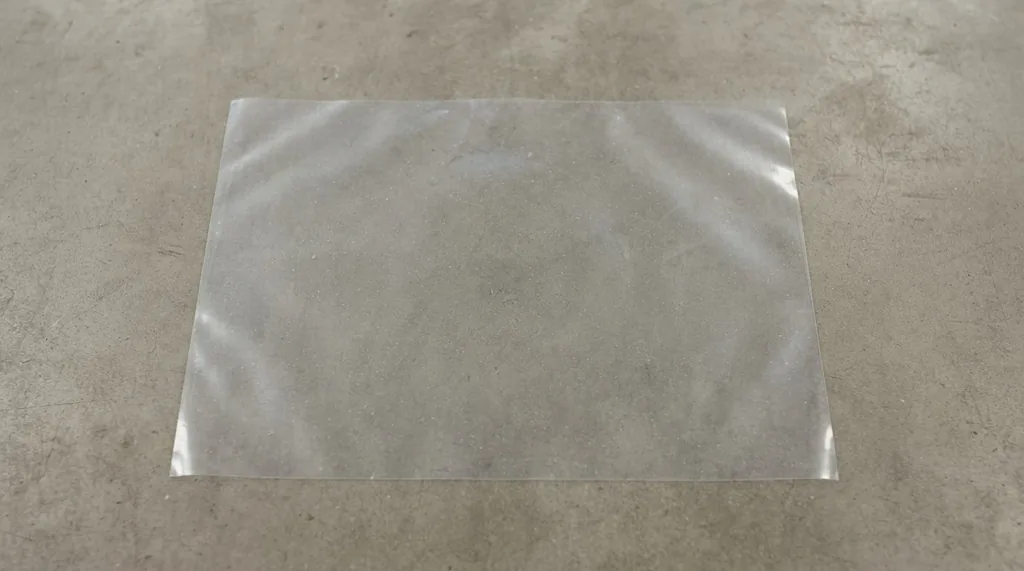
The United States set a preliminary 3.98% subsidy duty rate for Indian PET film maker SRF on Oct. 14, 2026.
The U.S. Department of Commerce set a preliminary 3.98% subsidy duty rate for Indian plastic film maker SRF Limited on Oct. 14, 2026.
The rate comes from the yearly review of an extra duty on plastic film, sheet and strip from India. The duty is known as a countervailing duty, an extra import tax that cancels out subsidies a foreign government gives its makers1.
In short, nothing changes at the U.S. border today. If the 3.98% rate holds in the final results, SRF shipments will need a cash deposit at that rate from the date those results are published. Shipments SRF sent in 2024 will be charged the final rate.
What did Commerce decide on Indian PET film?
The goods are polyethylene terephthalate film, sheet and strip, often called PET film. It is the thin, clear plastic film used in packaging and many industrial products. The Federal Register notice says Commerce "preliminarily determines" that SRF received subsidies from the Indian government1.
The preliminary results at a glance
| Point | Preliminary result |
|---|---|
| Goods | PET film, sheet and strip from India |
| Company reviewed | SRF Limited |
| Subsidy rate | 3.98% of value |
| Period covered | Jan. 1, 2024, to Dec. 31, 2024 |
| Companies dropped | Nine |
| Final results | Within 120 days of Oct. 14, 2026, unless extended |
Commerce set a subsidy rate of 3.98% of the value of the goods for SRF1. This is an "ad valorem" rate, which means a percentage of the shipment’s value. The rate covers goods brought into the United States from Jan. 1, 2024, to Dec. 31, 20241.
The notice is a preliminary result, not a final one. Commerce signed it on Oct. 7, 2026, and it was published on Oct. 14, 20261. Interested parties can now comment before Commerce issues its final decision.
Why does the United States charge this duty?
The duty rests on an order Commerce first published on July 1, 20021. That order found that Indian makers of PET film received government subsidies. Each year, companies can ask Commerce to review the rate for a past year.
Commerce explains its test for a subsidy in the notice. A subsidy exists when a government or public body gives money or other support, the company gains a benefit, and the support goes to a specific group1. Commerce checks each support program against this test.
For part of its findings, Commerce used "adverse facts available"1. This is a rule that lets Commerce fill gaps with less favorable information when it lacks full answers. The notice does not say which programs this affected. The details sit in a separate decision memo.
How did the review narrow to one company?
Commerce started this review on Aug. 22, 20251. On Sept. 30, 2025, it picked two companies to examine closely: Polyplex Corporation and SRF1.
On Nov. 20, 2025, the parties that had asked for the review withdrew their requests for every company except SRF1. The U.S. producers that brought the case kept their request for SRF. Commerce then sent its questions to SRF alone on Nov. 25, 20251.
The review then slowed down. A U.S. government shutdown led Commerce to pause all deadlines by 47 days, and later by 21 more days1. Commerce also extended the preliminary deadline to Sept. 30, 2026, and then by seven days to Oct. 7, 20261.
Which companies are dropped from the review?
Commerce dropped nine companies from the review because all requests to review them were withdrawn on time1. U.S. rules allow this when requests are withdrawn within 90 days of the start of the review.
The nine companies are:
- Chiripal Poly Films Limited
- Cosmo First Ltd.
- Ester Industries Limited
- Garware Hi-Tech Films Limited
- Garware Polyester Ltd.
- Jindal Poly Films Ltd.
- JPFL Films Private Limited
- Polyplex Corporation Ltd.
- Vacmet India Ltd.
For these companies, the 2024 duty will equal the cash deposit already paid when the goods entered the United States1. Commerce plans to send these instructions to U.S. Customs and Border Protection (CBP) no earlier than 35 days after Oct. 14, 20261. For importers of these firms’ 2024 goods, this means the deposit they paid becomes the final charge.
How do the deposits and final charges work?
The U.S. system has two steps. First, the importer pays a cash deposit when the goods arrive. Later, after a review, Commerce sets the final rate and CBP charges the real amount.
From preliminary rate to final charge
Here is how the SRF rate moves through that process:
- Commerce publishes the final results of this review.
- From that publication date, CBP collects cash deposits at the final SRF rate on new SRF shipments1.
- No earlier than 35 days after the final results, Commerce tells CBP to charge the final duty on SRF’s 2024 shipments1.
- If someone files a court case at the U.S. Court of International Trade, CBP waits before closing those entries1.
If the final SRF rate is zero or very small, no cash deposit will be needed on SRF goods1. Commerce calls a very small rate "de minimis".
What rates apply to other Indian makers?
The new 3.98% rate only covers SRF. Other Indian makers not in this review keep paying deposits at the all-others rate or at their own most recent rate1.
Rates likely to return if the order ended, sunset review, %
Recent rates for other companies are much higher. In the final results of the 2023 review, published July 13, 2026, Commerce set 10.07% for Cosmo First Limited and 135.38% for JPFL Films Private Ltd.2. Commerce treated Jindal Poly Films Limited as linked by ownership to JPFL2.
In its sunset review in February 2026, Commerce listed rates likely to return if the order ended3. These were 23.21% for Ester Industries, 29.45% for Garware Polyester, 18.57% for Polyplex Corporation and 25.25% for all others3. A sunset review is a check every five years on whether a duty order should stay.
Rates can also change after court cases. In February 2026, Commerce settled a court case with Jindal Poly Films over its 2021 rate of 116.96%4. Under the settlement, Jindal’s 2021 goods are charged 10.51% for part of the year and 11.67% for the rest4.
Why does the PET film order remain in place?
The order on Indian PET film has passed its latest five-year check. On Feb. 10, 2026, Commerce found that ending the order would likely lead to more subsidies3. Two U.S. producers, Microworks America and Mitsubishi Chemical America’s polyester film unit, took part in that review3.
The Government of India and Indian companies did not send a full response to that review3. Commerce therefore ran a shorter, 120-day review3.
On March 11, 2026, the U.S. International Trade Commission (USITC) voted on the same goods. It found that ending the duty would likely harm U.S. producers again5. As a result, the orders on PET film from India will remain in place5. The commission also kept anti-dumping orders on PET film from China, Taiwan and the United Arab Emirates5.
Who is affected by the SRF rate?
U.S. importers of SRF’s PET film are the most directly affected. They pay the duty at the border, so the final rate sets their cost. Their 2024 entries will also be charged at the final rate.
SRF itself is affected because the rate shapes its price in the U.S. market. U.S. buyers of SRF film may see that cost in their contracts. Importers of goods from the nine dropped companies now have a clear answer for 2024.
The notice also reminds importers of a reimbursement certificate1. Importers must file it before CBP closes their entries. The certificate states whether the foreign seller paid back any duties. Without it, Commerce may assume repayment and charge double duties1.
When will Commerce issue final results for PET film?
Interested parties can file written arguments, called case briefs, within 21 days of Oct. 14, 20261. That is Nov. 4, 2026. Replies to those briefs are due five days after the case brief deadline1.
Parties can ask for a hearing within 30 days of publication, by 5:00 p.m. Eastern Time1. All filings go through Commerce’s online system, known as ACCESS1. Commerce plans to share its calculations with parties within five days of publication1.
Commerce intends to issue the final results within 120 days of Oct. 14, 2026, unless it extends the deadline1. That points to about mid-February 2027.
Key points on the Indian PET film subsidy review
The table sums up the main facts of the preliminary results.
| Question | Answer |
|---|---|
| What changed? | Preliminary subsidy rate set for SRF |
| Who issued it? | U.S. Department of Commerce |
| Which goods? | PET film, sheet and strip from India |
| Which company? | SRF Limited |
| What rate? | 3.98% of value |
| Which period? | Jan. 1 to Dec. 31, 2024 |
| How many firms dropped? | Nine companies |
| Who collects the duty? | U.S. Customs and Border Protection |
| Published | Oct. 14, 2026 |
| Case briefs due | 21 days after publication |
| Final results | Within 120 days, unless extended |
The preliminary rate does not change today’s border deposits for SRF goods. The next date is the case brief deadline, 21 days after Oct. 14, 2026. The final rate, expected within 120 days, will set what importers pay on SRF film.
Sources
- ↩ AGENCY: — 14 / 2026 20940 https://www.federalregister.gov/documents/full_text/html/2026/10/14/2026-20940.html
- ↩ AGENCY: — 13 / 2026 14029 https://www.federalregister.gov/documents/full_text/html/2026/07/13/2026-14029.html
- ↩ AGENCY: — 10 / 2026 02557 https://www.federalregister.gov/documents/full_text/html/2026/02/10/2026-02557.html
- ↩ AGENCY: — 10 / 2026 02633 https://www.federalregister.gov/documents/full_text/html/2026/02/10/2026-02633.html
- ↩ USITC Makes Determinations in Five-Year (Sunset) Reviews Concerning Polyethylene Terephthalate (PET) Film, Sheet, and Strip from China, India, Taiwan, and United Arab Emirates | United States International Trade Commission https://www.usitc.gov/press_room/news_release/2026/er0311_68280.htm