
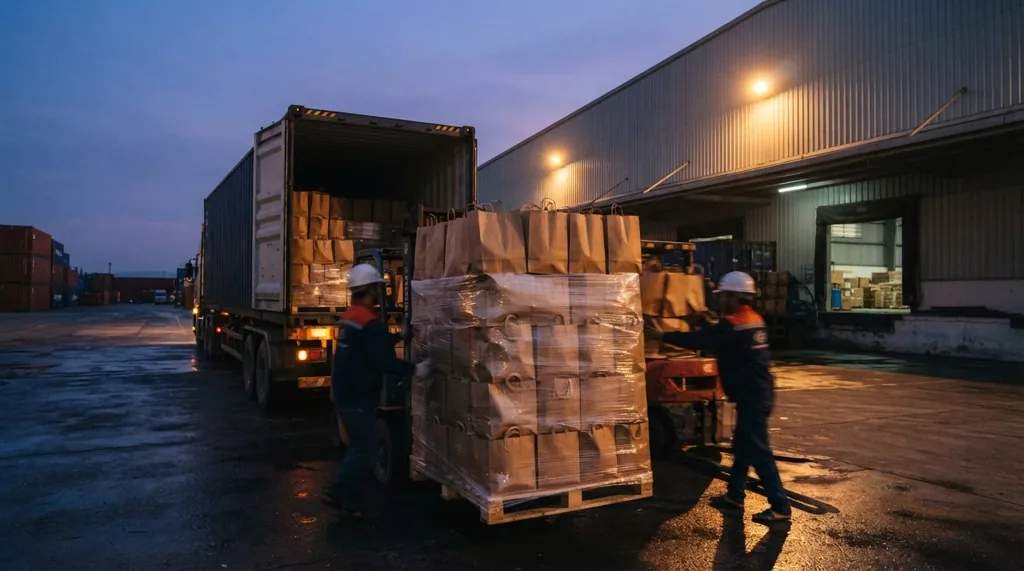
United States Commerce Department set a preliminary 28.52% anti-dumping rate for one Vietnamese paper bag exporter on Oct. 14, 2026.
The U.S. Department of Commerce has set a preliminary 28.52% dumping rate for one Vietnamese exporter of paper shopping bags, published Oct. 14, 2026.
The notice covers International Packaging Limited Company (IPSC), the only exporter still under review1. Commerce also ended the review for four other Vietnamese companies, so their existing duty rates stay in place1.
In short, the rate is not final yet. If Commerce confirms it, U.S. importers buying IPSC’s bags would pay a 28.52% cash deposit at entry. Most other Vietnamese exporters without their own rate pay 92.34%.
What did Commerce decide on Vietnamese paper bags?
The notice is the preliminary result of an "administrative review", a yearly check of how much duty importers actually owe. It is published in the Federal Register, the U.S. government’s official journal, on Oct. 14, 20261. Commerce signed it on Oct. 7, 20261.
Commerce found that IPSC sold paper shopping bags in the United States at less than their "normal value"1. This is dumping: selling goods abroad below a fair price. An anti-dumping duty is the extra import tax that makes up the difference.
Commerce calculated a weighted-average dumping margin of 28.52% for IPSC1. The margin is the gap between the fair price and the U.S. price, as a share of the U.S. price.
Which period and shipments does the review cover?
The review covers bags that entered the United States from Jan. 3, 2024, through June 30, 20251. That period starts on the date Commerce first published its preliminary findings in the original investigation2.
Commerce opened the review on Aug. 22, 2025, after companies asked for it on time1. A U.S. government shutdown in late 2025 delayed all deadlines by 47 days, then by 21 more days1. Commerce later moved the deadline for these preliminary results to Oct. 7, 20261.
Which Vietnamese companies are affected?
Commerce reviewed only one company in detail, IPSC, which it calls the "mandatory respondent"1. Four other companies withdrew their requests for a review within 90 days, so Commerce dropped them1:
- Blue Sea Pack Import Export Company Limited
- Goldsun Packaging and Printing Joint Stock Company
- Vietnam Red Star Industry Company Limited
- Vietnam Red Star Industry Company Limited of Vietnam
For these four companies, customs will collect duty at the cash deposit rate that applied when the bags entered1. Commerce will send these instructions to U.S. Customs and Border Protection (CBP) no earlier than 35 days after publication1.
In the 2024 duty order, Goldsun and Vietnam Red Star each received a rate of 36.51%2. Two other exporters, Dong Sung Printing and Khang Thanh Manufacturing, received the same rate2.
What about other exporters in Vietnam?
Exporters in Vietnam without their own rate pay the "Vietnam-wide" rate. Commerce treats Vietnam as a non-market economy, meaning it does not accept local prices and costs as fair1. So it groups exporters with no separate rate into one Vietnam-wide entity.
Anti-dumping rates on Vietnamese paper bags, %
No one asked Commerce to review that entity, so its rate does not change1. It stays at 92.34%1. In 2024, Commerce based this rate on "adverse facts available", a penalty rate used when companies do not give full information2.
A trader outside Vietnam that ships Vietnamese bags without its own rate pays the rate of its Vietnamese supplier1.
How did the 2024 duty order on paper bags start?
Commerce issued anti-dumping duty orders on paper shopping bags on July 18, 20242. The orders cover bags from eight places: Cambodia, Colombia, India, Malaysia, Portugal, Taiwan, China and Vietnam2.
Commerce found dumping in all eight in final findings published May 24, 20242. The U.S. International Trade Commission (ITC), which judges harm to U.S. industry, then found that these imports materially injured a U.S. industry2. The ITC published that finding on July 10, 20242.
The order on Vietnam has the case number A-552-8361. Rates in 2024 varied widely by country. For example, Portugal’s rate was 6.14% and China’s country-wide rate was 146.32%2.
How does Commerce turn the rate into duty?
The final rate will decide two things. It sets the duty owed on past shipments, and it sets the cash deposit on future ones1.
For past shipments, the steps are:
- Commerce finishes the review and publishes final results.
- Commerce calculates a separate rate for each importer that bought from IPSC. It divides the dumping amount on that importer’s sales by their customs value1.
- If the customs value is missing, Commerce uses a fixed amount per unit instead1.
- CBP collects the duty when it closes the entries, a step called liquidation.
If IPSC’s final rate is zero or below 0.50%, CBP will clear the entries without anti-dumping duty1. This tiny level is called "de minimis".
If a party files a timely case at the U.S. Court of International Trade, CBP will wait before clearing entries1.
What changes for importers’ cash deposits?
Nothing changes at the border yet. New cash deposits start only when Commerce publishes the final results of this review1. They then apply to bags entering on or after that date1.
Cash deposits after the final results
| Exporter | Cash deposit rate |
|---|---|
| IPSC | Final rate, or zero if de minimis |
| Exporters with an earlier separate rate | Existing rate continues |
| Other Vietnamese exporters | Vietnam-wide rate of 92.34% |
| Non-Vietnamese traders without a rate | Rate of their Vietnamese supplier |
After the final results, the deposits will work like this1:
- IPSC’s bags: the final rate, or zero if the rate is de minimis.
- Exporters with an earlier separate rate: their existing rate continues.
- Other Vietnamese exporters: the Vietnam-wide rate of 92.34%.
- Non-Vietnamese traders without a rate: the rate of their Vietnamese supplier.
Importers must also file a certificate on reimbursement before liquidation1. It states whether the exporter paid back the importer’s duties. Without it, Commerce may assume repayment happened and charge double duties1.
When can parties comment on the paper bag review?
Commerce will share its calculations with interested parties within five days of publication1. Interested parties include the exporter, importers and U.S. makers of bags.
The dates that follow are:
- Case briefs: written arguments, due no later than 21 days after publication1.
- Rebuttal briefs: answers to those arguments, due five days after the case brief deadline1.
- Hearing requests: due within 30 days after publication1.
All filings go through ACCESS, Commerce’s online filing system, by 5:00 p.m. Eastern Time1. Commerce asks for a public summary of each issue of no more than 450 words1. It will then issue final results that may differ from the preliminary rate.
Key points on Vietnamese paper shopping bags
The table below sums up the preliminary results.
| Question | Answer |
|---|---|
| Who issued it? | U.S. Department of Commerce |
| What goods? | Paper shopping bags from Vietnam |
| What type of notice? | Preliminary administrative review results |
| Which exporter was reviewed? | International Packaging Limited Company (IPSC) |
| Preliminary rate for IPSC | 28.52% |
| Vietnam-wide rate | 92.34%, unchanged |
| Companies dropped from review | Four, including Goldsun and Vietnam Red Star |
| Period covered | Jan. 3, 2024, to June 30, 2025 |
| Publication date | Oct. 14, 2026 |
| Case briefs due | 21 days after publication |
| Hearing requests due | 30 days after publication |
| When deposits change | When final results are published |
Until final results appear, cash deposits on Vietnamese paper bags do not change1. The 28.52% rate becomes the deposit only if Commerce confirms it in the final results1.
Sources
- ↩ 2026-20935.pdf https://public-inspection.federalregister.gov/2026-20935.pdf
- ↩ Federal Register :: Certain Paper Shopping Bags From Cambodia, Colombia, India, Malaysia, Portugal, Taiwan, the People’s Republic of China, and the Socialist Republic of Vietnam: Antidumping Duty Orders https://www.federalregister.gov/documents/2024/07/18/2024-15746/certain-paper-shopping-bags-from-cambodia-colombia-india-malaysia-portugal-taiwan-the-peoples