
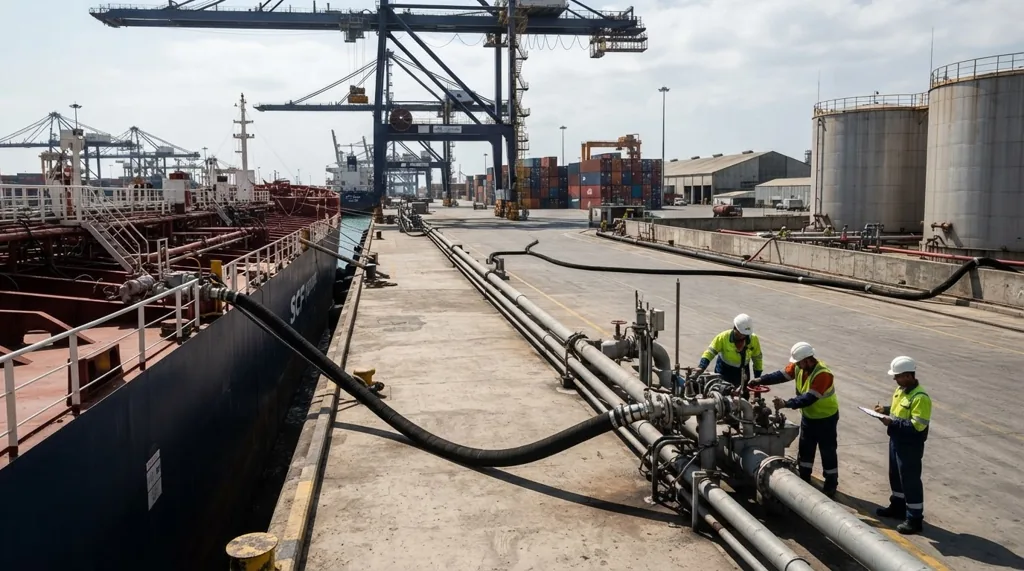
United States Treasury’s OFAC on Oct. 9, 2026 authorized the sale, delivery, offloading and import of Russian-origin diesel fuel until April 7, 2027.
The U.S. Treasury’s Office of Foreign Assets Control (OFAC) on Oct. 9, 2026 issued General License 135, which allows the sale, delivery, offloading and import of Russian-origin diesel fuel until 12:01 a.m. eastern daylight time on April 7, 20271.
OFAC is the Treasury office that runs U.S. sanctions programmes. Its announcement names the licence "Authorizing Transactions Related to the Sale, Delivery, Offloading, and Importation of Diesel Fuel of Russian Federation Origin"2.
In short, diesel made in Russia can again be bought, shipped, unloaded and brought into the United States without breaking U.S. sanctions rules, for about six months. The permission covers only diesel, and it does not let anyone draw money from accounts held for Russia’s central bank, its National Wealth Fund or its Ministry of Finance1.
What does General License 135 allow?
A general license is a public permission from OFAC. It lets anyone carry out a type of deal that sanctions would otherwise ban, without applying for a licence of their own. General License 135 is one such permission, signed by OFAC Director Bradley T. Smith and dated Oct. 9, 20261.
General License 135 at a glance
| Dimension | Provision |
|---|---|
| Issued by | OFAC, U.S. Treasury, Oct. 9, 2026 |
| Goods | Diesel fuel of Russian Federation origin |
| Steps allowed | Sale, delivery, offloading, importation |
| Rules lifted | 31 CFR parts 587 and 589 |
| Expiry | 12:01 a.m. EDT, April 7, 2027 |
The licence covers four steps in the trade of one product. These are:
- the sale of Russian-origin diesel fuel;
- its delivery to a buyer;
- its offloading from the ship or other carrier;
- its importation, "including importation into the United States."
Each step is allowed where it would otherwise be banned under two sets of U.S. sanctions rules1. Those rules are the Russian Harmful Foreign Activities Sanctions Regulations, in part 587 of title 31 of the Code of Federal Regulations, and the Ukraine-/Russia-Related Sanctions Regulations, in part 589 of the same title1. All transactions banned by those two sets of rules and "related to" these four steps are authorized1.
The words "related to" are broad. The licence does not limit itself to the buyer and the seller. Banks, shippers and port workers who handle a diesel deal fall inside it as long as the deal is linked to the sale, delivery, offloading or import of the fuel.
Which Russian goods does the licence cover?
The licence names one product only: diesel fuel of Russian Federation origin1. It does not mention crude oil, petrol, jet fuel, liquefied natural gas or coal.
That is narrower than earlier OFAC permissions in 2026. General License 134C, dated May 18, 2026, covered "crude oil or petroleum products of Russian Federation origin"3. That licence also named fuel produced by companies that are themselves under U.S. sanctions3. General License 135 does not repeat that wording; it simply covers Russian-origin diesel and says nothing on who made it1.
Other Russian energy goods therefore stay where they were. A cargo of Russian crude oil or another refined product gains nothing from General License 135. Only a shipment of diesel fuel falls under it.
Why are Russian fuel imports banned in the first place?
The ban on bringing Russian fuel into the country dates from Executive Order 14066, signed on March 8, 20224. The order prohibited "the importation into the United States" of several products of Russian origin4. The list reads: "crude oil; petroleum; petroleum fuels, oils, and products of their distillation; liquefied natural gas; coal; and coal products"4.
Diesel is a fuel made by distilling petroleum, so it sits inside that list. The 2022 order linked the ban to Russia’s war against Ukraine4. It said that war threatened "the peace, stability, sovereignty, and territorial integrity of Ukraine" and was a threat to U.S. national security and foreign policy4.
The order also left room for exceptions. Its bans apply "except to the extent provided by statutes, or in regulations, orders, directives, or licenses that may be issued pursuant to this order"4. It gave the Secretary of the Treasury the power to carry out the order, including through rules4. General License 135 uses the sanctions rules in parts 587 and 589 and states that the import of Russian diesel "into the United States" is authorized1.
OFAC’s announcement and the licence itself give no reason for the step2. Neither document mentions prices, fuel supply or any talks with Russia.
How is this different from General License 134C?
OFAC has issued a chain of Russian oil licences in 2026. On March 19 it issued General License 134A, for crude oil and petroleum products "Loaded on Vessels as of March 12, 2026"5. On April 17 it issued General License 134B, for cargoes loaded as of April 17, 20266. On May 18 it issued General License 134C3.
Two OFAC licences compared
| Question | General License 134C | General License 135 |
|---|---|---|
| Goods | Crude oil and petroleum products | Diesel fuel only |
| Loading cut-off | Loaded by April 17, 2026 | None |
| Import into the U.S. named | No | Yes |
| Valid until | June 17, 2026 | April 7, 2027 |
The 134 series was built around cargoes already at sea. General License 134C covered fuel loaded on any vessel on or before 12:01 a.m. eastern daylight time on April 17, 20263. It allowed the sale, delivery or offloading of those cargoes until June 17, 20263. It said that 134C replaced 134B, which had expired on May 16, 20263.
General License 135 works differently in three ways:
- No loading cut-off. The licence does not limit itself to fuel already loaded on a ship by a set date1.
- Import into the U.S. named. The licence lists importation, "including importation into the United States," next to sale, delivery and offloading1. The 134C text lists sale, delivery and offloading only3.
- Longer life. General License 135 runs to April 7, 2027, about six months from its issue date1. General License 134C ran for about one month after its signing3.
General License 134C also listed ship services that count as part of a delivery. These included docking, crew safety, emergency repairs, piloting, flagging, insurance and salvage3. General License 135 has no such list1.
What does the licence still forbid?
Paragraph (b) of General License 135 sets one limit. The licence does not allow "any debit to an account on the books of a U.S. financial institution" of three Russian state bodies1. These are:
- the Central Bank of the Russian Federation;
- the National Wealth Fund of the Russian Federation, the country’s state savings fund;
- the Ministry of Finance.
A debit means taking money out of an account. So a U.S. bank may not pay for a diesel deal from money held for any of these three bodies1. The payment for a cargo must come from another source.
General License 135 also covers only the bans in parts 587 and 5891. General License 134C listed several Iran-related and other sanctions rules by name3. It also stated that it did not allow deals with persons in Iran, North Korea, Cuba or the occupied regions of Ukraine3. General License 135 names only the two Russia-related sets of rules1. A deal that breaks a different U.S. sanctions programme gains no permission from it.
Who is affected by the Russian diesel licence?
Several groups along the fuel chain see a change:
- Fuel importers in the United States may now buy Russian-origin diesel and bring it into the country under the licence1.
- Traders and sellers abroad may sell and deliver Russian-origin diesel in deals that U.S. rules would otherwise ban1.
- Ports, terminals and carriers may take part in offloading the fuel1.
- U.S. banks may handle payments for these deals, but not from accounts of the Central Bank of Russia, the National Wealth Fund or the Ministry of Finance1.
For a U.S. buyer, the practical change is at the border. Before Oct. 9, the 2022 order banned the import of Russian petroleum fuels into the United States4. Under General License 135, a diesel shipment of Russian origin may be imported until the April 2027 cut-off1.
The licence does not change customs duties or other border rules. It removes a sanctions ban for one fuel; it does not create a quota or a tariff rate.
When does the permission end?
The Director signed the licence on Oct. 9, 2026, at 14:43 eastern time1. OFAC posted its announcement with the same release date2.
Russian fuel licences in 2026 and 2027
It expires at 12:01 a.m. eastern daylight time, April 7, 20271. Any sale, delivery, offloading or import that has not taken place by then loses the cover of the licence.
The 2026 record shows that OFAC often reissues these licences. Versions 134A, 134B and 134C came out between March 19 and May 18, 20263. Each new version changed the dates. General License 135 carries no letter yet and makes no statement on renewal1. Neither OFAC document announces any further step2, 1.
Key points on the Russian diesel licence
The table sets out the main facts of General License 135.
| Question | Answer |
|---|---|
| What changed? | Russian-origin diesel may be sold, delivered, offloaded and imported |
| Who issued it? | OFAC, U.S. Treasury |
| Instrument | General License 135 |
| Date issued | Oct. 9, 2026 |
| Which goods? | Diesel fuel of Russian Federation origin only |
| Import into the U.S.? | Yes, named in the licence |
| Rules it lifts | 31 CFR parts 587 and 589 |
| Underlying import ban | Executive Order 14066 of March 8, 2022 |
| What stays banned? | Debits from Russian central bank, National Wealth Fund, Ministry of Finance accounts |
| End date | 12:01 a.m. EDT, April 7, 2027 |
| Earlier licence | General License 134C, crude oil and petroleum products |
Until April 7, 2027, a shipment of Russian-origin diesel can enter the United States without a separate OFAC licence, provided its payment does not come from the three Russian state accounts1. After that date, the 2022 import ban on Russian petroleum fuels again covers diesel, unless OFAC issues a new licence4.
Sources
- ↩ download — 937216 / download https://ofac.treasury.gov/media/937216/download?inline
- ↩ Issuance of Russia-related General License | Office of Foreign Assets Control — recent actions / 20261009 33 https://ofac.treasury.gov/recent-actions/20261009_33
- ↩ download — 935641 / download https://ofac.treasury.gov/media/935641/download?inline
- ↩ Federal Register :: Prohibiting Certain Imports and New Investments With Respect to Continued Russian Federation Efforts To Undermine the Sovereignty and Territorial Integrity of Ukraine https://www.federalregister.gov/documents/2022/03/10/2022-05232/prohibiting-certain-imports-and-new-investments-with-respect-to-continued-russian-federation-efforts
- ↩ Issuance of Russia-related General License | Office of Foreign Assets Control — recent actions / 20260319 33 https://ofac.treasury.gov/recent-actions/20260319_33
- ↩ Issuance of Russia-related General License | Office of Foreign Assets Control — recent actions / 20260417 33 https://ofac.treasury.gov/recent-actions/20260417_33