
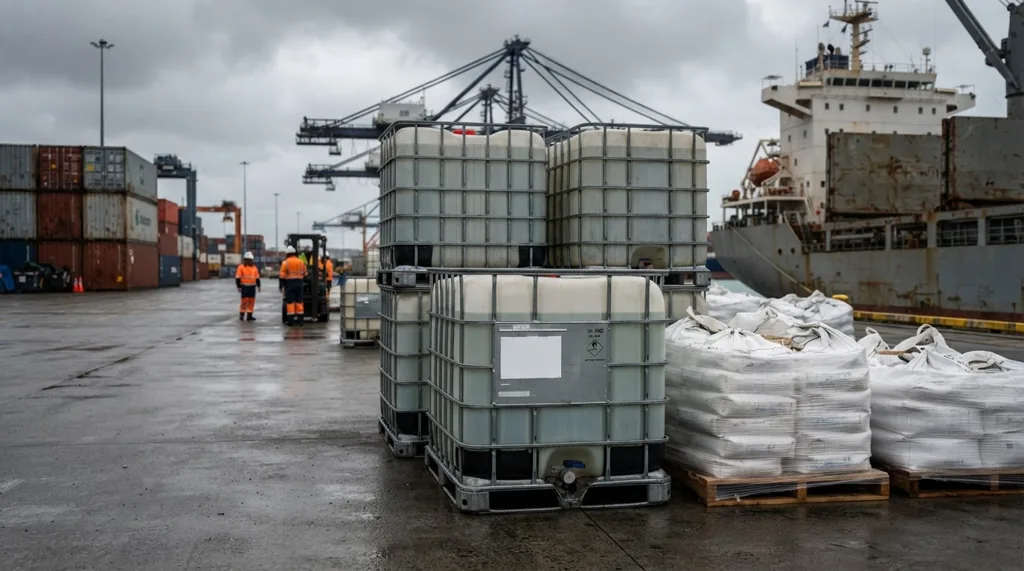
New Zealand has imposed restrictions on medium-chain chlorinated paraffins and UV-328-containing products due to their status as persistent organic pollutants, aligning with international environmental commitments.
New Zealand’s government has added two industrial chemical groups, medium-chain chlorinated paraffins used in PVC plastics and long-chain PFAS acids, to its banned-pollutant lists, with the ban starting on Dec. 16, 20261.
The same package adds an aircraft-use exemption for UV-328, a sunlight-blocking additive for plastics, from Oct. 9, 2026, and lists the farm pesticide chlorpyrifos from July 8, 20272.
In short, from Dec. 16, 2026, shipments of these chemicals, or of products made with them, can no longer enter or leave New Zealand unless a listed exemption covers them. Existing goods already in the country can stay in use until they wear out1.
Which two orders did New Zealand make?
The Governor-General made two orders on Sept. 7, 2026, and the New Zealand Gazette listed both among new secondary legislation3. The first is the Hazardous Substances and New Organisms (Schedules 1AA and 2A) Order 2026, numbered SL 2026/2642. It changes the country’s main law on hazardous chemicals, the Hazardous Substances and New Organisms Act 1996, called the HSNO Act here.
When each part of the chemical bans starts
| Date | Chemicals | What starts |
|---|---|---|
| Oct. 9, 2026 | UV-328 | New aircraft-use exemption |
| Dec. 16, 2026 | MCCPs and LC-PFCAs | Ban on import, export, manufacture and use |
| July 8, 2027 | Chlorpyrifos | Ban on use and export |
The second is the Imports and Exports (Restrictions) Prohibition Order (No 2) 2004 Amendment Order 2026, numbered SL 2026/2664. It adds the chemicals to the list of goods that may not be exported from New Zealand, with some exceptions4. Both orders are run by the Ministry for Cities, Environment, Regions, and Transport3.
Together, the two orders put the chemicals under rules that ban their import, export, manufacture and use1. The Cabinet paper behind the orders says the listing in the HSNO Act’s Schedule 2A brings in that ban for the two industrial chemical groups1.
Why is New Zealand banning these chemicals?
New Zealand is a party to the Stockholm Convention, a United Nations treaty that removes or limits persistent organic pollutants (POPs)1. These are toxic chemicals that stay in nature for a long time, travel far, and build up in people and animals through the food chain1.
In May 2025, parties to the treaty agreed to add three chemicals to its list, all with some exemptions1. The worldwide start date for these new limits is Dec. 16, 20261. That is why New Zealand’s ban on the two industrial chemical groups starts the same day.
The Minister for the Environment, Nicola Grigg, told Cabinet that a ban protects health and nature and avoids future clean-up costs1. The paper also says it keeps New Zealand in line with its main trading partners1. The Environmental Protection Authority (EPA), the chemicals regulator, consulted the public from March 16 to April 17, 2026, and received 19 submissions, which overall supported the plan1.
What are MCCPs and where are they found?
Medium-chain chlorinated paraffins, or MCCPs, are oily chemicals added mainly to soften PVC plastic and to slow fire1. They are also used as additives in metal-cutting fluids, paints, glues, sealants and rubbers1.
Trace levels caught by the export ban, % by weight
The orders define MCCPs by their chemistry. They are mixtures with carbon chains of 14 to 17 carbon atoms and at least 45% chlorine by weight, or with certain set chemical formulas4. Small amounts can also count. For export, the ban covers MCCPs found as unintended traces in products when they make up more than 3% by weight4.
The export order also sets a trace limit for a related, already-listed group, short-chain chlorinated paraffins. The ban applies to their traces in mixtures at 1% by weight or more4. These trace rules start on Dec. 16, 20264.
What are LC-PFCAs and where are they found?
Long-chain perfluorocarboxylic acids, their salts and related compounds, called LC-PFCAs, belong to the PFAS family of fluorine-based chemicals1. They are used in electronics, medical and lab devices, food-contact materials, paints, firefighting foams, personal care products and cars1.
The orders cover acids with 8 to 20 carbon atoms in the fluorinated chain, and chemicals that can break down into them4. One group is left out: PFOA, its salts and related compounds, which the treaty already lists separately2.
Which uses can continue under the exemptions?
The treaty lets countries keep some uses for a time, called specific exemptions, which allow named uses to go on after the ban1. New Zealand will take up all the exemptions for both chemical groups1. Officials must register this with the treaty office before Dec. 16, 20261.
How long the exemptions last
| Use | Allowed until |
|---|---|
| Some general MCCP uses | Dec. 16, 2031 |
| MCCPs in heavy-duty metal-cutting fluids | 2036 |
| MCCPs in repair parts for cars, machines, medical and defence goods | End of goods’ life or 2041 |
| LC-PFCAs in replacement chips | Dec. 16, 2031 |
| LC-PFCAs in some repair parts | 2041 |
For MCCPs, the allowed uses include2:
- Flexible PVC in building work, building wires and cables, and wires in medical devices
- Packaging films, but not food packaging
- Foam insulation made of flexible rubber
- Glues and sealants for doors and windows, waterproof coatings and anti-rust coatings
- Leather softeners, except in children’s products
- Metal-cutting fluids for heavy-duty work in industries such as cars, aircraft and energy
These uses stay open for different periods. Some general uses end after 5 years, on Dec. 16, 20311. Heavy-duty metal-cutting fluids may continue until 20362. Repair parts for cars, farm machines, medical equipment, aircraft and defence goods may continue until the end of the goods’ life or 2041, whichever comes first2.
For LC-PFCAs, the exemptions are narrower1. Chips designed as replacement parts (semiconductors) may continue for 5 years, until Dec. 16, 20311. Repair and replacement parts for some goods, such as cars no longer in mass production, may continue until 20412.
What happens to goods already in New Zealand?
Goods already in use when the ban starts can stay in use until the end of their service life1. New Zealand will tell the treaty office that such "articles in use" exist for both chemical groups1.
The draft notice for MCCPs lists many goods: glues, sealants, paints, plastics, rubbers, textiles, leather, cables and wires1. It covers their use in buildings, cars, machines, medical devices, electronics, air conditioners and heat pumps1. To count, the goods must be in New Zealand on or before Dec. 16, 20261.
The LC-PFCA draft notice is similar. It adds inks, photographic materials, lubricants, paper and paperboard, and semiconductors1.
What changes for UV-328 on Oct. 9?
UV-328 is an additive that protects plastics and coatings from sunlight damage, and it is already on the treaty’s banned list1. The treaty parties agreed to add a new exemption for it1.
The HSNO order adds that exemption from Oct. 9, 20262. It allows UV-328 in water-seal tape and in some glues and coatings used on aircraft2. The exemption covers use only, not production, and it ends by the end of 20302. Officials were to register New Zealand’s use of it before Oct. 9, 20261.
When does the chlorpyrifos ban start?
Chlorpyrifos is a pesticide used on farms, in homes and in industry1. Its listing in both orders starts on July 8, 2027, not on the global date2. From then, its use and export will be banned in New Zealand1.
The government chose the later date to match a phase-out that the EPA had already set in 20251. Under that phase-out, the only remaining use, treating grass grub in pasture, ends on July 7, 20271. Import and manufacture for that final use are already banned from Jan. 8, 20271. New Zealand will tell the United Nations before Dec. 16, 2026 that it does not yet accept the chlorpyrifos listing1.
Who is affected by the new chemical bans?
Importers of PVC goods, rubbers, paints, glues, sealants and metal-cutting fluids must check whether their products contain MCCPs. Importers of coated goods, electronics and parts must check for LC-PFCAs. From Dec. 16, 2026, goods outside an exemption will not be allowed into the country1.
Exporters face the export ban in the second order, including the trace limits4. Makers abroad that sell into New Zealand will need to show what their products contain.
The Cabinet paper expects the effect on industry to be small1. It says the exemptions give a move-over period of at least 5 years, depending on the use1. The government consulted New Zealand Customs, the Ministry for Primary Industries and other agencies, which agreed with the plan1.
Key points on New Zealand’s POP chemical bans
The table sums up the main facts.
| Question | Answer |
|---|---|
| What changed? | New chemicals added to banned-pollutant lists |
| Who made the orders? | Governor-General in Council, Sept. 7, 2026 |
| Which law? | HSNO Act and Imports and Exports order |
| Which chemicals? | MCCPs, LC-PFCAs, chlorpyrifos, UV-328 exemption |
| Main products hit | PVC, rubbers, paints, glues, coatings |
| What is banned? | Import, export, manufacture and use |
| MCCP trace limit for export | More than 3% by weight |
| Ban start for MCCPs and LC-PFCAs | Dec. 16, 2026 |
| UV-328 aircraft exemption | From Oct. 9, 2026 to end of 2030 |
| Chlorpyrifos ban start | July 8, 2027 |
| Longest exemptions | Up to 2041 for repair parts |
| Goods already in use | Can stay until end of life |
The next date for traders is Dec. 16, 2026. From that day, MCCPs and LC-PFCAs, and goods made with them, can only cross New Zealand’s border under a listed exemption1.
Sources
- ↩ Stockholm-Convention-Persistent-Organic-Pollutants-amendments.pdf https://environment.govt.nz/assets/publications/Stockholm-Convention-Persistent-Organic-Pollutants-amendments.pdf?v=a9528043b6a85c3d6150fe784b6774c514109ad5
- ↩ Hazardous Substances and New Organisms (Schedules 1AA and 2A) Order 2026 | New Zealand Legislation https://www.legislation.govt.nz/secondary-legislation/pco-drafted/2026/264/en/latest/
- ↩ 26_04836_00_e.pdf https://members.wto.org/crnattachments/2026/TBT/NZL/26_04836_00_e.pdf
- ↩ Imports and Exports (Restrictions) Prohibition Order (No 2) 2004 Amendment Order 2026 | New Zealand Legislation https://www.legislation.govt.nz/secondary-legislation/pco-drafted/2026/266/en/latest/