
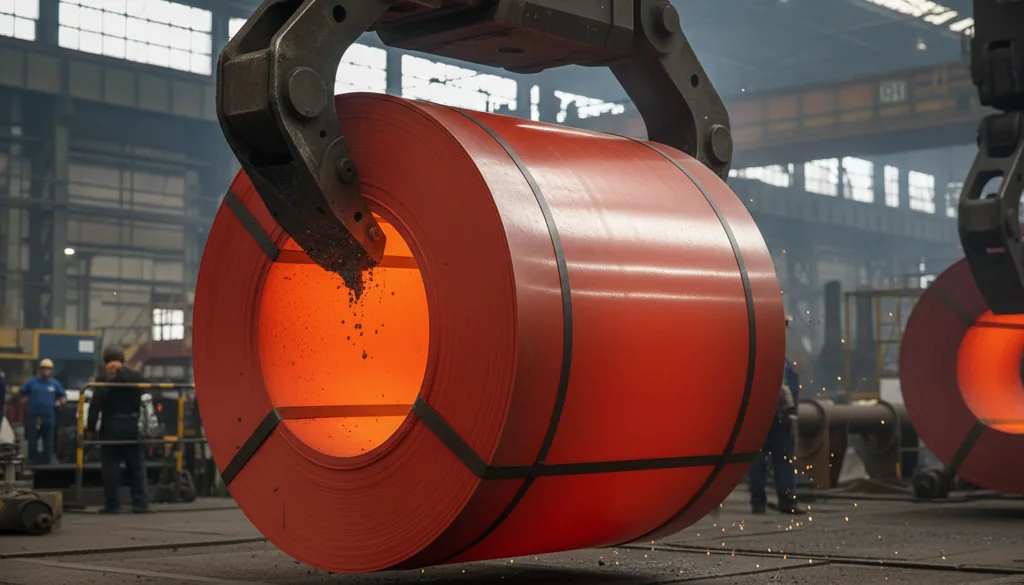
Mexico has concluded affirmative antidumping investigations into hot-rolled steel imports from China and Vietnam, resulting in the imposition of safeguard measures to protect domestic industries.
Mexico’s economy ministry has imposed definitive antidumping duties on hot-rolled steel imports from China and Vietnam, closing a 20-month investigation that began in March 2025 and will raise delivered costs for every tonne shipped after 3 September 2026.
The duties cover 19 tariff lines of flat-rolled carbon and alloy steel, from 3 mm coils used in car bodies to 10 mm plates for shipbuilding, and will stay in place for at least five years unless a review finds the domestic industry no longer needs protection. The ministry said in its final resolution that the new rates are set to offset the price gap between the imported steel and the local reference price, and that the importer—not the exporter—must pay the difference at the border.
It is the third time in four years that Mexico has used antidumping duties to shield its steel mills from Asian competition. The last review, published in April 2022, kept duties on German and French hot-rolled steel but left China and Vietnam untouched until the new complaint from Ternium México, the country’s largest steelmaker, triggered the current probe.
The duties and the goods they hit
The final resolution sets country-wide rates of 24.5 % for China and 16.3 % for Vietnam, applied on top of the existing 15 % most-favoured-nation tariff1. For individual companies that cooperated with the investigation, the rates are lower: 12.7 % for China’s Baosteel Zhanjiang and 8.9 % for Vietnam’s Formosa Ha Tinh1. Every shipment must now carry a certificate of origin issued by the exporting country’s chamber of commerce, and the importer must file a declaration of compliance with the economy ministry before the steel clears customs1.
2024 imports by tariff line, tonnes
The 19 tariff lines cover 1.2 million tonnes of steel that entered Mexico in 2024, split roughly 60-40 between China and Vietnam2. The largest single line is 7208.26—coils of 3 mm to 4.75 mm thickness, pickled and uncoated—which alone accounted for 450,000 tonnes last year2. The next two are 7208.52 (plates of 4.75 mm to 10 mm) and 7208.36 (coils with relief patterns), each bringing in about 200,000 tonnes2. The duties also reach alloy-steel wide flats (7225.30) and narrow strips (7211.13), products that compete directly with the output of Ternium’s Monterrey mill1.
Who pays and what it costs
The importer pays the duty at the time of entry, and the ministry has not provided any rebate or deferral mechanism1. For a typical 20-tonne container of 3 mm coils from China, the duty adds $1,200 to the delivered cost, lifting the delivered price by about 12 %1. Vietnamese coils face a smaller hit—$800 per container—but still see a 7 % increase1. The ministry said in its statement that the rates are calibrated to restore “fair competition” and that no exemptions will be granted for steel already in transit or under contract before 3 September1.
What the duty adds to one 20-tonne container of 3 mm coils
The resolution also closes a loophole that had allowed some tool-grade steel to enter duty-free. The ministry ruled that hot-rolled tool steel—used in dies and cutting blades—falls inside the scope of the investigation, so shipments of that grade will now attract the same rates1. The decision followed objections from Vietnam’s embassy, which argued that its producers had not exported tool steel to Mexico during the investigation period, but the ministry said the product’s physical characteristics and production process were too close to the covered steel to justify an exclusion1.
How the investigation unfolded
The probe began on 3 March 2025 after Ternium filed a complaint alleging that Chinese and Vietnamese mills were selling steel in Mexico at prices below their home-market levels2. The ministry set a 12-month period for dumping—September 2023 to August 2024—and a three-year window for injury analysis, ending in August 20242. It sent questionnaires to 14 exporters, eight importers and two domestic producers, and held a public hearing on 26 June 2026 that drew representatives from ArcelorMittal, Grupo Acerero and the Vietnamese embassy1.
From complaint to final rates
The preliminary determination, published on 23 March 2026, imposed provisional duties of 28.7 % for China and 18.5 % for Vietnam1. After the hearing, the ministry lowered the rates in the final resolution, citing new evidence that narrowed the price gap1. It also rejected arguments from two Chinese mills—Shougang Jingtang and Shougang Qian’an—that the investigation had violated the principle of legal certainty by changing methodology mid-probe; the ministry said the adjustments were fully documented and did not alter the core finding of dumping1.
What the duties replace and what they leave alone
The new duties supersede the provisional rates that have been in place since March 2026, but they do not affect the separate antidumping duties on German and French hot-rolled steel that were last reviewed in April 20223. Those duties—ranging from 10 % to 25 %—remain in force until their next five-year review in 20273. The ministry also left untouched its 2023 duties on Vietnamese cold-rolled steel and Chinese coated steel, which cover different product families and tariff lines4.
Three remedy files, side by side
| Question | New hot-rolled duties | German / French duties | 2023 cold-rolled & coated duties |
|---|---|---|---|
| Goods covered | 19 lines of hot-rolled steel | Hot-rolled steel | Different product families |
| Rate | 24.5% China, 16.3% Vietnam | 10% to 25% | Unchanged |
| Status | Supersede provisional rates | Remain in force | Left untouched |
| Next review | Petitions from Sep 2028 | Five-year review in 2027 | — |
The final resolution does not address the 2024 complaint on Chinese ammonium sulphate, which is still under investigation, or the February 2025 probes into Chinese polycarbonate sheets and cardboard4. Those cases are proceeding on separate tracks, and the ministry has not signalled whether it will consolidate them or issue separate determinations. For now, the hot-rolled duties stand alone as the only new trade remedy to take effect in Mexico this year.
The next review and the signal it sends
The duties will stay in place until at least 3 September 2031, unless a mid-term review finds that the domestic industry no longer needs protection1. The ministry said in its statement that it will accept petitions for review starting in September 2028, and that any change would require a fresh investigation with new questionnaires and hearings1. Until then, importers must continue to file the compliance declaration and pay the duty at the border, with no provision for refunds or retroactive adjustments.
The decision marks the fourth time since 2020 that Mexico has used antidumping duties to shield its steel sector from Asian imports, following probes into cold-rolled steel, coated steel and rebar. The pattern suggests that the ministry views trade remedies as a permanent tool rather than a temporary fix, and that future complaints from domestic producers are likely to trigger new investigations. For importers, the message is clear: every tonne of hot-rolled steel from China or Vietnam now carries a 24.5 % or 16.3 % surcharge, and the only way to avoid it is to source from mills that have secured individual rates or to shift to suppliers in countries not covered by the duties.
Sources
- ↩ UPM RIP Document https://sidof.segob.gob.mx/notas/docFuente/5797809
- ↩ trade-remedies.wto.org — investigation / mex 3424 vnm https://trade-remedies.wto.org/en/antidumping/investigations/investigation/mex-3424-vnm
- ↩ Notes from the Official Gazette of the Federation https://sidof.segob.gob.mx/notas/5649378
- ↩ Historical DOF Publications on Foreign Trade https://www.snice.gob.mx/cs/avi/snice/historicos.dof.html