
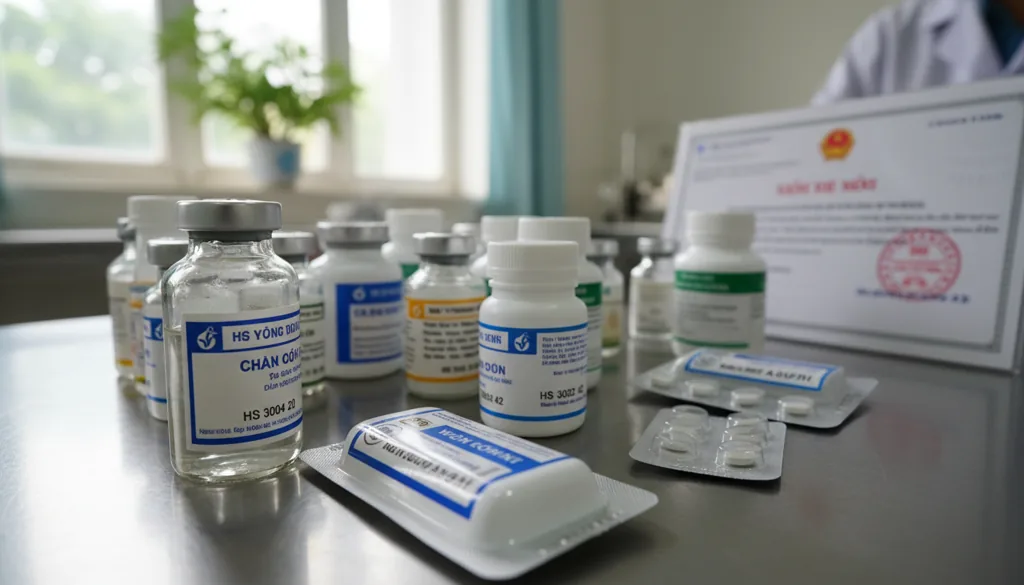
Viet Nam has issued a series of draft circulars to strengthen oversight of veterinary drugs through updated regulatory frameworks.
Vietnam has published a draft circular that will overhaul the rules for veterinary drugs, setting new requirements for importers, manufacturers and traders from 12 October 2026.
The 82-page document covers vaccines, antibiotics, narcotic raw materials and every other product used to treat or prevent animal disease. The delivered cost of these goods will rise: every shipment must now carry a pre-issued import permit, a certificate of analysis and, for controlled substances, a narcotics licence issued by the Ministry of Agriculture and Environment. The ministry said in a statement that the measure is designed to protect animal health and food safety1.
It comes after a year of tightening across the sector. In January 2026 the government amended four earlier decrees on animal husbandry and veterinary controls; in June it published Decree 211/2026, which sets fines for breaches of the rules. The new circular will replace at least six older instruments, including Circular 13/2016, which has governed veterinary drugs for the past decade1.
What the draft circular changes
The draft consolidates the entire life cycle of a veterinary drug into one text. It sets the rules for marketing authorisation, testing, manufacturing for export, import, quality inspection, labelling, prescribing, advertising and the lists of prohibited substances. It also introduces electronic labelling and a new summary of product characteristics that must accompany every batch1.
Importing a veterinary drug, before and after
| Requirement | Current regime | Under the draft circular |
|---|---|---|
| Import permit | Not required | Separate permit, every shipment |
| Certificate of analysis | Not required | Must accompany the application |
| Narcotics licence | Not required | From Ministry of Agriculture and Environment, controlled substances only |
| Clearance timing | On arrival of registered goods | Permit completed within one working day of arrival |
For importers, the biggest change is the permit requirement. Under the current regime, a company can bring in a drug once it has a marketing authorisation. The draft circular adds a second step: the importer must apply for a separate permit before each shipment arrives. The application must include the certificate of analysis, the narcotics licence (if applicable) and proof that the drug is registered in Vietnam. The ministry has not said how long the permit will take to issue, but the circular states that the process must be completed within one working day of the goods arriving at the border2.
The circular also tightens the rules for transit and re-export. Any animal or animal product passing through Vietnam must now carry a veterinary transit certificate issued by the Department of Animal Health and Production. The certificate is valid for the duration of the stay in Vietnam, which cannot exceed the date printed on the document. During transit, the carrier must follow a fixed route, dispose of no waste or carcasses, and report any sign of disease to the nearest veterinary authority2.
Who pays for the new requirements
The costs fall on the company selling the drug. The importer pays the permit fee, the testing fee and the cost of any additional documentation. The manufacturer pays for the new labelling and the summary of product characteristics. For drugs containing narcotic substances or precursors, the importer must also obtain a licence from the Ministry of Agriculture and Environment, which carries its own fee1.
Where the cost lands
The ministry has not published the fee schedule, but the circular states that the fees must be “reasonable and transparent”. It also says that the fees will be reviewed every two years. The first review is due in 20281.
What the circular leaves alone
The draft does not change the tariff lines for veterinary drugs. The products remain classified under the same Harmonised System codes they have used for years. It also does not change the list of prohibited substances, which has been in place since 2016. The circular does, however, add a new list of narcotic substances and precursors that can be used as raw materials for veterinary drugs. This list is published as an annex to the circular and will be updated by the ministry as needed1.
What the circular does not touch
The circular also leaves the existing rules for post-market surveillance in place. Companies must still report adverse events and conduct periodic safety reviews. The only change is that the reports must now be submitted electronically through the ministry’s portal1.
What happens next for veterinary drugs
The draft is open for public comment until 12 October 2026. Comments can be sent to the National Notification Authority or the National Enquiry Point at the Ministry of Agriculture and Environment. The ministry said in a statement that it will consider all comments before finalising the text, but it has not said when the circular will be adopted or when it will take effect1.
Dates companies need to watch
Even before the comment period closes, companies can start preparing. The new permit requirement will add at least one step to the import process, and the transit rules will require carriers to plan routes and report any incidents. The ministry has not said whether it will phase in the new rules, but the circular states that the permit requirement will apply to all shipments arriving after the circular takes effect2.
The volumes are small enough that the effect on regional prices will be marginal. Vietnam imports about $120 million worth of veterinary drugs each year, most of it from China, India and the European Union. The new rules will add costs, but the ministry has said that the fees will be kept low to avoid disrupting trade. The bigger impact will be on compliance: companies that do not prepare for the new requirements risk having shipments delayed or rejected at the border1.
Sources
- ↩ Draft Circular on veterinary drug management https://docs.wto.org/imrd/directdoc.asp?DDFDocuments/T/G/SPS/NVNM189.docx
- ↩ QD-BNNMT: Independence, Freedom, Hai Phong https://cdn.haiphong.gov.vn/gov-hpg/5892/tintuc/2026/5/qd-1878-ngay-22.5.2026-bnnmt-cong-bo-tthc-sua-doi-bo-sung-bai-bo-lvuc-cnty639154260106512809.pdf