
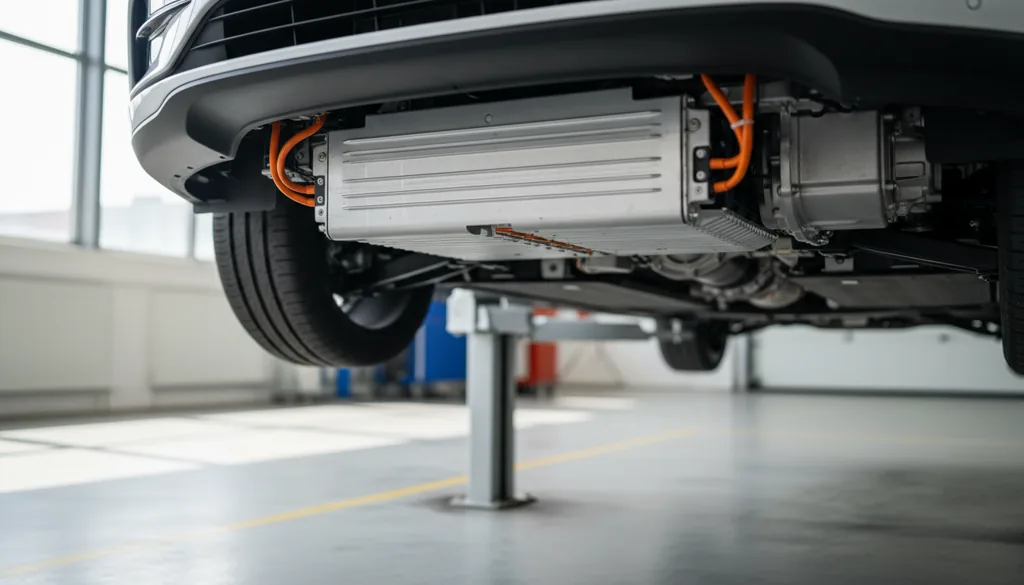
China has updated fuel consumption evaluation methods and introduced corporate average fuel consumption credits for passenger cars and new energy vehicles, reinforcing fuel efficiency targets and incentivizing clean mobility.
China has updated its fuel consumption rules for passenger cars and introduced a credit system for new energy vehicles, setting stricter efficiency targets and rewarding manufacturers that shift to cleaner models. The changes, which take effect on 1 January 2027, apply to every company that sells or imports cars in China and tie the cost of compliance to the delivered cost of each vehicle.
The new rules cover all passenger cars—from compact sedans to SUVs—and set a corporate average fuel consumption target of 4.0 litres per 100 kilometres for 2027, down from 4.5 litres in 20251. At the same time, the required share of new energy vehicles in each manufacturer’s fleet rises to 58% in 2027, up from 48% in 20261. Companies that miss the targets must buy credits from rivals that exceed them, turning compliance into a direct cost for laggards.
It comes after years of gradual tightening. The original 2025 targets were first published in 2020, and the latest adjustment was notified to the World Trade Organization on 20 August 20262. The notification does not open a new comment period, signalling that the rules are final.
The credit system and who pays for it
Under the new system, every car sold earns or costs credits based on its fuel efficiency and whether it is a new energy vehicle. A battery-electric car, for example, generates positive credits, while a petrol SUV with high fuel consumption generates negative ones. At the end of each year, manufacturers must balance their books: positive credits can be sold, negative ones must be covered by buying credits or paying a penalty1.
Who owes the full target, and who gets a discount
| Question | Standard regime | Importers under 2,000 cars a year |
|---|---|---|
| Target reduction | None — full target applies | Up to 60% |
| Condition | None | Cut fuel consumption at least 4% from previous year |
| Cost of a miss | Buy credits or pay penalty | Buy credits or pay penalty |
The delivered cost of compliance falls on the manufacturer. For a company that sells 100,000 cars a year, missing the 2027 target by 0.1 litres per 100 km could add ¥150 million ($21 million; £16 million) to its annual bill1. Smaller importers—those selling fewer than 2,000 cars a year—can apply for a 60% reduction in their target if they cut fuel consumption by at least 4% from the previous year1.
The rules also introduce a multiplier for low-fuel-consumption vehicles. If a manufacturer sells a plug-in hybrid that consumes 3.0 litres per 100 km, only 0.1 cars are counted against its fleet average, effectively rewarding efficiency even within the petrol segment1.
What the rules change in testing and approval
The amendment to national standard GB 27999—2025 adds new calculation methods for corporate average CO₂ emissions. It specifies how to measure real-world fuel consumption, how to weight different vehicle types, and how to account for low-fuel-consumption models2. The standard also sets the formula for converting fuel consumption into CO₂ emissions, ensuring that the credit system aligns with China’s broader climate goals.
Testing and approval must now be done before a car is sold. Manufacturers must submit test reports to the Ministry of Industry and Information Technology (MIIT) and receive a certificate for each model2. The ministry said in a statement that the new methods will “ensure consistency between laboratory results and on-road performance”2.
The rules leave open how often manufacturers must retest existing models. The notification does not specify whether a car certified in 2025 must be retested in 2027, creating uncertainty for companies that sell long-lived models.
How the rules compare with earlier measures
China first introduced fuel consumption targets in 2012, setting a 6.9-litre standard for 2015. The 2025 target of 4.5 litres was adopted in 2020, and the 2027 target of 4.0 litres marks the steepest annual reduction yet1. The new energy vehicle credit requirement has also risen sharply: from 10% in 2019 to 58% in 20271.
Corporate average fuel consumption target, L/100 km
The rules sit alongside other incentives. A separate trade-in subsidy, running until 31 December 2026, offers up to ¥20,000 ($2,800; £2,100) to consumers who scrap an old petrol car and buy a new electric one3. Guangzhou has also extended its purchase tax exemption for new energy vehicles, though the benefit is halved from 1 January 20264.
What the rules leave alone
The new system does not change the list of vehicles that qualify as new energy. Battery-electric, plug-in hybrid, and fuel-cell cars remain eligible, while mild hybrids and vehicles with small electric ranges do not1. The rules also do not alter the way credits are traded: the market remains closed to financial speculators, and credits can only be bought and sold between manufacturers.
What the new rules do not touch
The rules also leave intact the exemption for low-volume importers. Companies that sell fewer than 2,000 cars a year can apply for a reduced target, provided they cut fuel consumption by at least 2% annually1. The exemption is designed to protect niche brands, but it also means that some high-emission sports cars continue to enter the market without penalty.
The next deadline and what it signals
The first compliance period under the new rules runs from 1 January 2027 to 31 December 2027. Manufacturers must submit their 2027 data to MIIT by 31 March 2028, and the ministry will publish the results by 30 June 20281. Companies that fail to meet their targets will have until 31 December 2028 to buy credits or pay penalties.
The 2027 compliance clock
| Date | Who is caught | What falls due |
|---|---|---|
| 1 Jan 2027 | All manufacturers and importers | First compliance period opens; 4.0 L target and 58% NEV share apply |
| 31 Mar 2028 | Manufacturers | Submit 2027 data to MIIT |
| 30 Jun 2028 | MIIT | Publish results |
| 31 Dec 2028 | Manufacturers missing targets | Buy credits or pay penalties |
The timing signals China’s push to meet its 2030 carbon peak. With the new energy vehicle credit requirement set to rise to 65% in 2028, the 2027 rules are a stepping stone rather than a final destination. For manufacturers, the message is clear: the cost of compliance will keep rising, and the only way to avoid it is to sell more electric cars.
Sources
- ↩ 2026-2027年度乘用车企业燃料消耗量与新能源汽车积分管理通知 https://app.www.gov.cn/govdata/gov/202511/11/539929/article.html
- ↩ Amendment No.1 of GB 27999—2025 Fuel consumption evaluation methods and targets for passenger cars https://docs.wto.org/imrd/directdoc.asp?DDFDocuments/T/G/TBTN24/CHN1914A1.docx
- ↩ 2026 Year Automotive Trade-In Subsidy Implementation Details https://www.mofcom.gov.cn/zwgk/zcfb/art/2025/art_2a65998b79af47eaaf2115ef1ce234f9.html
- ↩ Guangzhou Announces Continuation and Optimization of New Energy Vehicle Purchase Tax Exemption Policy https://czj.gz.gov.cn/zwgk/zfxxgkml/czyjs/jsjfxx/content/post_9125741.html